


Introduction:
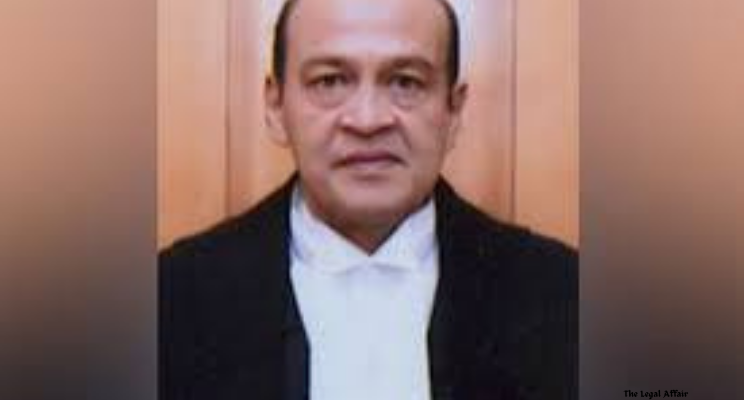
The Lok Sabha Committee constituted to inquire into allegations against Justice Yashwant Varma, former Judge of the Allahabad High Court and Delhi High Court, has concluded that all three Articles of Charge framed against him stand proved. The report, prepared under the Judges (Inquiry) Act, 1968, was tabled in the Lok Sabha on August 12, 2026, bringing the findings of the high-profile judicial inquiry formally before Parliament.
The controversy originated from a fire that broke out during the intervening night of March 14 and 15, 2025, at Justice Varma’s official residence at 30, Tughlaq Crescent, New Delhi. Following the incident, substantial quantities of Indian currency, particularly ₹500 notes, were allegedly found in a storeroom on the premises. Witnesses described the currency as consisting of bundles, heaps and stacks of burnt, partially burnt, wet and scattered notes. The discovery immediately raised questions concerning the source, ownership and presence of the cash at the official residence of a sitting High Court Judge.
Justice Varma denied wrongdoing and maintained that he had no access to the storeroom because, according to him, it was detached from the main official residence. He also questioned the manner in which the currency was handled after the fire and raised the possibility that the notes could have been planted or that a larger conspiracy was involved. He subsequently resigned from judicial office on April 10, 2025.
In response to the controversy, Lok Sabha Speaker Om Birla constituted an inquiry committee on August 12, 2025, under the Judges (Inquiry) Act, 1968. The committee was headed by Supreme Court Justice Aravind Kumar and included then Bombay High Court Chief Justice Shree Chandrashekhar, who was subsequently elevated to the Supreme Court, and senior advocate B.V. Acharya. The committee submitted its report to the Speaker on May 18, 2026.
The inquiry focused on three principal allegations. The first concerned the discovery and possession of substantial unexplained currency at the judge’s official residence. The second related to the alleged failure to preserve material evidence after the currency was discovered. The third concerned the explanations furnished by Justice Varma, which the presenting side alleged were evasive, misleading and inconsistent with the circumstances emerging from the evidence.
The committee’s mandate was not to determine criminal liability in the manner of a criminal court. Rather, it was concerned with examining whether the conduct alleged against a sitting constitutional judicial office-holder constituted established misconduct warranting action under the constitutional and statutory framework governing judicial accountability. This distinction assumed particular importance in the committee’s treatment of the question of ownership of the currency.
After examining documentary, photographic and electronic material and recording the testimony of several witnesses, the committee concluded that all three Articles of Charge had been established. At the same time, it expressly clarified that its findings did not amount to a determination that Justice Varma was the direct personal owner of every currency note in a criminal-law sense. Its central conclusion was that substantial unexplained currency was found within premises occupied by the judge, that the storeroom formed part of those official premises, and that Justice Varma failed to provide a satisfactory explanation concerning its presence, source or ownership.
The report therefore places emphasis not merely on the discovery of cash but also on the subsequent conduct surrounding the evidence and the explanations furnished by the judge. The committee considered the three charges cumulatively while separately examining the factual basis of each allegation.
Arguments of the Parties:
Justice Yashwant Varma’s position throughout the inquiry was that the allegations did not establish that the currency belonged to him or that he had any connection with it. A central element of his defence was the physical status of the storeroom in which the currency was allegedly discovered. He maintained that the storeroom was detached from the main official residence and that he did not have access to it. This, according to his defence, undermined any inference that the currency found there was within his possession or control.
The defence also questioned the manner in which the alleged currency was dealt with after the fire. The notes were not properly seized, counted, inventoried or preserved. No satisfactory panchnama was prepared at the relevant stage, and the storeroom was not immediately secured in a manner that would preserve the scene for subsequent examination. Cleaning was also allegedly undertaken after the first responders had left the premises. As a consequence, the exact amount of currency originally present could not be established.
Justice Varma’s position was that such deficiencies were significant because the inquiry was concerned with an allegation based substantially on the alleged discovery of cash. If the notes were not seized, preserved or properly documented, the defence could legitimately question whether the currency actually existed in the quantity later alleged, whether it belonged to anyone connected with the judge, and whether the scene had been altered before a proper investigation could take place.
The defence also raised the possibility of planting or a larger conspiracy. This line of argument sought to explain the presence of the currency without attributing it to Justice Varma. The suggestion was that the failure of the authorities to preserve the notes and secure the site prevented the defence from testing alternative explanations. In substance, the defence sought to emphasise the absence of direct evidence establishing personal possession, ownership or removal of the cash by Justice Varma.
The presenting side, on the other hand, relied upon the testimony of persons who had reached the residence following the fire. Several Delhi Fire Services and police personnel stated that they had seen substantial quantities of currency in the storeroom. Their descriptions of burnt, half-burnt, wet and scattered ₹500 notes were supported, according to the committee, by photographic and electronic material.
The presenting side argued that the failure to preserve the currency could not retrospectively erase the fact that officials had actually seen and identified the notes. The absence of a proper inventory meant that the exact amount could not be determined, but it did not necessarily disprove the existence of substantial currency in the storeroom.
The presenting side further relied upon the location of the storeroom. The committee was invited to consider that the currency had been discovered not at an unrelated public location but within the official residential premises occupied by Justice Varma. Evidence concerning the functioning of the household establishment, including the involvement of persons associated with the residence, was also relied upon to establish that the judge could not simply disassociate himself from events occurring within the official premises.
Particular attention was drawn to evidence concerning Justice Varma’s private secretary Rajinder Singh Karki and household staff member Mohd. Rahil. Witness C.G. Rawat reportedly stated that he saw Karki and Rahil near the storeroom engaged in cleaning after the fire had been extinguished. The presenting side relied on this circumstance to contend that the scene had been disturbed and that the opportunity to preserve the currency as material evidence had been lost.
The committee, however, did not accept an argument that the responsibility for the failure to preserve evidence lay exclusively with Justice Varma. It acknowledged that the fire and police officials themselves had failed to take appropriate steps to secure, seize and document the currency. Nevertheless, it considered that Justice Varma, having become aware of the incident and remaining in communication with members of the household establishment, had an institutional responsibility to ensure that potentially significant material was preserved and reported.
With respect to the third charge, the presenting side argued that Justice Varma’s defence changed over time. The committee noted that the initial position was a complete denial of the existence or possession of unexplained cash attributable to him. Subsequently, the defence increasingly relied upon the fact that the notes had not been seized, as well as the possibility that they had been planted or that a conspiracy was responsible.
The presenting side contended that such explanations were unsupported by evidence. Justice Varma did not lead evidence to substantiate the allegations of planting or conspiracy and did not provide a list of defence witnesses. The committee was therefore asked to consider whether his shifting explanation could be regarded as a satisfactory response to the evidence produced during the inquiry.
Justice Varma also withdrew from the proceedings after the presenting side had completed its evidence and its witnesses had been cross-examined. The committee expressly recognised that withdrawal from the proceedings could not, by itself, constitute proof of misconduct. Nevertheless, it considered the withdrawal relevant when assessed alongside the absence of evidence supporting the factual allegations subsequently advanced by the judge.
Thus, while Justice Varma’s defence centred upon lack of direct ownership, lack of access to the storeroom, deficiencies in preservation of the alleged cash and the possibility of foul play, the presenting side sought to establish that the surrounding circumstances, witness testimony and conduct after the discovery collectively demonstrated serious unexplained circumstances and a failure of institutional responsibility.
Court’s Judgment:
Strictly speaking, the present matter does not involve a conventional “court judgment”. The operative findings were made by the parliamentary inquiry committee constituted under the Judges (Inquiry) Act, 1968. The report was subsequently submitted to the Lok Sabha Speaker and tabled before the House. Accordingly, the conclusions discussed here are those of the inquiry committee rather than a judicial determination of criminal guilt.
On the first Article of Charge, the committee found that substantial quantities of unexplained Indian currency were present in the storeroom of Justice Varma’s official residence. The committee attached considerable importance to the testimony of the fire service and police personnel who had personally seen the notes. Their accounts, according to the report, were supported by photographic and electronic material.
The committee accepted that the exact quantity of cash could not be established. This was largely because the currency was not properly seized, counted or preserved immediately after its discovery. However, the committee rejected the proposition that this evidentiary deficiency destroyed the significance of the original discovery. The witnesses had seen the currency, and their evidence was supported by contemporaneous material.
An important aspect of the committee’s reasoning was its treatment of possession and control. It did not conclude that the evidence established, in the criminal-law sense, that every note belonged personally to Justice Varma. Instead, it proceeded on the narrower but significant finding that the unexplained currency was found within official premises occupied by him and that the storeroom formed part of those premises.
The committee therefore rejected the idea that a bare denial was sufficient. In its assessment, where a substantial amount of unexplained cash is discovered in the official residential premises of a judge, the circumstances require a credible explanation concerning its presence, source and ownership. Justice Varma’s denial, in the committee’s view, did not satisfactorily answer those questions.
The committee’s approach is significant because it distinguished between criminal attribution of ownership and institutional accountability. The inquiry did not purport to convict Justice Varma of possessing illicit cash. Rather, it examined whether the circumstances surrounding the discovery and his subsequent response were sufficient to establish misconduct within the framework of a judicial inquiry.
The first Article of Charge was consequently held proved.
The second charge concerned the preservation of evidence. Here, the committee acknowledged a serious lapse on the part of the police and other officials. The currency was not seized or inventoried, the scene was not immediately preserved in an adequate manner, and the storeroom was subsequently subjected to cleaning. The result was that the material evidence which might have enabled investigators to establish the exact quantity, condition and location of the notes was lost.
Nevertheless, the committee did not consider this official lapse sufficient to absolve Justice Varma of responsibility. Its reasoning was that the failure of public officials to preserve evidence and the failure of the judge to ensure preservation were not mutually exclusive propositions.
The committee placed particular reliance on the fact that persons associated with the household establishment were allegedly present near the storeroom after the fire. The evidence of C.G. Rawat concerning Rajinder Singh Karki and Mohd. Rahil was treated as relevant to the disturbance of the scene.
Importantly, the committee did not find that Justice Varma himself had physically removed the currency. Such a finding would have required a different and more direct evidentiary basis. Instead, the committee found that he failed to take reasonable steps to secure and preserve material evidence after becoming aware of the incident.
The committee thus treated the preservation issue as one of institutional responsibility. A judge occupying official residential premises is not merely a private occupant in the ordinary sense. The circumstances of the discovery, combined with the official status of the premises and the serious nature of the material involved, required an appropriate response to ensure that the evidence was secured and made available for examination.
The second Article of Charge was therefore also found proved.
The third Article of Charge dealt with the nature and credibility of Justice Varma’s explanations. The committee found that his position evolved during the proceedings. According to the report, the initial response was a complete rejection of the allegation concerning unexplained cash. Subsequently, the defence relied increasingly upon the failure to seize the notes and the possibility that they had been planted or that a larger conspiracy had taken place.
The committee was not persuaded by this explanation. It observed that no evidence had been produced to substantiate the allegations of planting or conspiracy. Nor had Justice Varma presented a list of defence witnesses or otherwise led evidence capable of supporting those factual assertions.
The committee also considered the absence of a satisfactory explanation concerning what inquiries had been undertaken following the discovery of the cash. It found that the response did not adequately address the accounts of independent officials who claimed to have seen the currency or explain the steps taken to secure the site and preserve the evidence.
Justice Varma’s withdrawal from the proceedings was also considered in this context. The committee was careful not to treat withdrawal as an independent basis for proving misconduct. Instead, it considered the circumstance alongside the failure to substantiate the factual allegations raised in his defence.
Ultimately, the committee characterised the explanation as “evasive, incomplete and misleading in effect.” This conclusion did not rest merely on the fact that Justice Varma denied the allegations. The concern was that his response, according to the committee, did not meaningfully explain the central factual circumstances emerging from the evidence.
The committee’s conclusion on the third charge reflects an important distinction in disciplinary proceedings. A respondent is entitled to deny an allegation and challenge the evidence against him. However, where the surrounding circumstances raise substantial questions, an explanation that merely denies responsibility without addressing the central facts may not be considered satisfactory by an inquiry body.
After considering the evidence as a whole, the committee held all three Articles of Charge proved. It specifically clarified that its findings did not constitute a determination of direct personal ownership of the currency in a criminal sense. The core finding was that substantial unexplained currency had been found within official premises occupied by Justice Varma; that the storeroom formed part of those premises; that the evidence surrounding the discovery had not been properly preserved; and that Justice Varma had failed to provide a satisfactory explanation for the presence, source or ownership of the cash.
The report also acknowledged the contribution of the legal and assisting teams involved in the proceedings, including Additional Solicitor General Aishwarya Bhati, Raja Thakare, Senior Advocates Sidharth Luthra and Siddharth Aggarwal, and advocates Karan Umesh Salvi and Sameeksha Dua.
The findings must ultimately be understood within the constitutional scheme governing judicial accountability. The Judges (Inquiry) Act, 1968 provides the statutory framework for investigating allegations of misbehaviour or incapacity against judges of the higher judiciary. The committee’s report is therefore not equivalent to a criminal conviction. Its significance lies in the parliamentary process through which allegations against a member of the higher judiciary are examined and reported.
The report also demonstrates the distinction between evidentiary shortcomings and the existence of underlying facts. The committee criticised the authorities for failing to preserve the currency, yet it did not consider that failure sufficient to erase the testimony of persons who had actually observed the notes. At the same time, the committee declined to make a broader finding of criminal ownership unsupported by direct evidence.
The final outcome is therefore a finding of institutional and judicial misconduct on all three charges rather than a criminal conviction for possession of the cash. With the report now tabled before the Lok Sabha, its findings enter the parliamentary record and assume significance in the larger constitutional debate concerning accountability, integrity and public confidence in the higher judiciary. The case illustrates that judicial independence and judicial accountability operate together: independence protects judges from improper interference, while accountability mechanisms ensure that allegations of serious misconduct are subjected to a structured and legally prescribed examination.
The committee’s report ultimately rests on the cumulative effect of the unexplained currency, the failure to preserve material evidence and the inadequacy of the explanations offered in response. Its conclusion is that, taken together, these circumstances established all three Articles of Charge against Justice Yashwant Varma.