


Introduction:
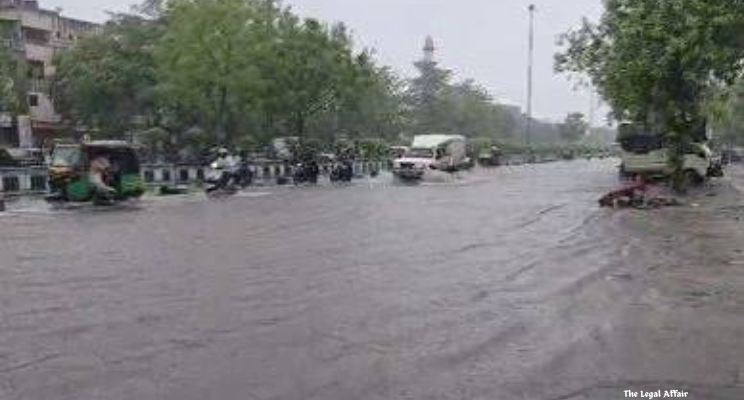
The Gujarat High Court witnessed an unusual courtroom exchange on Friday when persistent rainfall in Ahmedabad prompted advocates to request Chief Justice Sunita Agarwal to conclude court proceedings early. The request was made after lawyers expressed concern that continuous rain and waterlogging around the High Court premises could leave them stranded if proceedings continued until the regular closing hours.
The incident occurred shortly after the post-lunch session resumed. Advocates appearing before the Chief Justice informed the Court that access roads surrounding the High Court were rapidly becoming inundated due to incessant rainfall. They apprehended that if the rain continued, they might not be able to leave the court premises safely. Although the matter did not involve adjudication of any legal dispute, it reflected the practical challenges faced by members of the Bar during extreme weather conditions and highlighted the importance of coordination between the Bench and the Bar in ensuring the smooth functioning of courts.
The exchange remained cordial throughout, with Chief Justice Agarwal responding to the concerns with a blend of practicality and light-hearted humour while also clarifying the institutional procedure required for making such requests on behalf of the legal fraternity.
Arguments of the Parties:
The advocates submitted that heavy rainfall had significantly affected movement around the High Court premises. They informed the Chief Justice that access to the surrounding roads had become difficult and that there was a genuine apprehension that continued rainfall would result in severe waterlogging, preventing lawyers, litigants and court staff from leaving the premises after court hours. They therefore requested that the Court rise early for the day.
The lawyers also requested the Chief Justice to communicate with other Benches of the High Court so that proceedings across the court could conclude earlier in view of the prevailing weather conditions. Their request was based on practical considerations rather than any legal grievance, as they sought to avoid being stranded due to flooding.
Responding to the submissions, Chief Justice Sunita Agarwal initially remarked that there was no reason to assume that the advocates would be unable to leave the premises. When another advocate pointed out that the rain was continuing heavily, the Chief Justice responded in a lighter vein by saying, “Enjoy.” The exchange continued in a cordial atmosphere, with the advocates reiterating the seriousness of the situation and requesting consideration of an early closure.
Court’s Judgment:
Since the issue did not arise from any judicial proceedings requiring adjudication, no formal judicial order was passed by the Court. However, Chief Justice Sunita Agarwal clarified the administrative protocol governing such requests within the High Court.
The Chief Justice observed that while she could consider requests concerning her own court, any request seeking coordination with other Benches should appropriately originate from the High Court Bar Association. She explained that communication with other judges on matters affecting the functioning of multiple courts could only be made upon an official request by the Bar Association through its President, thereby respecting the institutional framework governing court administration.
The Bench made it clear that such collective administrative decisions are ordinarily channelled through recognised representatives of the Bar rather than through individual advocates appearing before the Court. This observation underscored the importance of maintaining established institutional procedures even during unforeseen situations affecting court functioning.
During the interaction, the Chief Justice also attempted to lighten the atmosphere. After hearing the advocates’ concern that they might not be able to leave the premises because of the rain, she humorously remarked that if they were unable to leave immediately, they could instead continue arguing their matters before the Court. The light-hearted comment drew attention to the cordial relationship that often exists between the Bench and the Bar despite unexpected disruptions.
When one of the advocates apologised for interrupting the proceedings to raise the issue, the Chief Justice assured the lawyers that she understood the practical difficulties caused by the adverse weather conditions. Her response reflected judicial sensitivity towards the concerns of advocates while simultaneously ensuring that court administration continued to follow established procedures.
Although no substantive legal issue arose for determination, the incident serves as a reminder that courts are not insulated from the impact of natural events such as heavy rainfall and flooding. Efficient functioning of the justice delivery system often depends upon cooperation between the judiciary, the Bar and court administration, particularly during emergencies. The exchange also illustrates how administrative concerns affecting the legal fraternity are expected to be addressed through institutional channels while preserving judicial decorum and ensuring orderly court functioning.