


Introduction:
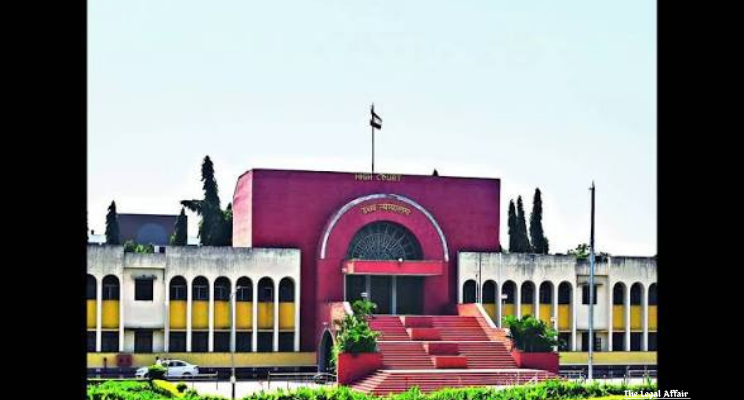
The Bombay High Court, in Debashish Devnarayan Ghosh v. State of Maharashtra [Writ Petition Nos. 9010 and 9011 of 2025], 2026 LiveLaw (Bom) 323, reaffirmed the settled legal position that revenue authorities have no jurisdiction to determine whether a person belongs to a Scheduled Tribe while exercising powers under Sections 36 and 36A of the Maharashtra Land Revenue Code, 1966. Justice Arun R. Pedneker held that the exclusive authority to decide the caste or tribe status of an individual vests in the Caste Scrutiny Committee and that any finding recorded by a revenue officer on such an issue is without jurisdiction.
The dispute arose from proceedings initiated in 1989 by the Sub-Divisional Officer (SDO), who suo motu examined whether certain agricultural land was protected tribal land under Sections 36 and 36A of the Maharashtra Land Revenue Code. During the enquiry, the SDO concluded that the original landholder, Babu Nana Jadhav, belonged to the “Sonkoli” community, which is not recognised as a Scheduled Tribe, and therefore held that the statutory restrictions protecting tribal land were inapplicable.
More than three decades later, the legal heirs of Babu Nana Jadhav challenged the SDO’s order before the Additional Commissioner. The delay of about thirty-four years was condoned, and the SDO’s order was set aside. The Revenue Minister affirmed the decision. Aggrieved by these concurrent orders, the petitioner approached the Bombay High Court, primarily challenging the condonation of delay and the setting aside of the SDO’s decision.
The case raised important questions regarding the limits of the jurisdiction of revenue authorities, the exclusive role of the Caste Scrutiny Committee in determining Scheduled Tribe status, and whether a liberal approach can be adopted while condoning delay where an order suffers from a jurisdictional defect affecting substantive rights.
Arguments of the Parties:
The petitioner contended that the Additional Commissioner and the Revenue Minister had committed a serious error in condoning an unexplained delay of nearly thirty-four years. It was argued that such an extraordinary delay could not be excused in the absence of sufficient cause and that reopening proceedings after several decades defeated the principle of finality in administrative decisions.
The petitioner further submitted that the SDO had lawfully exercised jurisdiction under Sections 36 and 36A of the Maharashtra Land Revenue Code after conducting a proper enquiry. During the proceedings, the wife and daughter of Babu Nana Jadhav had allegedly stated that the family belonged to the Sonkoli community. Based on these statements and the available material, the SDO concluded that the landholder was not a member of a Scheduled Tribe and, therefore, the statutory protections relating to transfer of tribal land were not attracted. It was argued that this finding was based on evidence collected during the enquiry and did not warrant interference after such a long lapse of time.
The State and the legal heirs, on the other hand, supported the orders of the Additional Commissioner and the Revenue Minister. They argued that the SDO lacked jurisdiction to determine the caste or tribe status of any individual. Under the statutory framework governing caste verification, only the Caste Scrutiny Committee is empowered to decide whether a person belongs to a Scheduled Tribe. Consequently, the SDO’s finding that Babu Nana Jadhav belonged to the Sonkoli community was without legal authority.
It was further submitted that proceedings under Sections 36 and 36A could be initiated only where there existed material indicating a transfer of land from a tribal to a non-tribal in violation of the statutory restrictions. In the present case, no transfer document was available before the SDO when the suo motu proceedings commenced. It was also pointed out that Babu Nana Jadhav had already passed away before the proceedings concluded, making the enquiry even more questionable.
The respondents therefore contended that since the SDO’s order was fundamentally without jurisdiction and adversely affected valuable statutory rights available to Scheduled Tribes, the authorities were justified in adopting a liberal approach while condoning the delay and setting aside the illegal order.
Court’s Judgment:
The Bombay High Court dismissed both writ petitions and upheld the orders passed by the Additional Commissioner and the Revenue Minister. The Court held that the SDO had travelled beyond the jurisdiction conferred upon him under Sections 36 and 36A of the Maharashtra Land Revenue Code.
Justice Arun R. Pedneker observed that the purpose of proceedings under Sections 36 and 36A is to examine whether a transfer of tribal land has taken place in contravention of statutory safeguards. Such proceedings cannot be converted into an enquiry regarding the caste or tribe status of the landholder. The Court noted that there was no material before the SDO indicating any transfer attracting the provisions of Sections 36 and 36A when the suo motu proceedings were initiated.
The Court categorically held that the determination of whether a person belongs to a Scheduled Tribe falls exclusively within the jurisdiction of the Caste Scrutiny Committee. Unless the Committee validates or rejects a caste claim in accordance with law, no revenue authority can independently record findings on the caste or tribe status of an individual. By declaring that Babu Nana Jadhav belonged to the Sonkoli community, the SDO assumed a jurisdiction that the law did not confer upon him.
The High Court observed that this erroneous finding had serious legal consequences because it deprived the family of statutory protection available to members of Scheduled Tribes under Sections 36 and 36A of the Maharashtra Land Revenue Code. An order passed without jurisdiction and affecting substantive rights cannot be permitted to continue merely because considerable time has elapsed.
On the issue of delay, the Court held that where an order is void or passed without jurisdiction, the appellate authorities are justified in adopting a liberal approach while considering an application for condonation of delay. Since the impugned order had the effect of denying statutory benefits by an authority lacking competence, the Additional Commissioner and the Revenue Minister rightly condoned the delay and interfered with the SDO’s decision.
Accordingly, the Bombay High Court found no infirmity in the concurrent findings of the appellate authorities. It dismissed both writ petitions and reaffirmed that only the Caste Scrutiny Committee is competent to determine Scheduled Tribe status, while revenue authorities exercising powers under the Maharashtra Land Revenue Code cannot adjudicate caste claims or deprive individuals of statutory protections on that basis.