


Introduction:
In an important judgment balancing public order, administrative legality, and constitutional sensitivities surrounding public memorials, the Andhra Pradesh High Court upheld directions for the removal and shifting of a statue of Dr. B.R. Ambedkar that had allegedly been installed without permission on government land in Jaladurgam village of Nandyal District. The Court held that the installation was carried out despite cancellation of an earlier Gram Sabha resolution and during the subsistence of proceedings under Section 145 of the Code of Criminal Procedure, which had been initiated to prevent disturbance to public peace and tranquillity.
The decision was delivered by a Division Bench comprising Chief Justice Lisa Gill and Justice Ninala Jayasurya in Rasipogula Nagaraju & Ors. v. Abdul Rasul Shaik & Ors., Writ Appeal No. 513 of 2026. The Bench dismissed the appeal filed against an earlier order of a Single Judge directing removal of the statue from the disputed site.
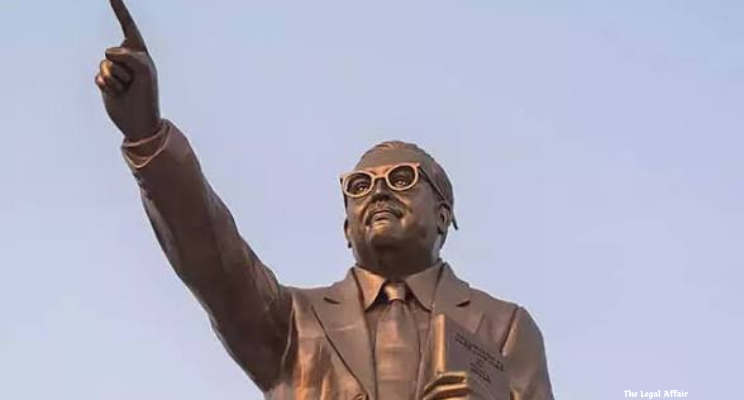
The controversy arose from the installation of a statue of Dr. B.R. Ambedkar in Ward No.1 of Jaladurgam Village, Peapully Mandal, Nandyal District. Allegations were raised that the statue had been erected in the middle of a narrow twelve-foot-wide village road, thereby obstructing public movement and violating government regulations as well as judicial directions governing installation of statues in public spaces and on roads.
The matter gained further complexity because the land in question was admittedly government land situated near an Edgah and K.E. Colony. Initially, the Gram Sabha had passed a resolution allocating a small extent of land for installation of the statue. However, following objections from villagers and local residents, the Gram Panchayat subsequently cancelled the earlier resolution.
Despite cancellation of the permission and while proceedings under Section 145 Cr.P.C. were already pending to maintain law and order, the statue was allegedly installed overnight on April 13, 2023, immediately preceding the birth anniversary of Dr. B.R. Ambedkar. Section 145 Cr.P.C. empowers Executive Magistrates to take preventive measures in disputes relating to land or public property where there is likelihood of breach of peace.
The High Court was therefore called upon to decide whether the installation could be protected on grounds of public sentiment and whether authorities were justified in directing its removal despite the symbolic and emotional significance attached to the statue of Dr. Ambedkar.
The case also raised broader questions concerning the rule of law, regulation of public spaces, powers of local authorities, and the extent to which symbolic political or social acts can bypass statutory procedures in the name of public sentiment or social justice.
Ultimately, while recognising the respect owed to the statue and sentiments associated with Dr. B.R. Ambedkar, the Court concluded that public order and legality could not be compromised by unauthorised acts carried out in defiance of lawful proceedings.
Arguments of the Parties:
The appellants challenged the order of the Single Judge directing removal of the statue and argued that the impugned order was unsustainable both legally and factually. Their primary contention was that the Court had not been apprised of the complete factual background surrounding the installation of the statue.
The appellants submitted that the Gram Sabha had initially passed a valid resolution allocating land for installation of the statue of Dr. B.R. Ambedkar. Pursuant to this resolution, the Tahsildar had also issued an endorsement confirming allocation of land. According to them, these developments demonstrated that the installation process had originally received official approval from local authorities.
It was argued that the statue was not erected on the main road itself nor did it obstruct vehicular movement or public utility. The appellants claimed that the structure had been placed away from the road margins and therefore allegations regarding obstruction were exaggerated and politically motivated.
The appellants further relied upon the decision in Nelakudithi Venkatapathi Rao and Another v. State of Andhra Pradesh and Others, reported in 2016 LawSuit (Hyd) 31. Based on this judgment, it was contended that prior permission was not required when a statue was proposed to be installed on land that did not form part of a road, roadside margin, or public pathway.
Another argument advanced by the appellants was that the installation of the Ambedkar statue carried significant social and emotional importance for members of the local community, particularly marginalised sections who regarded Dr. Ambedkar as a symbol of constitutional empowerment and social justice.
The appellants therefore urged the Court to adopt a humanitarian and practical approach rather than mechanically enforcing technical objections relating to permissions or procedural formalities.
On the other hand, the State authorities, Gram Panchayat, and official respondents opposed the appeal and defended the order directing removal of the statue.
The respondents pointed out that although a Gram Sabha resolution had initially been passed allocating land for installation of the statue, the same resolution was subsequently cancelled after objections were received from villagers and community elders.
According to the authorities, once the earlier resolution stood cancelled, there was no subsisting permission authorising installation of the statue at the disputed location. Despite this, the appellants proceeded with installation of the statue during the night of April 13, 2023, without obtaining approval from competent authorities.
The respondents further submitted that the location where the statue was ultimately installed differed from the site originally contemplated in the earlier Gram Sabha proceedings. Thus, even assuming some preliminary approval existed earlier, the actual installation was carried out at a different location and without valid authorisation.
The Government Pleader also relied heavily upon the conduct of the appellants themselves. It was pointed out that the appellants had approached the Revenue Divisional Officer through a representation dated February 13, 2023 seeking permission to install the statue on government land and requesting protection against possible obstruction.
According to the respondents, this conduct itself disproved the appellants’ later argument that no permission was legally required. If permission was unnecessary, there would have been no occasion for the appellants to approach revenue authorities seeking official approval.
Another major aspect highlighted by the authorities concerned the proceedings initiated under Section 145 Cr.P.C. The respondents submitted that on the basis of information provided by the local police regarding possible communal or public disturbance, the competent authority had already initiated preventive proceedings on March 23, 2023 to maintain peace and tranquillity in the village.
Despite the subsistence of these proceedings, the appellants proceeded with installation of the statue in the middle of the night preceding Ambedkar Jayanti. According to the respondents, this conduct demonstrated deliberate disregard for lawful orders intended to prevent tension and disturbance in the locality.
The authorities therefore argued that the Single Judge was fully justified in directing removal of the unauthorised structure in the larger interest of public order and administration of law.
Court’s Judgment:
The Andhra Pradesh High Court dismissed the writ appeal and upheld the directions issued by the Single Judge for removal and shifting of the statue.
The Division Bench carefully examined the factual background and concluded that the installation of the statue had unquestionably taken place without valid permission and in disregard of pending proceedings under Section 145 Cr.P.C.
Chief Justice Lisa Gill and Justice Ninala Jayasurya observed that the Gram Panchayat had indeed cancelled the earlier resolution allocating land for installation of the statue. Therefore, after cancellation of the resolution, no lawful authority remained permitting the appellants to proceed with the installation.
The Court attached significant importance to the appellants’ own conduct in seeking permission from revenue authorities. Referring to the representation submitted before the Revenue Divisional Officer, the Bench noted that the appellants themselves had described the site as “government land” and had requested permission for installation of the statue.
The Court reasoned that if the appellants genuinely believed that no permission was required, there was no logical explanation for their repeated attempts to secure official approval from Gram Panchayat and revenue authorities.
The Bench therefore rejected the argument that installation could be justified without prior permission.
Another crucial aspect considered by the Court was the pendency of proceedings under Section 145 Cr.P.C. The Bench observed that these proceedings had been initiated specifically to prevent breach of peace and maintain tranquillity in the village after police authorities reported possible tension surrounding the proposed installation.
The Court emphasised that despite the operation of preventive orders, the statue was installed during the midnight of April 13, 2023. Such conduct, according to the Bench, reflected complete disregard for lawful administrative measures intended to preserve public order.
The Court categorically held that the installation was carried out not only without permission but also in violation of proceedings initiated under Section 145 Cr.P.C. to prevent commotion and disturbance in the village.
While dealing with the appellants’ reliance upon the earlier judgment in Nelakudithi Venkatapathi Rao, the Court found the precedent distinguishable on facts. The present case involved admitted government land, cancellation of earlier permission, and ongoing preventive proceedings under criminal law. Therefore, the appellants could not claim protection merely by asserting that the statue did not directly obstruct the roadway.
Importantly, the High Court balanced its legal conclusions with sensitivity toward the symbolic importance of Dr. B.R. Ambedkar. The Bench acknowledged the sentiments attached to the statue and recognised the need for dignified handling of the issue.
Accordingly, while affirming removal of the statue from the disputed site, the Court directed authorities to ensure that the statue is shifted “with due respect, care and caution.” The Bench further directed that the statue be preserved safely until an alternative site is identified and appropriate permission for installation is granted in accordance with law.
The Court also fixed a timeline of two months for completion of the entire exercise.
The judgment reinforces the principle that public sentiment, however genuine or emotionally significant, cannot justify bypassing statutory procedures or defying lawful administrative orders. At the same time, the Court demonstrated judicial sensitivity by ensuring respectful treatment of the statue and permitting the possibility of lawful reinstallation at an approved location.
The ruling also highlights the preventive role of Section 145 Cr.P.C. in maintaining public order in sensitive disputes involving public property and competing community interests. By upholding the removal order, the Andhra Pradesh High Court reaffirmed that rule of law and public peace must prevail over unilateral actions undertaken without legal sanction.