


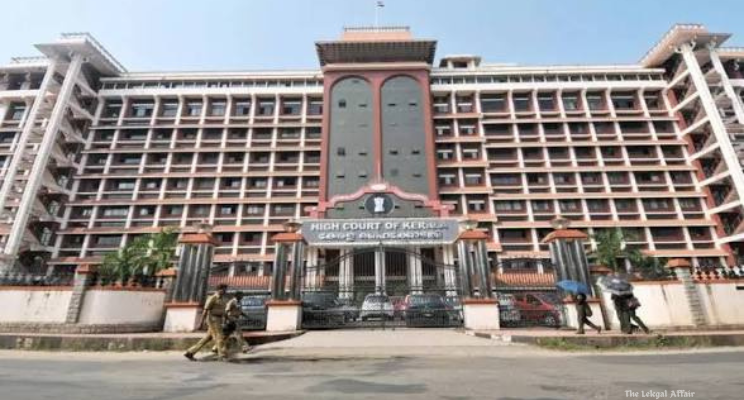
Introduction:
In an important judgment interpreting the compensation framework under the Disaster Management Act, 2005, the Kerala High Court has held that when a building is requisitioned in its entirety by the Disaster Management Authority during a public emergency, the authority is legally bound to pay rent for all rooms in the premises irrespective of whether every room was actually occupied.
The ruling was delivered by Justice Viju Abraham in the case titled N. Rajendran v. State of Kerala and Others. The Court clarified that where possession of an entire building is taken over under statutory powers, the arrangement constitutes a form of compulsory acquisition by force of law, thereby entitling the owner to compensation for the whole premises and not merely for rooms physically utilized by occupants.
The dispute arose in the backdrop of the COVID-19 pandemic, during which governments across India invoked emergency powers under the Disaster Management Act to requisition private properties for quarantine facilities, containment centers, and emergency medical infrastructure. In the present case, the petitioner, N. Rajendran, owned a building containing 25 rooms which was taken over by the District Disaster Management Authority for use as an institutional quarantine facility.
According to the petitioner, the Chairman of the District Disaster Management Authority invoked powers under Section 65 of the Disaster Management Act and requisitioned the entire premises. The Village Officer took possession of the compound as well as keys to all rooms, thereby effectively excluding the owner from control or use of the property for the relevant period.
The building remained under the possession and control of the authorities for approximately 155 days. Subsequently, following earlier proceedings before the High Court initiated by the petitioner, possession of the building was restored to him and compensation amounting to approximately ₹4.32 lakh, after deductions, was awarded.
However, the petitioner was dissatisfied with the quantum of compensation because the authorities calculated rent only for the actual days during which specific rooms were occupied by quarantined individuals. Aggrieved by this methodology, the petitioner invoked Section 66 of the Disaster Management Act and approached the Arbitrator seeking proper compensation for the entire period during which the whole building remained under governmental possession.
The Arbitrator, however, upheld the compensation framework applied by the authorities and granted rent only for actual occupation days. This compelled the petitioner to once again approach the Kerala High Court challenging the legality of the compensation determination.
The case raised important legal questions concerning the scope of compensation under Sections 65 and 66 of the Disaster Management Act, the relationship between statutory provisions and executive government orders, and the extent to which the State may limit compensation during emergency requisition of private property.
A particularly significant issue before the Court was whether executive instructions issued during the pandemic could lawfully curtail compensation payable under a parliamentary statute. The State relied upon certain government orders limiting compensation in quarantine facilities to either 14 days or the actual period of occupancy, whichever was lesser. The petitioner argued that such executive restrictions could not override statutory rights guaranteed under Section 66 of the Act.
The judgment ultimately became an important reaffirmation of the principle that executive orders cannot dilute statutory entitlements and that compulsory requisition of private property by the State carries with it a corresponding obligation to pay fair and lawful compensation.
Beyond the immediate facts of the case, the ruling has broader implications for future emergency governance, property rights, and compensation disputes arising from governmental takeover of private infrastructure during disasters and public health crises.
Arguments of the Parties:
The petitioner, N. Rajendran, contended before the High Court that the compensation awarded to him for requisition of his building was grossly inadequate and contrary to the mandate of Section 66 of the Disaster Management Act, 2005.
The petitioner submitted that the District Disaster Management Authority had taken over his entire building comprising 25 rooms by exercising powers under Section 65 of the Act during the COVID-19 pandemic. According to him, the authorities took possession not merely of a few rooms but of the whole premises, including the compound and all keys to the building, thereby depriving him of any control or beneficial use of the property during the requisition period.
The petitioner emphasized that the building remained under governmental possession for 155 days and that throughout this period he was prevented from commercially exploiting or otherwise utilizing any part of the premises.
He argued that the authorities committed a serious error by calculating compensation only on the basis of actual room occupancy by quarantined individuals. According to the petitioner, once possession of the entire building was taken over compulsorily under statutory powers, compensation had to be assessed for the entire premises irrespective of whether all rooms were continuously occupied.
The petitioner further submitted that Section 66 of the Disaster Management Act clearly mandates payment of compensation based upon the “rent payable in respect of the premises.” Therefore, according to him, the statutory language contemplates compensation for the premises requisitioned and not merely for the duration of individual occupancy.
It was also argued that the government orders relied upon by the authorities while calculating compensation were arbitrary and inconsistent with the parent statute. The petitioner specifically challenged the legality of the executive instructions limiting compensation to either 14 days or the actual number of days a person stayed in quarantine, whichever was lesser.
According to the petitioner, such executive limitations could not override or dilute statutory rights created under Section 66 of the Act. He contended that once Parliament had provided a statutory formula for compensation, the State Government lacked authority to reduce or restrict compensation through administrative orders.
The petitioner also stressed that the requisition amounted in substance to compulsory acquisition or compulsory possession by force of law. Therefore, fairness and constitutional principles required full compensation for the period during which the authorities retained exclusive possession of the building.
On the other hand, the State of Kerala opposed the writ petition and defended the compensation methodology adopted by the authorities and upheld by the Arbitrator.
Appearing for the respondents, Government Pleader Nima Jacob argued that compensation had been calculated strictly in accordance with the applicable government orders issued during the COVID-19 pandemic.
The State relied heavily upon a government order dated 26 June 2020 which provided that payment in individual quarantine cases would be limited either to 14 days or the actual number of days a person stayed in the facility, whichever was lesser.
According to the respondents, compensation was therefore payable only for rooms actually occupied by quarantined individuals and only for the period of such occupancy. The State contended that payment of rent for unoccupied rooms would amount to unjust enrichment and would exceed the intended scope of the compensation framework formulated during the pandemic.
The respondents also appear to have argued that the executive instructions were framed keeping in mind practical administrative and financial considerations during an unprecedented public health crisis. Since quarantine occupancy fluctuated over time, the State maintained that compensation should reasonably correspond only to actual usage.
Further, the State defended the Arbitrator’s award and contended that no interference was warranted because the compensation determination had already been adjudicated under the statutory arbitration mechanism provided under Section 66 of the Act.
However, the State faced difficulty explaining how executive instructions limiting compensation could override the statutory language of Section 66, which specifically refers to compensation based on “rent payable in respect of the premises.”
Thus, the principal controversy before the High Court centered upon the interplay between statutory compensation rights and executive administrative orders issued during emergency pandemic management.
Court’s Judgment:
Allowing the writ petition, the Kerala High Court held that the Disaster Management Authority was legally obligated to pay rent for all 25 rooms in the building for the entire period of 155 days during which the premises remained under its possession and control.
Justice Viju Abraham observed that the requisition of the building under Section 65 of the Disaster Management Act constituted a form of compulsory acquisition or compulsory possession by operation of law. Therefore, once the entire building was taken over, the owner became entitled to compensation corresponding to the whole premises rather than merely portions physically occupied at different points of time.
The Court categorically observed:
“The taking over of the building from the petitioner is a case of compulsory acquisition, by the force of law.”
The Court emphasized that the authorities had not merely utilized selected rooms intermittently but had assumed complete control over the premises by taking possession of all keys and the compound area. As a result, the petitioner was effectively deprived of possession, access, and beneficial enjoyment of the entire property throughout the requisition period.
A major aspect of the judgment involved interpretation of Section 66 of the Disaster Management Act. Justice Abraham examined the statutory language carefully and observed that compensation under the provision must be fixed on the basis of “rent payable in respect of the premises.”
According to the Court, the statutory reference to “premises” necessarily signifies the property requisitioned as a whole and not isolated portions depending upon fluctuating occupancy patterns.
The Court also examined two government orders relied upon by the State. The first government order dated 25 June 2020 laid down guidelines regarding payment of expenditure to institutional quarantine facilities. The Court observed that this order itself recognized that compensation must ultimately conform to Section 66 of the Disaster Management Act.
The second government order dated 26 June 2020 sought to restrict compensation in individual cases to either 14 days or the actual number of days of stay, whichever was lesser. The State relied upon this order to justify payment only for occupied rooms.
However, the High Court held that the said government order had no application to the petitioner’s case because it related only to situations involving individual quarantine arrangements in hotels or tourist homes where accommodation was utilized on a case-to-case basis.
Justice Abraham clarified that the petitioner’s situation was fundamentally different because the entire building had been requisitioned and placed under exclusive governmental control.
The Court observed:
“This cannot be extended to the case of the petitioner, wherein the whole building was taken over by the authorities.”
Importantly, the Court strongly reaffirmed the principle that executive orders cannot override or dilute statutory provisions enacted by Parliament. Justice Abraham held that once Section 66 mandates compensation based upon rent payable for the premises, the State cannot impose artificial restrictions through executive instructions limiting compensation to actual occupancy.
The Court declared:
“The provisions of a Statute cannot be modified by way of an executive order.”
This observation forms one of the most significant aspects of the judgment because it reinforces constitutional principles relating to separation of powers and supremacy of statutory law over administrative circulars or executive guidelines.
The Court also recognized the practical realities of requisition. Once the authorities assumed possession of the building, the petitioner lost all ability to commercially utilize, rent out, or otherwise benefit from any room in the premises, irrespective of whether every room remained occupied throughout the quarantine period.
Therefore, the Court concluded that fairness and statutory interpretation both required payment of rent for all rooms for the entire duration of possession.
Accordingly, the High Court set aside the restrictive compensation methodology and directed the Chairman of the District Disaster Management Authority to pay rent for all 25 rooms for the entire period of 155 days together with applicable interest within one month.
The judgment is legally significant because it establishes that when the State compulsorily takes over private property during emergencies, compensation must reflect the actual extent of deprivation suffered by the owner rather than selective utilization by authorities.
The ruling also strengthens the principle that emergency governance, even during extraordinary crises like the COVID-19 pandemic, remains subject to statutory discipline and constitutional limitations.
Ultimately, the judgment reaffirms that public emergencies may justify temporary requisition of private property, but they do not authorize the State to diminish lawful compensation through administrative shortcuts or executive modifications contrary to parliamentary enactments.