


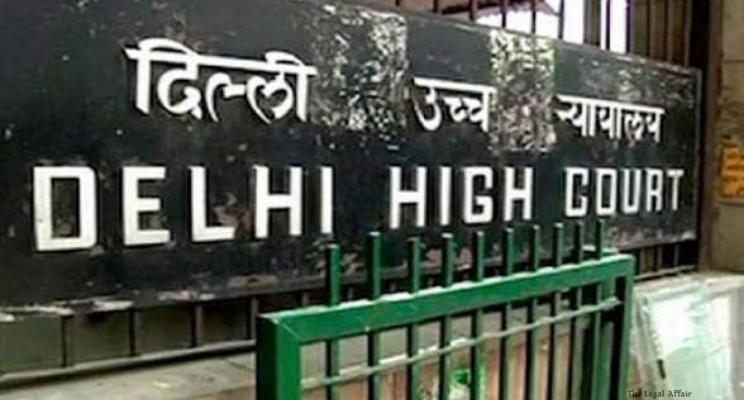
Introduction:
In a significant judgment reinforcing the evidentiary framework in corruption cases, the Delhi High Court, in Const. Satish Kumar v. State of Delhi, upheld the conviction of a police constable under the Prevention of Corruption Act for demanding and accepting illegal gratification. The decision, delivered by Justice Chandrasekharan Sudha, addressed a critical question that often arises in corruption trials: whether the absence of the complainant’s testimony is fatal to the prosecution’s case.
The case dates back to 1994, when the accused, a constable posted at Mehrauli Police Station, was alleged to have demanded a bribe of ₹1,000 from a citizen. The complainant’s identity card had been seized during a routine police checking operation, and the constable allegedly sought illegal payment for its return. Acting on the complaint, the Anti-Corruption Branch organized a trap operation, during which the accused was caught red-handed while accepting the bribe.
Following trial, the constable was convicted under Sections 7 and 13 of the Prevention of Corruption Act, provisions that deal with public servants taking gratification other than legal remuneration and criminal misconduct. The trial court sentenced him to one year of rigorous imprisonment on each count along with a fine, with the sentences to run concurrently.
However, a crucial development complicated the case. During the trial, the complainant could not be examined as he remained untraceable despite repeated efforts. This led the accused to challenge the conviction before the High Court, arguing that the absence of the complainant’s testimony undermined the prosecution’s case. The appeal thus raised important questions about the nature of proof required in corruption cases and the extent to which other forms of evidence can compensate for the lack of direct testimony from the complainant.
The High Court’s ruling is particularly relevant in the broader context of anti-corruption jurisprudence in India, where cases often hinge on trap proceedings and the testimony of independent witnesses. By upholding the conviction despite the absence of the complainant, the Court has reaffirmed the principle that justice cannot be thwarted merely due to the unavailability of a single witness, provided the remaining evidence is credible and sufficient.
Arguments of the Parties:
The appellant-constable challenged the trial court’s judgment primarily on the ground that the prosecution had failed to prove the essential ingredients of the offences under the Prevention of Corruption Act. He contended that the demand for illegal gratification, which is a sine qua non for conviction under these provisions, had not been established beyond reasonable doubt. According to the appellant, the non-examination of the complainant was a fatal flaw in the prosecution’s case, as it deprived the Court of direct evidence regarding the alleged demand.
The appellant argued that the complainant was the most material witness, being the person who allegedly paid the bribe. His absence, therefore, created a significant gap in the prosecution’s narrative. It was submitted that without the complainant’s testimony, the prosecution could not conclusively establish that there was any demand for bribe, which is a mandatory requirement under the law. The appellant further contended that reliance on the testimony of other witnesses, such as the panch witness, was insufficient to prove the offence in the absence of corroboration from the complainant.
Another line of argument advanced by the appellant related to the validity of the sanction for prosecution. It was contended that the sanction had not been granted by a competent authority, thereby vitiating the entire proceedings. The appellant asserted that the authority granting sanction did not have the requisite power to remove him from service, and therefore, the sanction was legally defective.
Additionally, the appellant sought to cast doubt on the credibility of the trap proceedings, suggesting that procedural irregularities and inconsistencies in the prosecution’s evidence rendered the case unreliable. He argued that the benefit of doubt should be extended to him, particularly in light of the missing complainant.
On the other hand, the respondent-State defended the conviction by emphasizing the strength and consistency of the evidence on record. It was argued that the prosecution had successfully established both the demand and acceptance of illegal gratification through the testimony of the panch witness and other supporting evidence. The State contended that the panch witness, who had accompanied the complainant during the trap and had witnessed the transaction, provided clear and reliable testimony that fully supported the prosecution’s case.
The State also relied on the landmark judgment of the Supreme Court of India in Neeraj Dutta v. State (Government of NCT of Delhi), which clarified that the absence of the complainant is not necessarily fatal to a corruption case. According to this precedent, demand and acceptance of illegal gratification can be proved through other forms of evidence, including the testimony of witnesses and circumstantial evidence.
In response to the challenge regarding sanction, the State argued that the sanction had been validly granted by the Additional Deputy Commissioner of Police, who was competent to remove the accused from service. Therefore, the requirement of a valid sanction under the Prevention of Corruption Act had been duly satisfied.
The State further submitted that the trap proceedings were conducted in accordance with established procedures and that the recovery of the tainted money from the accused, coupled with the testimony of the panch witness, conclusively proved the offence. It was argued that the appellant had failed to provide any plausible explanation for the recovery of the bribe amount, thereby strengthening the prosecution’s case.
Court’s Judgment:
The Delhi High Court, after a detailed examination of the evidence and legal principles, dismissed the appeal and upheld the conviction of the appellant. The judgment is notable for its clear articulation of the standards of proof in corruption cases and its reliance on established precedents.
At the outset, the Court addressed the appellant’s primary contention regarding the non-examination of the complainant. It held that while the complainant is undoubtedly an important witness, his absence does not automatically render the prosecution’s case unsustainable. The Court emphasized that the essential requirement is the proof of demand and acceptance of illegal gratification, which can be established through other reliable evidence.
In this regard, the Court placed significant reliance on the decision in Neeraj Dutta v. State (Government of NCT of Delhi), where it was held that the prosecution can prove demand even in the absence of the complainant by relying on circumstantial evidence and the testimony of other witnesses. The High Court observed that this principle is particularly relevant in cases where the complainant is unavailable, either due to death, hostility, or other reasons.
Applying this principle to the facts of the case, the Court found that the testimony of the panch witness was both credible and sufficient to establish the demand and acceptance of the bribe. The panch witness had clearly deposed that the accused demanded the money and accepted it in his presence during the trap operation. The Court noted that there was no reason to disbelieve this testimony, especially in the absence of any material contradictions or inconsistencies.
The Court also considered the recovery of the tainted money from the accused as a crucial piece of evidence. It observed that the recovery, coupled with the positive chemical test results, corroborated the prosecution’s case and reinforced the credibility of the panch witness’s testimony. The Court held that these circumstances collectively established the guilt of the accused beyond reasonable doubt.
On the issue of sanction, the Court rejected the appellant’s challenge by holding that the Additional Deputy Commissioner of Police was indeed a competent authority to grant sanction for prosecution. It reasoned that since the authority had the power to remove the accused from service, it was legally competent to grant sanction under the Prevention of Corruption Act. The Court found no infirmity in the sanction order and held that it did not vitiate the proceedings.
The Court further observed that the trial court had meticulously evaluated the evidence and had arrived at a well-reasoned conclusion. It found no perversity or illegality in the trial court’s judgment that would warrant interference in appeal. The Court reiterated that appellate courts should be slow to overturn findings of fact unless there is a clear error or miscarriage of justice.
Importantly, the Court underscored the broader objective of the Prevention of Corruption Act, which is to curb corruption among public servants and maintain public confidence in the integrity of public administration. It observed that technical objections should not be allowed to defeat the ends of justice, particularly in cases where the evidence clearly establishes wrongdoing.
In conclusion, the High Court held that the prosecution had successfully proved both the demand and acceptance of illegal gratification, and that the conviction of the appellant was fully justified. The appeal was accordingly dismissed, and the sentence imposed by the trial court was upheld.
This judgment serves as an important reaffirmation of the principle that corruption cases must be decided on the basis of the totality of evidence, rather than the presence or absence of a single witness. It also highlights the judiciary’s commitment to ensuring that public servants who engage in corrupt practices are held accountable, while maintaining the integrity of the legal process.