


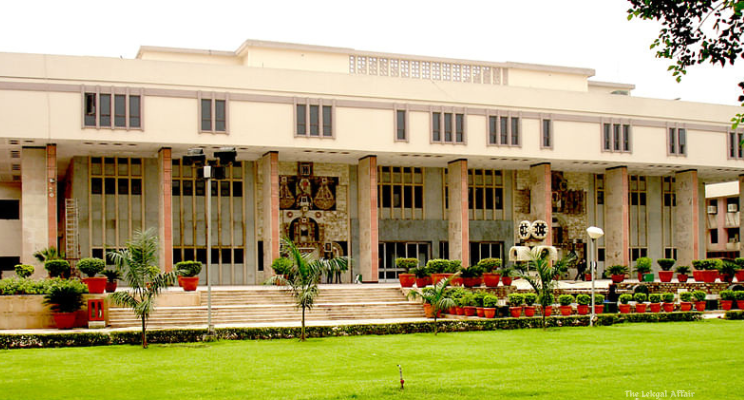
Introduction:
In Shri Mohkam Singh v. Delhi Jal Board (LPA 1101/2024), the Delhi High Court, through a Division Bench comprising Chief Justice D.K. Upadhyay and Justice Tejas Karia, dismissed an intra-court appeal filed by a daily wage worker seeking regularisation of his services, holding that a break in service disentitles a workman from claiming parity with others who were regularised under an existing policy; the appellant had initially been engaged as a daily wager in 1982 and continued working until his services were terminated in 1993, which led to an industrial dispute culminating in a Labour Court award in 2002 directing his reinstatement with 50% back wages but only from July 17, 1996, thereby creating a gap in service between 1993 and 1996, and it was this discontinuity that ultimately became the central issue in determining his entitlement to regularisation, as the appellant contended that similarly situated workers had been regularised from 1990 and that denial of the same benefit to him amounted to hostile discrimination, while the respondents maintained that the break in service and the nature of his initial appointment disentitled him from claiming such relief, leading to concurrent findings by the Industrial Tribunal and the Single Judge rejecting his claim, which were ultimately upheld by the Division Bench.
Arguments of the Appellant:
The appellant advanced a case rooted in the principles of equality and non-discrimination, contending that he had been unfairly denied the benefit of regularisation despite being similarly placed to other workers who had been absorbed into regular service under a policy introduced by the employer; it was argued that he had been engaged as a daily wager as early as 1982 and had rendered long years of service prior to his termination in 1993, and therefore his claim for regularisation ought to have been considered on par with other employees who were regularised from 1990 onwards under the relevant scheme; the appellant emphasized that the denial of regularisation to him, while extending the same benefit to others performing similar duties, constituted hostile discrimination and violated the principle of equality enshrined in constitutional jurisprudence; it was further submitted that the termination of his services in 1993 was not justified, as evidenced by the Labour Court’s award directing reinstatement, and therefore the period of unemployment between 1993 and 1996 should not be held against him for the purpose of determining his eligibility for regularisation; the appellant contended that once reinstatement was ordered, he ought to have been treated as being in continuous service, at least for the limited purpose of considering his claim under the regularisation policy, and that the denial of continuity of service in the award should not operate to defeat his substantive rights; he also argued that the nature of his work and the duration of his engagement demonstrated that he was not a casual or temporary employee in the true sense, but rather a long-serving worker who had been kept in a precarious position due to the employer’s failure to regularise him in a timely manner; the appellant further sought to distinguish his case from those where initial appointments were irregular or illegal, asserting that his engagement, though not against a sanctioned post, was nonetheless legitimate and deserving of consideration under the regularisation scheme once it came into force; it was also argued that the Industrial Tribunal and the Single Judge had erred in placing undue emphasis on the break in service, without adequately considering the broader context of his employment history and the discriminatory impact of denying him regularisation, and therefore the Division Bench was urged to set aside the impugned orders and grant him the relief sought.
Arguments of the Respondent:
The respondent, namely the Delhi Jal Board, opposed the appeal and supported the findings of the Industrial Tribunal and the Single Judge, contending that the appellant’s claim for regularisation was legally untenable due to the absence of continuous service and the nature of his initial engagement; it was submitted that the appellant had been engaged as a daily wager or muster roll employee, not against any sanctioned post, and therefore his initial appointment did not confer any right to regularisation, particularly in light of settled legal principles governing public employment; the respondent acknowledged that a policy for regularisation had been introduced, but emphasized that eligibility under such a policy was contingent upon fulfillment of specific conditions, including continuity of service, which the appellant failed to satisfy due to the break between 1993 and 1996; it was argued that the Labour Court’s award clearly directed reinstatement only from July 17, 1996, and did not grant continuity of service from the date of termination, and since this aspect of the award was never challenged by the appellant, it attained finality and could not be reopened at a later stage to support his claim for regularisation; the respondent further contended that the claim of hostile discrimination was misconceived, as the appellant was not similarly situated to those workers who had been regularised, given that they had uninterrupted service and fulfilled the criteria under the policy, whereas the appellant’s service was discontinuous and therefore materially different; it was also submitted that the Industrial Tribunal had specifically recorded a finding that the appellant would have been regularised under the scheme had his services not been terminated, which itself demonstrated that the denial of regularisation was not arbitrary but a consequence of his ineligibility due to the break in service; the respondent emphasized that regularisation cannot be claimed as a matter of right and must be considered strictly in accordance with the applicable policy and legal framework, and that granting relief to the appellant despite his ineligibility would amount to granting him an undue advantage over others who met the prescribed conditions; accordingly, the respondent prayed for dismissal of the appeal and affirmation of the impugned orders.
Court’s Judgment:
The Delhi High Court, upon a detailed examination of the facts and the legal position, upheld the concurrent findings of the Industrial Tribunal and the Single Judge and dismissed the intra-court appeal, holding that the appellant was not entitled to regularisation due to the break in his service and the absence of continuity, which was a crucial factor under the applicable policy; the Court observed that the appellant’s initial engagement as a daily wager was not against any sanctioned post, and therefore did not, by itself, confer any right to regularisation, although it acknowledged that had the appellant remained in continuous service, his case might have been considered under the regularisation scheme; however, the Court emphasized that the Labour Court’s award dated January 3, 2002, which directed reinstatement with effect from July 17, 1996, without granting continuity of service from the date of termination in 1993, resulted in a clear break in service, and since this aspect of the award was never challenged by the appellant, it became final and binding, thereby precluding him from claiming the benefit of continuous service for the purpose of regularisation; the Court rejected the appellant’s contention that the denial of regularisation amounted to hostile discrimination, holding that the principle of equality applies only to similarly situated persons, and since the appellant’s service record was materially different from those of workers who had been regularised, he could not claim parity with them; it further noted that the Industrial Tribunal had already recorded a categorical finding that the appellant would have been regularised under the scheme had his services not been terminated, which clearly indicated that the denial of regularisation was not arbitrary but a direct consequence of his ineligibility due to the break in service; the Court also underscored the importance of adhering to the terms of judicial orders, observing that the appellant could not seek to indirectly challenge the Labour Court’s award by claiming continuity of service in subsequent proceedings when he had accepted the award without contest; the Bench reiterated that regularisation is not an automatic or vested right and must be granted strictly in accordance with the applicable policy and legal principles, and that courts cannot extend such benefits on equitable considerations alone when the eligibility criteria are not met; in light of these findings, the Court concluded that there was no merit in the appeal and dismissed it, thereby reaffirming the principle that a break in service is a significant factor that can disentitle a workman from claiming regularisation and parity with others who have been continuously employed.