


Introduction:
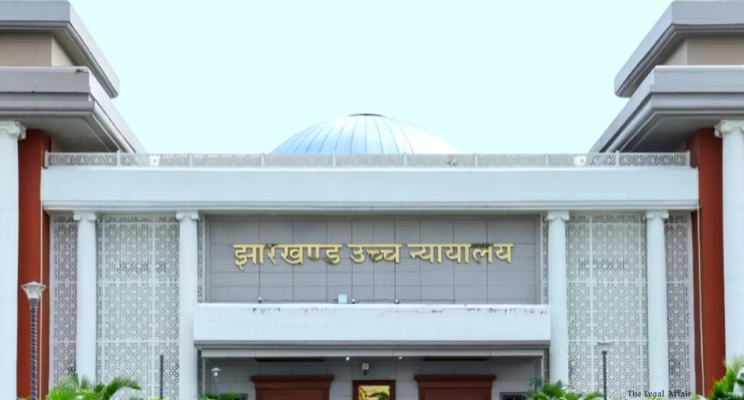
The case of Nageshwar Acharya and Another v. State of Jharkhand and Others (W.P. (PIL) No. 682 of 2025) was adjudicated by the Jharkhand High Court, where a Division Bench comprising Chief Justice M. S. Sonak and Justice Rajesh Shankar addressed a crucial issue concerning the misuse of public infrastructure by industrial establishments. The matter arose out of a public interest litigation highlighting severe road safety concerns and lack of adequate parking facilities around the Chaliyama Steel Plant (CSP) situated in the Saraikela-Kharsawan district. The petitioners brought to the Court’s attention that heavy vehicles associated with the plant were routinely occupying public roads and highways due to the absence of designated parking spaces within the plant premises, leading to congestion, frequent accidents, and serious risks to commuters and workers. The issue raised was not merely administrative but touched upon larger constitutional principles, including the right to life under Article 21 of the Constitution of India, equitable access to public resources, and the responsibility of industries to comply with statutory norms. The Court was thus called upon to examine whether commercial interests of industries could override the rights of ordinary citizens to safe and unobstructed use of public roads, and whether the State had fulfilled its obligations in ensuring compliance with applicable laws and safeguarding public safety.
Arguments on Behalf of the Petitioners:
The petitioners, represented by learned counsel, advanced a compelling case centered on the systemic negligence of both the industrial unit and the State authorities. They contended that the Chaliyama Steel Plant had failed to comply with mandatory statutory requirements, particularly Rule 41 of the Jharkhand Building Bye-laws, 2016, which obligates industrial establishments to provide adequate internal parking facilities for vehicles associated with their operations. The absence of such facilities, according to the petitioners, had resulted in heavy vehicles being parked indiscriminately on public roads, thereby converting these roads into de facto parking zones.
The petitioners argued that this unauthorized use of public roads significantly obstructed traffic flow and reduced the effective width of roads available to ordinary commuters. They emphasized that such practices not only caused inconvenience but also posed grave safety risks, as evidenced by frequent accidents in the area. The petitioners highlighted that the affected roads and highways were essential public infrastructure funded by taxpayers and intended for equitable use by all, not for the disproportionate benefit of a single industrial entity.
Another critical aspect of the petitioners’ argument was the lack of adequate road safety measures and medical infrastructure in the vicinity. They pointed out that the region lacked proper trauma care facilities to handle accident victims, thereby exacerbating the consequences of road mishaps. The petitioners submitted that the State’s failure to ensure such facilities amounted to a violation of the fundamental right to health, which is an integral component of the right to life under Article 21.
The petitioners further alleged that there was a pattern of inaction and non-enforcement by the authorities, allowing the industrial unit to continue its operations without adhering to statutory norms. They sought directions from the Court to ensure strict compliance with parking regulations, development of designated parking zones, and establishment of adequate medical facilities to address the ongoing crisis.
Arguments on Behalf of the Respondents:
The respondents, including the State authorities and representatives of the industrial unit, sought to counter the allegations by highlighting the measures already in place and the steps being considered to address the issues raised. It was submitted that certain parking facilities existed within or around the plant premises and that efforts were being made to regulate the movement and parking of heavy vehicles.
The respondents contended that the use of public roads by industrial vehicles was not inherently unlawful, as such roads are meant for public use, including commercial transport. They argued that the presence of heavy vehicles on these roads was a natural consequence of industrial activity and economic development in the region. It was further submitted that the authorities were aware of the challenges and were taking steps to improve infrastructure and ensure better traffic management.
In response to concerns regarding medical facilities, the State indicated that existing healthcare infrastructure was being utilized and that proposals for further development were under consideration. The respondents emphasized that policy decisions in such matters required careful planning and allocation of resources, and that immediate implementation of all suggested measures might not be feasible.
However, the respondents did not deny that certain gaps existed, particularly in relation to parking facilities and traffic regulation. They urged the Court to adopt a balanced approach that would allow industrial activity to continue while gradually addressing the concerns raised by the petitioners.
Judgment:
After carefully considering the submissions of both parties and examining the material on record, the Jharkhand High Court delivered a comprehensive judgment addressing the multifaceted issues raised in the petition. At the outset, the Court acknowledged the importance of industrial development and the role of industries in economic growth. However, it emphasized that such development must not come at the cost of public safety and equitable access to shared resources.
The Court observed that in the absence of designated parking facilities within the premises of the Chaliyama Steel Plant, heavy vehicles were being compelled to use public roads as makeshift parking areas. This practice, the Court noted, resulted in obstruction of traffic, reduction of available road space for other users, and increased risk of accidents. The Court held that such disproportionate use of public roads by an industrial entity was neither reasonable nor permissible.
Emphasizing the principle of equitable use, the Court stated that while industries are entitled to use public roads for transportation of goods, such use must be balanced and should not impose undue burden on other users. The Court underscored that public roads are constructed and maintained using public funds and are intended for the benefit of all citizens. Therefore, no single entity can claim a dominant or exclusive right over such infrastructure.
The Court also took note of the statutory obligations imposed under the Jharkhand Building Bye-laws, 2016, particularly Rule 41, which mandates the provision of adequate parking facilities within industrial premises. It held that non-compliance with these provisions by the industrial unit was a significant factor contributing to the current situation. The Court directed the State authorities to ensure strict enforcement of these statutory requirements and to take necessary steps to prevent the misuse of public roads.
In addition to addressing parking and traffic issues, the Court examined the broader implications of the situation on public health and safety. It reiterated that the right to health is an integral part of the right to life under Article 21 and that the State has a constitutional obligation to ensure access to adequate healthcare facilities. The Court found that the existing medical infrastructure in the region was insufficient to handle accident-related emergencies, particularly in an area with high industrial activity and traffic density.
Accordingly, the Court directed the State to consider the establishment of emergency trauma care facilities in the vicinity of the steel plant and along the affected highway corridor. It also suggested exploring the possibility of involving the industrial unit in the development of such facilities under its Corporate Social Responsibility obligations, thereby aligning corporate interests with public welfare.
The Court issued a series of detailed directions aimed at addressing the issues in a systematic and time-bound manner. These included strict enforcement of parking norms, development of designated parking and holding zones for heavy vehicles, regulation and upgradation of road infrastructure, installation of traffic control systems, and continuous monitoring to prevent unauthorized use of public roads. The Court also mandated coordination among various departments, including industry, health, and law enforcement, to ensure effective implementation of these measures.
Importantly, the Court required the State authorities to file a comprehensive compliance report within six months, detailing the steps taken to implement the directions. This provision was intended to ensure accountability and sustained oversight.
In conclusion, the judgment stands as a significant affirmation of the principle that public resources must be used equitably and responsibly. It highlights the need for a balanced approach that accommodates industrial growth while safeguarding the rights and safety of the general public. By addressing both infrastructural and systemic issues, the Court has laid down a framework for ensuring that development does not come at the expense of public welfare.