


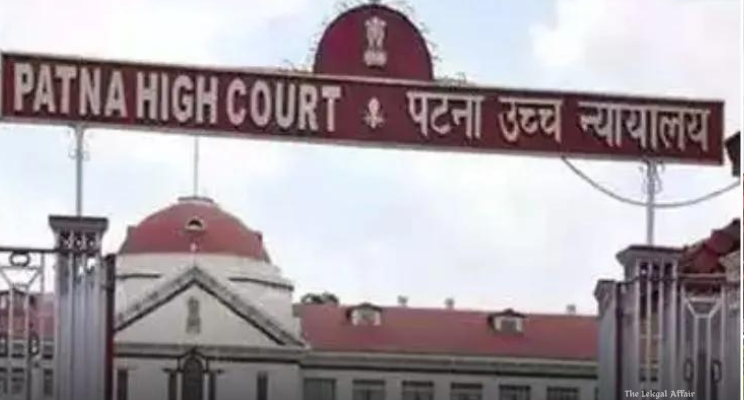
Introduction:
In Raj Kumar Jha v. State of Bihar and Ors. (Letters Patent Appeal No. 762 of 2025 arising out of CWJC No. 9626 of 2025), the Patna High Court revisited the well-settled principle that delay and laches can be fatal to claims in service jurisprudence. The matter came before a Division Bench comprising Chief Justice Sangam Kumar Sahoo and Justice Harish Kumar, where the appellant sought regularisation of his services along with consequential pensionary benefits. The appeal challenged an earlier order of a Single Judge dated 24.06.2025, which had disposed of the writ petition by granting liberty to the petitioner to approach the competent authority through a fresh representation. The case raised a critical question: whether repeated representations by a litigant can extend the limitation period and revive stale claims after an inordinate delay. The High Court answered this in the negative, emphasizing that courts cannot entertain claims brought after prolonged and unexplained delays, especially in service matters where timeliness is crucial.
Arguments by the Appellant:
The appellant, Raj Kumar Jha, advanced his case on the foundation of long service and alleged discrimination. He contended that he had been appointed as a Work Supervisor Grade II as early as 1973 and had continued in service until his retirement in 2012. According to him, his services were comparable to those of other similarly situated employees who had been granted regularisation by the State authorities. Despite this parity, he was denied regularisation, which, in turn, deprived him of pensionary and other post-retirement benefits.
The appellant argued that this denial constituted a clear case of discrimination, violating the principle of equality enshrined in constitutional jurisprudence. He asserted that once the State had regularised the services of similarly placed employees, it could not arbitrarily exclude him from the same benefit without justifiable reasons.
A significant part of the appellant’s argument revolved around his continued efforts to seek redressal. He maintained that he had not remained idle but had consistently pursued his claim by submitting representations to the authorities over the years. These representations, according to him, demonstrated his diligence and bona fide intent to secure justice.
He further contended that the delay in approaching the Court should not be viewed in isolation, as it was mitigated by his continuous engagement with the administrative machinery. In his view, the filing of representations indicated that the cause of action was recurring and had not become stale.
The appellant also sought to rely on equitable considerations, urging the Court to adopt a liberal approach in service matters involving retired employees. He emphasized that denial of pensionary benefits had severe financial consequences, particularly in old age, and therefore warranted sympathetic consideration.
Challenging the order of the Single Judge, the appellant argued that merely granting liberty to file a fresh representation did not adequately address his grievance. He contended that the Court ought to have adjudicated the matter on merits and granted the relief of regularisation along with consequential benefits.
Arguments by the Respondents:
The State of Bihar, represented by its counsel, strongly opposed the appeal and questioned its maintainability on the ground of delay and laches. The respondents argued that the appellant had approached the Court after an inordinate delay of nearly 13 years following his retirement in 2012, which by itself was sufficient to disentitle him from any relief.
The respondents emphasized that service matters require prompt action, and any claim brought after such a prolonged delay undermines administrative certainty and fairness. They argued that entertaining stale claims would open the floodgates of litigation and disrupt settled positions.
A key contention of the respondents was that mere submission of representations does not extend the limitation period. They argued that if such a principle were accepted, litigants could indefinitely prolong their claims by repeatedly filing representations, thereby defeating the purpose of limitation laws.
The respondents also pointed out that the appellant’s service record was not unblemished. They submitted that he had remained absent from duty for prolonged periods, amounting to more than 12 years. Such conduct, according to them, disentitled him from seeking equitable relief such as regularisation.
It was further argued that the appellant had failed to provide any satisfactory explanation for the delay in approaching the Court. The absence of a valid justification, coupled with his conduct during service, made his claim untenable.
The respondents relied on settled legal principles and precedents, including the judgment in P.S. Sadasivaswamy v. State of Tamil Nadu, to contend that an aggrieved employee must approach the Court within a reasonable time, typically within six months to one year of the cause of action.
On these grounds, the respondents urged the Court to dismiss the appeal and uphold the order of the Single Judge.
Court’s Judgment:
The Patna High Court, after considering the submissions of both parties, dismissed the Letters Patent Appeal, reaffirming the doctrine of delay and laches as a fundamental principle governing the exercise of writ jurisdiction.
At the outset, the Court framed the central issue as whether the appellant’s delayed approach could be condoned in light of his repeated representations. The Court answered this question in the negative, holding that mere filing of representations does not extend the limitation period or revive a stale cause of action.
The Bench placed significant reliance on the judgment of the Supreme Court in P.S. Sadasivaswamy v. State of Tamil Nadu, which laid down that in service matters, an aggrieved person must approach the Court within a reasonable time, generally within six months to one year. The Court reiterated that this principle is essential to ensure certainty and stability in administrative decisions.
In a strongly worded observation, the Court emphasized that delay defeats equity and that courts cannot come to the aid of indolent litigants who approach the judiciary at their own convenience. The Bench remarked that entertaining such belated claims would not only burden the judicial system but also cause injustice to others whose rights may be affected.
The Court observed that the appellant had approached the Court nearly 13 years after his retirement, which constituted an inordinate and unexplained delay. It held that such a delay, in itself, was sufficient to reject the claim at the threshold.
Addressing the appellant’s reliance on representations, the Court categorically held that such representations do not extend the limitation period. It noted that accepting this argument would render limitation laws meaningless and encourage litigants to bypass statutory timelines.
The Court also took note of the appellant’s service record, particularly his prolonged absence from duty for over 12 years. This factor further weakened his claim for regularisation and equitable relief.
The Bench found no illegality or perversity in the order of the Single Judge, who had merely granted liberty to the appellant to file a fresh representation. It held that the appellate court, in exercise of its jurisdiction, would not interfere with such an order in the absence of any manifest error.
Ultimately, the Court concluded that the appellant had failed to make out a case for interference. It held that the claim was barred by delay and laches and that no relief could be granted in such circumstances.
Accordingly, the Letters Patent Appeal was dismissed.