


Introduction:
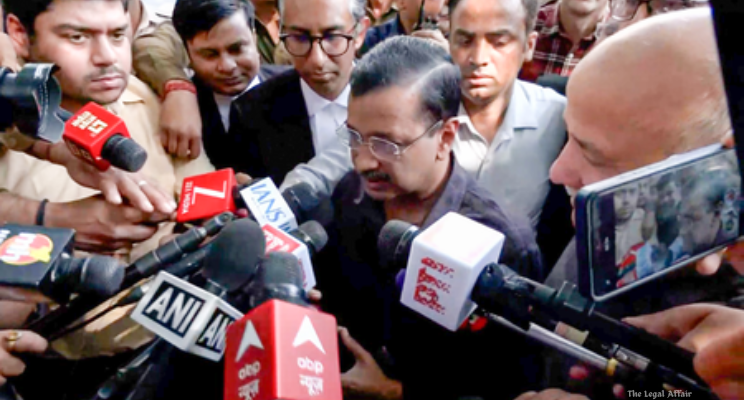
In a significant development in the much-debated excise policy case, a Delhi Court on Friday discharged former Delhi Chief Minister Arvind Kejriwal and senior Aam Aadmi Party leader Manish Sisodia along with 21 other accused persons, holding that the prosecution failed to establish even a prima facie case. The order was passed by Special Judge Jitendra Singh of the Rouse Avenue Courts, who, in strong terms, criticised the investigation conducted by the Central Bureau of Investigation (CBI). The Court observed that the voluminous chargesheet filed in the alleged liquor policy scam suffered from serious lacunae, internal contradictions, and misleading averments, none of which were supported by reliable witness statements or cogent material. Notably, the Court also directed initiation of a departmental inquiry against the Investigating Officer. The case arose from the Delhi Government’s 2021–22 excise policy, which was later withdrawn after allegations of irregularities and alleged undue benefits to private entities surfaced, prompting the Lieutenant Governor to order a probe. The prosecution had alleged that the policy was framed and implemented with corrupt intent, causing loss to the public exchequer while favouring select licensees. However, after prolonged incarceration of key political leaders—Sisodia for approximately 530 days and Kejriwal for around 156 days across two periods—the Court concluded that the material placed on record was insufficient to sustain the charges.
Arguments of the Prosecution:
The prosecution, led by the Central Bureau of Investigation, contended that the 2021–22 excise policy was not merely a policy reform but a carefully orchestrated conspiracy designed to grant undue advantages to selected private entities. According to the CBI, the policy was framed and implemented without requisite approvals of competent authorities and was tailored to favour certain licensees post tender. It was alleged that key decision-makers played instrumental roles in recommending changes that allegedly diluted safeguards and enabled private players to reap disproportionate benefits. The agency claimed that irregularities were embedded at multiple stages—formulation, approval, and implementation—thereby constituting offences under the Prevention of Corruption Act and the Indian Penal Code. With respect to Manish Sisodia, the CBI asserted that he was responsible for the formulation and execution of the policy and had actively participated in decisions that facilitated undue favours. The FIR alleged that he took decisions “without approval of the competent authority” and acted with intent to benefit particular licensees. The prosecution further claimed that his arrest on February 26, 2023, became necessary as he allegedly gave evasive replies during questioning and did not cooperate despite being confronted with incriminating material. Subsequently, the Enforcement Directorate also arrested him in connection with a money laundering case arising out of the same alleged scam. Regarding Arvind Kejriwal, who was formally arrested by the CBI on June 26, 2024, while in custody in the related money laundering case, the prosecution alleged that he was part of the larger conspiracy and had knowledge of and involvement in decisions that allegedly resulted in pecuniary benefits to private entities. The agency maintained that the chargesheet ran into thousands of pages and included documentary material, digital evidence, financial trails, and statements of witnesses which, according to it, established a chain of events pointing toward a criminal conspiracy. It was also argued that the excise policy, which sought to privatise liquor trade in the national capital, led to windfall gains for select private players and caused substantial losses to the public exchequer. The prosecution emphasised that the scale and nature of the alleged irregularities justified a full-fledged trial and that discharge at this stage would prematurely terminate proceedings in a matter involving serious allegations of corruption at high levels of governance.
Arguments of the Defence:
The defence, led by senior advocates including Rebecca M. John and Vivek Jain for Manish Sisodia, and N. Hariharan along with Mudit Jain for Arvind Kejriwal, mounted a strong challenge to the very foundation of the prosecution’s case. It was argued that the chargesheet, despite its voluminous nature, failed to disclose any concrete evidence linking the accused to acts of corruption or criminal conspiracy. The defence contended that policy formulation, even if later withdrawn, does not ipso facto constitute a criminal offence unless accompanied by clear evidence of mala fide intent and quid pro quo arrangements. They emphasised that the excise policy was framed as a reform measure aimed at boosting revenue and streamlining liquor trade, and mere administrative or procedural irregularities cannot be equated with criminal misconduct. On behalf of Sisodia, it was argued that there was no recovery of illicit proceeds, no document indicating personal gain, and no credible witness statement establishing his involvement in any conspiracy. The defence further highlighted that prolonged incarceration without trial, especially in absence of substantive evidence, amounted to a grave injustice. Regarding Kejriwal, it was contended that he was implicated without any cogent material and that no witness had directly attributed any unlawful act or decision to him. The defence pointed out inconsistencies within the prosecution’s own narrative, arguing that the chargesheet contained internal contradictions and selective interpretations of documents. It was further submitted that the prosecution relied heavily on assumptions and conjectures rather than legally admissible evidence. The defence argued that the standard at the stage of framing charges requires the existence of prima facie material indicating the commission of an offence, and in its absence, the accused are entitled to discharge. They stressed that the criminal justice system cannot be used as a tool for political vendetta and that the rule of law demands objective assessment of evidence rather than reliance on the gravity of allegations alone.
Court’s Judgment:
After examining the material placed on record, the Court concluded that the prosecution had failed to establish even a prima facie case against any of the accused persons. The Special Judge observed that the chargesheet, though running into thousands of pages, contained numerous lacunae and misleading averments not substantiated by witness statements or documentary evidence. The Court noted that several allegations were not supported by any material on record and that the internal contradictions in the chargesheet struck at the very root of the alleged conspiracy theory. While discharging Kuldeep Singh, who was arrayed as the first accused, the Court remarked that it was surprising that he was implicated in the absence of any material whatsoever against him. With respect to Manish Sisodia, the Court categorically held that there was no evidence demonstrating his involvement in any criminal conspiracy or illegal act connected to the excise policy, nor was there any recovery to suggest personal gain. As far as Arvind Kejriwal was concerned, the Court concluded that he had been implicated without any cogent material. The Judge underscored that attributing criminal conspiracy to a person holding a constitutional post without fundamental material is inconsistent with the rule of law. The Court emphasised that in criminal jurisprudence, suspicion—however strong—cannot take the place of proof, and the absence of foundational evidence renders continuation of proceedings untenable. Observing that the investigation suffered from serious defects, the Court directed initiation of a departmental inquiry against the CBI Investigating Officer. The order effectively discharged all 23 accused persons from the case, bringing a significant chapter of the high-profile excise policy controversy to a close at the trial court stage.