


Introduction:
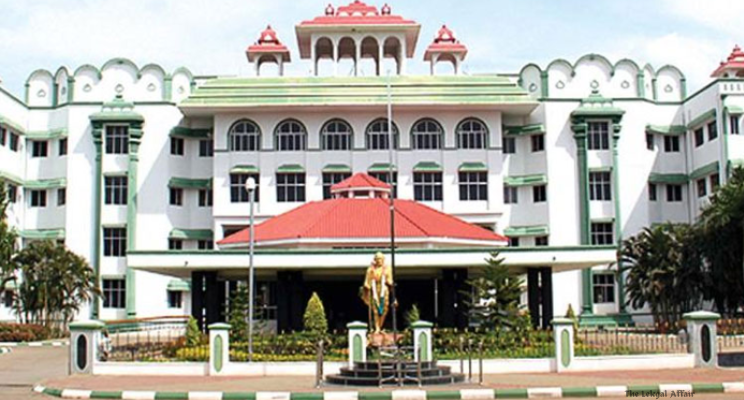
In Chellamanickam v. The Principal Secretary and Others, WP(MD). No.4303 of 2026, reported in 2026 LiveLaw Mad 86, the Madurai Bench of the Madras High Court presided over by Justice Krishnan Ramasamy dealt with a significant and sensitive question touching upon personal liberty, religious identity, and administrative law. The petitioner, Chellamanickam, approached the Court challenging the decision of the Tahsildar of Thiruppathur Taluk, Sivagangai District, who had rejected his application seeking issuance of a “No Caste No Religion” certificate. The rejection was primarily on the ground that there was no existing Government Order enabling issuance of such a certificate. The petitioner contended that he was entitled to such recognition, whereas the State maintained that no such certificate could be granted in the absence of statutory backing. During the course of hearing, the Court raised a crucial question regarding whether the petitioner had formally relinquished his religion in accordance with established rites. The petitioner candidly admitted that he had not done so. This admission formed the fulcrum of the Court’s reasoning. The case thus presented a nuanced interplay between constitutional freedoms, individual identity, administrative procedure, and the legal consequences of religious affiliation. The decision not only addressed the petitioner’s grievance but also clarified the procedural and substantive requirements for seeking recognition as a person without caste or religion within the framework of existing legal norms.
Arguments:
The petitioner’s primary contention was that he was born to parents belonging to the Hindu religion but sought to identify himself as a person without caste and without religion. He submitted that his application for a “No Caste No Religion” certificate was rejected by the Tahsildar solely on the ground that there was no Government Order providing for issuance of such a certificate. According to him, this rejection was arbitrary and unsustainable in law. The petitioner argued that in a constitutional democracy founded upon the principles of liberty, equality, and secularism, an individual must have the autonomy to choose not to identify with any caste or religion. He asserted that the absence of a specific Government Order should not defeat his fundamental right to freedom of conscience, as guaranteed under Article 25 of the Constitution of India. It was his implicit case that identity is a matter of personal choice and that the State machinery ought to recognize and record such self identification.
On the other hand, the State, represented by Government Advocate Mrs. S. Jeyapriya, contended that the application was rightly rejected. The State’s stand was twofold. First, there was admittedly no Government Order or statutory framework authorizing the issuance of a “No Caste No Religion” certificate. In the absence of such enabling provisions, the Tahsildar could not have acted beyond his jurisdiction. Administrative authorities, it was argued, are creatures of statute and can exercise only such powers as are conferred upon them. Secondly, the State highlighted that the petitioner continued to belong to the Hindu religion by birth and had not undertaken any formal act of relinquishment. When queried by the Court, the petitioner admitted that he had not renounced his religion in accordance with Hindu rites or any legally recognized process. Therefore, the State submitted that without relinquishing his religion, the petitioner could not seek a certificate declaring him as belonging to no religion.
The Court’s questioning revealed the crux of the issue. The Judge sought clarification as to whether the petitioner had performed any formal act indicating renunciation of his faith. Upon receiving a negative answer, the Court examined the logical and legal consequences of such a position. The petitioner’s request effectively sought official recognition of a status that contradicted his continued religious affiliation. The State argued that recognition of a “No Caste No Religion” status necessarily presupposed the absence of religious identity. In the absence of proof of relinquishment, such a declaration would be factually and legally inconsistent. The State also emphasized that policy considerations and administrative uniformity required a clear legal basis before issuing any certificate that could have implications for records, benefits, and social classification.
Judgment:
Justice Krishnan Ramasamy, after hearing the submissions of both sides, held that the petitioner’s request could not be granted in the circumstances presented. The Court categorically observed that unless and until the petitioner had relinquished his religion as per Hindu rites, his request for issuance of a “No Caste No Religion” certificate could not be considered. The Court reasoned that the issuance of such a certificate presupposed a complete dissociation from religious identity. In the absence of any proof of relinquishment, there was no question of directing the authorities to issue the certificate.
The Court underscored that administrative authorities cannot be compelled to act in a manner contrary to existing rules or in the absence of statutory backing. When the State contended that there was no Government Order providing for such a certificate, the Court did not dispute that position. However, rather than dismissing the petitioner’s claim outright without recourse, the Court adopted a balanced approach. It granted liberty to the petitioner to relinquish his religion in accordance with established procedures and thereafter approach the authorities with an application supported by proof of such relinquishment. The Court further directed that in such an event, the authorities must consider the application in accordance with existing rules, or frame appropriate rules if necessary.
This direction reflects a nuanced judicial approach. The Court did not negate the petitioner’s freedom of conscience or the possibility of identifying as a person without caste or religion. Instead, it clarified that such a status cannot be claimed in abstraction while retaining formal religious identity. The legal system requires objective proof of change in status, especially where such status may have administrative and legal consequences. The Court’s insistence on relinquishment aligns with the principle that legal recognition must correspond with factual reality. If a person continues to belong to a religion by birth and has not undertaken any act of renunciation, the State cannot be compelled to record him as belonging to no religion.
The judgment thus reinforces the importance of procedural compliance in matters relating to personal status. It balances individual liberty with administrative legality. By granting liberty to the petitioner to take necessary steps and reapply, the Court preserved his constitutional rights while upholding the rule of law. The decision clarifies that self declaration, without corresponding legal action, is insufficient to secure official certification of a status that has significant social and legal implications.
In essence, the Court held that freedom of conscience includes the freedom to renounce religion, but such renunciation must be demonstrable and in accordance with recognized procedures. Only thereafter can the State be called upon to recognize and certify a change in status. The writ petition was thus disposed of with liberty, rather than being allowed outright.