


Introduction:
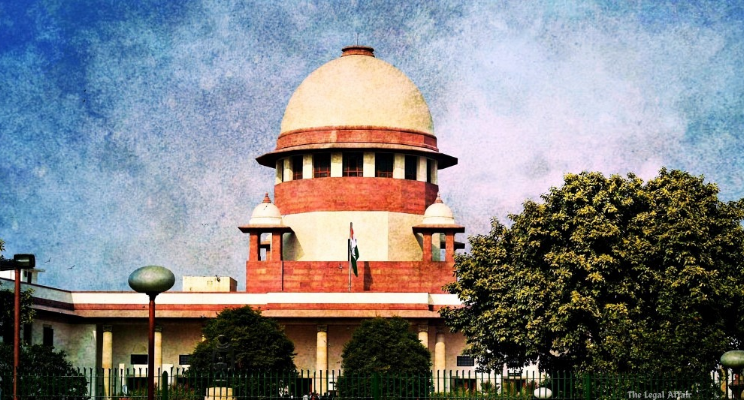
The Supreme Court of India has once again reinforced the foundational philosophy of the Arbitration and Conciliation Act, 1996, namely that courts must exercise minimal judicial intervention in arbitral proceedings and must not assume powers that the statute does not expressly confer. In a significant judgment delivered by a Bench comprising Justice J.B. Pardiwala and Justice K.V. Viswanathan, the Court set aside a part of the Bombay High Court’s order which had declared certain arbitral proceedings a nullity while deciding an application for substitution of an arbitrator under Section 15(2) of the Arbitration Act.
The appeal arose from a complex commercial dispute between Ankhim Holdings Pvt. Ltd. and another, on one side, and Zaveri Construction Pvt. Ltd., on the other, concerning rights and obligations flowing from a partnership formed for execution of a Slum Rehabilitation Authority (SRA) project. What began as a contractual dispute evolved into a layered legal controversy involving arbitration, insolvency proceedings under the Insolvency and Bankruptcy Code, 2016 (IBC), and the limits of judicial authority during arbitral supervision.
The Supreme Court was called upon to examine whether, while exercising jurisdiction under Section 15(2) of the Arbitration Act for appointment of a substitute arbitrator, a High Court could go further and invalidate past arbitral proceedings on the ground that they were conducted during a statutory moratorium under the IBC. Answering this in the negative, the Court held that such an approach was impermissible, contrary to statutory design, and destructive of the objective of the Arbitration Act.
Arguments on Behalf of the Appellants:
The appellants contended that the Bombay High Court had grossly exceeded its jurisdiction while deciding an application under Section 15(2) of the Arbitration and Conciliation Act, 1996. It was submitted that the statutory scope of Section 15(2) is narrow and clearly defined: once the mandate of an arbitrator terminates, the Court’s role is confined to appointing a substitute arbitrator, who must continue the proceedings from the stage already reached, unless the parties agree otherwise.
The appellants argued that the High Court had no authority under the Act to examine the validity of earlier arbitral proceedings, let alone declare them a nullity. Such powers, it was submitted, are either vested in the arbitral tribunal itself under the principle of kompetenz-kompetenz, or can be exercised only in specific statutory proceedings such as an appeal under Section 37 or a challenge to the award under Section 34.
It was further argued that the High Court’s interference directly violated the principle of minimal judicial intervention, which is the cornerstone of modern arbitration law. The appellants submitted that once arbitral proceedings are pending, courts must refrain from stepping into the merits or procedural legality of the arbitration, except where expressly permitted by statute. By setting aside interim orders passed under Section 17 and declaring the proceedings between March and August 2022 as void, the High Court had effectively exercised appellate jurisdiction without statutory sanction.
On the issue of insolvency and moratorium, the appellants submitted that the arbitral tribunal had already considered and rejected the objection based on Section 14 of the IBC, holding that arbitration could proceed once the Interim Resolution Professional was no longer in control. This decision, they argued, could not have been indirectly overturned by the High Court at the stage of substituting the arbitrator.
Relying on precedents including Interplay between Arbitration Agreements and Insolvency Proceedings and Official Trustee v. Sachindra Nath Chatterjee, the appellants argued that a court cannot assume jurisdiction merely because it perceives an error or illegality. Jurisdiction must be expressly conferred by law, and where none exists, judicial restraint is mandatory.
Arguments on Behalf of the Respondent:
The respondent supported the Bombay High Court’s reasoning and argued that the arbitral proceedings conducted between March 2022 and August 2022 were inherently void, as they took place during a period when a statutory moratorium under the Insolvency and Bankruptcy Code was in force. According to the respondent, Section 14 of the IBC imposes an absolute bar on continuation of proceedings against a corporate debtor once insolvency or liquidation proceedings commence.
It was submitted that any orders passed by the arbitrator during such a moratorium were non est in law, and the High Court was justified in declaring them a nullity to prevent perpetuation of an illegality. The respondent contended that courts are not powerless spectators when faced with proceedings conducted in violation of a statutory mandate, particularly one enacted in public interest like the IBC.
The respondent further argued that the High Court, while exercising jurisdiction under Section 15(2), was not acting in isolation but was seized of the entire factual matrix, including the impact of insolvency proceedings on arbitration. It was submitted that allowing the substitute arbitrator to continue from an illegal stage would have caused irreparable prejudice and confusion, thereby undermining the integrity of the arbitral process.
It was also contended that the arbitrator’s rejection of the moratorium objection and the interim orders permitting sale of flats were fundamentally flawed and beyond jurisdiction. In such circumstances, the respondent argued, the High Court’s intervention was necessary to restore legality and ensure that the arbitration proceeded on a lawful footing.
The respondent urged the Supreme Court to adopt a purposive approach, balancing the objectives of the Arbitration Act with the mandatory provisions of the IBC, and to uphold the High Court’s decision as a corrective measure rather than an overreach.
Court’s Analysis and Judgment:
The Supreme Court undertook a detailed examination of the statutory framework of the Arbitration and Conciliation Act, 1996, with particular emphasis on Sections 5, 15, 17, and 37, and reiterated that the Act is designed to limit judicial interference at every stage of the arbitral process. Justice Pardiwala, speaking for the Bench, observed that Section 15(2) confers a specific and limited jurisdiction on the court: to appoint a substitute arbitrator when the mandate of the existing arbitrator terminates.
The Court held that the “proper and legal course” for the High Court was to appoint a substitute arbitrator and allow the proceedings to continue from the stage already reached. By declaring the earlier proceedings a nullity, the High Court had assumed a power not conferred by the Act, thereby violating the express legislative mandate of minimal judicial intervention under Section 5.
The Bench was particularly critical of the High Court’s decision to set aside interim orders passed under Section 17, noting that such orders can be interfered with only through an appeal under Section 37. The Court observed that permitting indirect interference at the stage of arbitrator substitution would render the statutory appeal mechanism redundant and open the floodgates for judicial intrusion at every procedural stage.
Relying on Official Trustee v. Sachindra Nath Chatterjee (1968), the Court reiterated the settled principle that absence of jurisdiction cannot be cured by perceived necessity or equitable considerations. If a court is not vested with jurisdiction to decide a particular issue, it is impermissible for it to do so, regardless of the merits of the objection.
On the interplay between arbitration and insolvency, the Court clarified that while the IBC undoubtedly has overriding effect, disputes relating to the impact of moratorium on arbitral proceedings must be resolved through appropriate statutory channels, not through collateral adjudication under Section 15(2). The Court noted that the arbitrator had already ruled on the moratorium objection, and any challenge to that determination had to be made in accordance with the remedies provided under the Arbitration Act.
The Supreme Court concluded that the High Court’s approach had frustrated the very objective of the Arbitration Act by unsettling completed proceedings and prolonging the dispute. Accordingly, the appeal was partly allowed. The Court upheld the High Court’s decision to appoint a substitute arbitrator but set aside the portion of the order declaring the arbitral proceedings between 17 March 2022 and 25 August 2022 a nullity. The substitute arbitrator was directed to continue the proceedings in accordance with law.
Importantly, the Court clarified that its observations were confined to the issue of jurisdiction and should not be construed as an opinion on the merits of the dispute or the validity of the arbitrator’s interim orders, which would be decided in appropriate proceedings.