


Introduction:
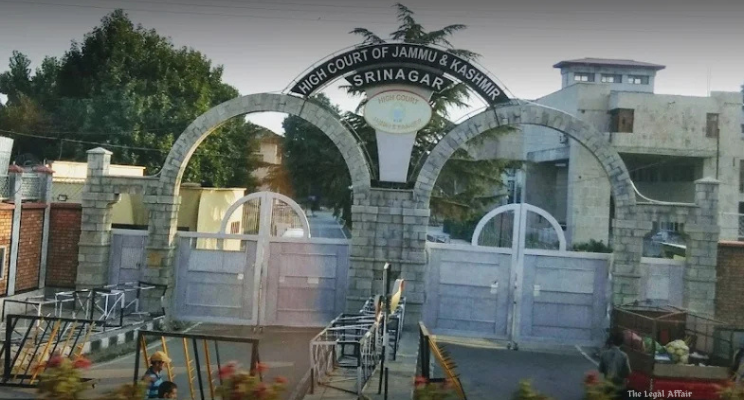
The Jammu and Kashmir and Ladakh High Court, in Mushtaq Ahmad Bakshi and Connected Matters, reported as 2026 LiveLaw (JKL), delivered a landmark ruling reaffirming a foundational principle of criminal jurisprudence that corruption does not disappear merely because the statute under which it was facilitated is later declared unconstitutional. The batch of eleven petitions was decided by Justice Sanjay Dhar, who was called upon to examine whether criminal prosecutions initiated by the Central Bureau of Investigation in relation to large-scale irregularities under the Jammu and Kashmir State Lands (Vesting of Ownership to the Occupants) Act, 2001, popularly known as the Roshni Act, could legally survive after the Act itself had been struck down as unconstitutional and void ab initio. The petitioners, comprising public servants and private beneficiaries, sought quashing of FIRs and charge-sheets primarily on the ground that once the Roshni Act had been declared non est in the eyes of law by the Division Bench in Professor S.K. Bhalla v. State of J&K (2020), all actions taken under it stood obliterated, including criminal proceedings. The High Court rejected this sweeping proposition and held that criminal liability for abuse of official position, conspiracy, and conferment of undue benefit under the Jammu and Kashmir Prevention of Corruption Act survives independently of the fate of the parent statute. The judgment is significant not only for Roshni-related cases but also for its wider implications on how courts treat corruption embedded within invalid legislative or executive frameworks.
Arguments of the Petitioners:
The petitioners contended that the foundation of all criminal proceedings lay exclusively in the Roshni Act, which had been declared unconstitutional and void from its inception by the Division Bench in Professor S.K. Bhalla. They argued that once a statute is declared void ab initio, it must be deemed never to have existed in the eyes of law, and consequently, all actions taken under it, whether administrative or criminal, must collapse automatically. On this premise, it was submitted that FIRs, charge-sheets, and prosecutions arising from implementation of the Roshni Act were legally unsustainable and amounted to an abuse of the process of law. The petitioners further asserted that since the Division Bench had directed retrieval of the land illegally vested under the Roshni Act, no loss ultimately survived to the State, and therefore the essential ingredient of wrongful loss, which underpins offences of corruption, stood extinguished. Emphasis was also placed on Article 20(1) of the Constitution, with the argument that prosecuting the petitioners after the Roshni Act had been invalidated amounted to retrospective criminalisation for acts which were not offences under a valid law at the time of commission. According to the petitioners, the Roshni Act provided the legal cover under which land vesting took place, and once that cover was judicially removed, the actions taken pursuant thereto could not retrospectively be branded as criminal. It was further argued that mere implementation of a statute, even if later struck down, could not expose public servants to criminal prosecution, particularly when they acted in accordance with the law as it stood at the relevant time. On these grounds, the petitioners urged the Court to exercise its inherent jurisdiction to quash the proceedings at the threshold.
Arguments of the Respondent and the CBI:
Opposing the petitions, the Central Bureau of Investigation and the State argued that the criminal prosecutions were not founded on alleged violations of the Roshni Act but on distinct and independent offences under the Jammu and Kashmir Prevention of Corruption Act. It was submitted that the Division Bench in Professor S.K. Bhalla had not only struck down the Roshni Act but had also recorded damning findings regarding large-scale abuse of official position, arbitrary pricing, free transfers of valuable State land, and deep-rooted official connivance, which warranted criminal investigation and prosecution. The respondents contended that declaring a statute unconstitutional does not confer immunity on individuals who exploited that statute as a vehicle for corruption. They emphasized that bribery, illegal gratification, criminal conspiracy, and misuse of official position are offences under the Prevention of Corruption Act, which continues to remain valid and enforceable. The respondents further argued that restitution of land to the State does not erase the commission of criminal offences, as criminal law focuses on culpable conduct and intent rather than merely on the ultimate outcome or recovery of benefits. On the Article 20(1) plea, it was argued that the petitioners were not being prosecuted for an offence created by the Roshni Act but for offences under the Prevention of Corruption Act, which was very much in force at the time of the alleged acts. The respondents also highlighted that the Division Bench’s directions for CBI investigation and prosecution were explicit and binding, and could not be nullified indirectly through quashing petitions. It was submitted that while bona fide actions could be protected during trial, blanket quashing at the threshold would defeat the very purpose of the investigation directed by the constitutional court.
Court’s Judgment:
Justice Sanjay Dhar, after an extensive examination of the legal issues, decisively rejected the petitioners’ attempt to equate invalidation of the Roshni Act with automatic extinction of criminal liability. The Court held that corruption cannot be legitimised or erased merely because the statute under which it was committed has been declared unconstitutional. In strong terms, the Court observed that accepting the petitioners’ argument would lead to absurd and dangerous consequences, remarking that to suggest a public servant who accepted bribe or illegal gratification while implementing the Roshni Act could go scotfree merely because the Act was struck down would be “illogical and preposterous.” The Court clarified that the prosecutions were not for any offence under the Roshni Act but for offences defined under the Prevention of Corruption Act, which continues to be valid law. Even if the Roshni Act is deemed never to have existed, the Court held, abuse of official position, conspiracy, and conferment of undue benefit remain criminal acts punishable under the corruption law. Addressing the argument relating to absence of loss to the State, the Court categorically held that restitution of benefits does not obliterate criminal offences, observing that once an offence is committed, subsequent recovery or restoration cannot wipe out culpability. On the Article 20(1) plea, the Court held the argument to be wholly misconceived, noting that there was no retrospective criminalisation involved, as the offences alleged were under a law that was in force at the time of commission and continues to remain so. Justice Dhar further underscored that the directions issued by the Division Bench in Professor S.K. Bhalla mandating CBI investigation and prosecution were binding and could not be diluted at the threshold by invoking inherent jurisdiction. At the same time, the Court struck a careful balance by clarifying that mere implementation of the Roshni Act would not automatically attract criminal liability and that public servants who acted bona fide and strictly in accordance with the law as it stood could not be prosecuted. However, where the material collected disclosed misuse of official position, conspiracy, or conferment of undue benefit, criminal proceedings were justified and could not be quashed. The Court thus upheld the continuation of CBI prosecutions in principle and proceeded to examine each petition on its individual merits.