


Introduction:
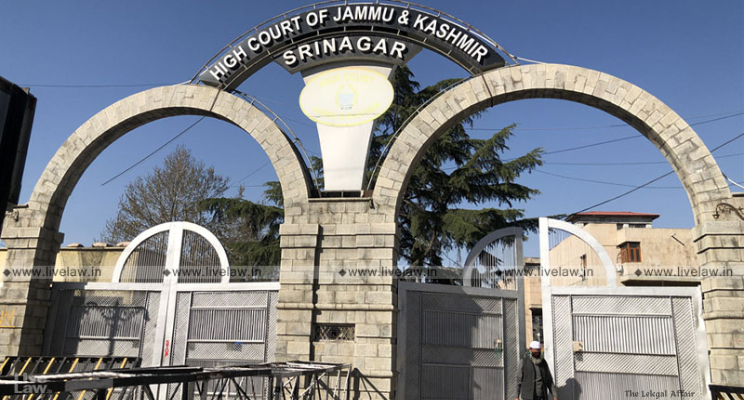
The Jammu and Kashmir and Ladakh High Court in Om Prakash and Others versus Bodh Raj and Others (2026) examined the legality of a revisional court order which had set aside a Sub Divisional Magistrate’s final order passed under Section 133 of the Code of Criminal Procedure and had remanded the matter for fresh consideration, the case arose from a complaint by fifteen residents of village Agore in Tehsil Bhalwal who alleged that two shop owners were storing and unloading large quantities of wheat fodder in a residential locality which caused dust pollution and public nuisance affecting health and quality of life, the residents approached the Sub Divisional Magistrate under Section 133 CrPC seeking immediate restraint on the commercial activity, the SDM initially issued a conditional order directing stoppage of unloading activity in the residential area and later made the order absolute on October 28 2016, the shop owners challenged this final order before the Additional Sessions Judge who found that mandatory procedural steps under Sections 133 and 137 CrPC were not followed and therefore remanded the matter to the SDM to restart proceedings from the stage of show cause, aggrieved by this remand the residents approached the High Court under Section 482 CrPC seeking restoration of the SDM’s final order and contending that public nuisance had already been established and no useful purpose would be served by reopening the matter.
Arguments:
The petitioners before the High Court argued that the purpose of Section 133 CrPC is to provide swift relief against public nuisance and that hyper technical procedural objections should not defeat substantive justice especially when environmental and health concerns of residents are involved, they contended that the SDM had applied his mind to the issue and had rightly made the conditional order absolute after considering the reply of the shop owners who had admitted to carrying on the fodder business for several decades, the petitioners submitted that the revisional court had unnecessarily interfered with a well meaning and protective order which sought to preserve public health and residential tranquility, on the other hand the respondents supported the revisional court’s findings and argued that proceedings under Chapter X CrPC are special in nature and must strictly follow statutory steps including issuance of conditional order proper opportunity to deny existence of public right and compliance with inquiry procedure under Section 137, they contended that they had taken preventive measures like covering fodder with tarpaulin and that their long standing business could not be restrained without due process, it was also pointed out that the SDM had not properly conducted the inquiry mandated by law and had mechanically converted the conditional order into a final one, therefore the remand was necessary to protect procedural fairness and rule of law.
Judgment:
Justice Rahul Bharti dismissed the petition and upheld the revisional court’s order holding that compliance with Chapter X of CrPC is mandatory and cannot be bypassed even if the order appears to be well intentioned or aimed at addressing public grievance, the Court held that if the statutory procedure prescribed under Sections 133 to 143 CrPC is not followed then any final order passed thereunder cannot be sustained in law, the Court observed that the revisional court had rightly noticed procedural lacuna and had lawfully directed the SDM to recommence proceedings from the stage of show cause which is consistent with statutory mandate, the High Court further remarked that the petitioners should have participated in the remanded proceedings before the SDM instead of rushing to the High Court to salvage an order which lacked procedural foundation, however while affirming the remand the Court expanded the scope of inquiry by directing the SDM to also verify whether the shops and storage sheds from which fodder was being stocked were constructed on State land or private proprietary land, the Court clarified that if any encroachment upon State land is found then the authorities would be well within their rights to remove such encroachment irrespective of the nuisance proceedings, significantly the Court directed that fresh notices must be issued to all concerned and that even if the original complainants do not appear the SDM shall still be bound to verify land status and take the matter to its logical end thereby ensuring that public property protection and nuisance control both proceed according to law, thus the Court reinforced that procedural safeguards are not technical hurdles but essential components of fair administration and that public interest objectives must be pursued strictly within legal framework.