


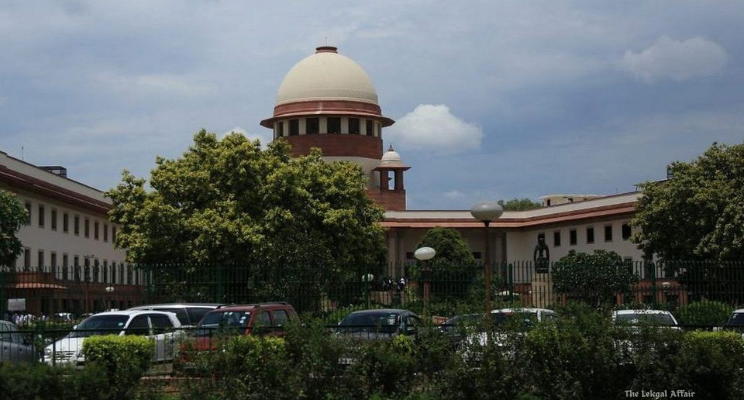
Introduction:
In a significant ruling touching upon the delicate balance between individual privacy and the powers of investigative agencies, the Supreme Court of India declined to grant interim protection to Kolkata businessman Jitendra Mehta, who had sought to restrain the Enforcement Directorate (ED) from conducting forensic examination of his seized mobile phone, contending that unrestricted access to his personal digital data would violate his fundamental right to privacy under Article 21 of the Constitution; the matter was heard by a Bench comprising Chief Justice of India Surya Kant, Justice Joymalya Bagchi, and Justice Vipul Pancholi, arising out of a writ petition challenging both the seizure of his iPhone 15 Pro Max during a search conducted on 08 January 2026 and the subsequent summons issued under Section 50 of the Prevention of Money Laundering Act, 2002 (PMLA) requiring him to remain present during forensic examination of the device, with the petitioner asserting that there were no statutory safeguards regulating extraction of digital data, that no predicate offence had been registered against him, and that the seizure amounted to a fishing and roving inquiry contrary to constitutional protections, while the Court, however, was not persuaded to stay the investigation at the interim stage and issued notice limited to examining the nature of allegations against the petitioner or his associates, observing that lawful investigation cannot be thwarted merely on apprehension of privacy breach, especially when safeguards against public disclosure of irrelevant data already exist within constitutional discipline.
Arguments on Behalf of the Petitioner:
Senior Advocate C.A. Sundaram, appearing for the petitioner, mounted a multifaceted constitutional challenge primarily anchored in the right to privacy as recognised in Justice K.S. Puttaswamy v. Union of India, arguing that digital devices today contain the most intimate details of a person’s life—personal communications, photographs, professional data, financial information, and confidential contacts—and therefore any unrestricted extraction of such data without a narrowly tailored framework amounts to disproportionate intrusion into personal liberty; it was contended that while Section 17 of the PMLA empowers search and seizure, it does so only upon the officer having “reason to believe” based on material in possession, and that such power cannot be converted into a general exploratory mission in the hope of discovering something incriminating, particularly when the petitioner was not even named in any scheduled offence nor accused in any predicate crime, making the seizure speculative rather than evidence-driven; Sundaram further submitted that the summons itself indicated that a full forensic examination would be conducted, effectively granting the agency access to the entire digital universe of the petitioner without any keyword limitation, relevance filter, or judicial oversight, which, according to him, violated not only privacy but also procedural fairness; reliance was placed on earlier interim orders passed by coordinate benches of the Supreme Court where agencies had been restrained from accessing seized digital devices or directed to adopt filtered or supervised extraction methods, even in cases where the individuals concerned were accused persons, and therefore, denying similar interim protection to a person who was not even accused amounted to unequal treatment; it was also argued that once forensic extraction is completed, the writ petition would become infructuous, and therefore interim protection was essential to preserve the very subject matter of constitutional adjudication; additionally, Sundaram objected to what he perceived as judicial presumption of guilt, emphasizing that constitutional courts must operate on presumption of innocence and cannot justify invasive procedures merely on the possibility that incriminating material may be found; lastly, it was urged that at the very least, the ED should be directed to disclose the basis of seizure and restrict examination to specific parameters relevant to the alleged investigation concerning third parties, so that privacy intrusion remains proportionate and constitutionally sustainable.
Arguments on Behalf of the Enforcement Directorate and Court’s Interventions:
Although detailed submissions of the ED were not extensively recorded at this stage, the Court’s observations reflected the institutional position that investigative agencies are entitled to examine material lawfully seized during the course of investigation, and that digital devices, far from being immune, may often constitute the most critical evidence in economic offences involving layered transactions, shell entities, and electronic communications; Chief Justice Surya Kant repeatedly questioned where the violation of privacy lay if the investigation was being conducted lawfully, observing that privacy does not create a protective wall against legitimate criminal investigation, and clarifying that while irrelevant personal data cannot be made public or form part of prosecution material, the agency cannot be prevented from accessing the device merely because it contains private information; the Court also distinguished between misuse of data and access to data, stating that constitutional protection primarily operates against wrongful disclosure and misuse, not against lawful examination for investigative purposes; responding to the argument that no ECIR or predicate offence existed against the petitioner, Justice Joymalya Bagchi clarified that an ECIR is linked to the offence, not to individuals, and that search powers under the PMLA are not contingent upon the person searched being formally accused; the Bench also noted that unlike arrest under Section 19 of the PMLA, where reasons must be communicated, there is no statutory mandate requiring disclosure of reasons for search to the person searched, and therefore absence of such disclosure cannot invalidate seizure at the threshold; the Court further remarked that serious allegations involving large sums of money were under investigation and that a mobile phone could be a strong piece of incriminating evidence, particularly in financial crime networks where digital trails often establish linkages between multiple actors; while acknowledging that in certain cases protection had been granted on a case-to-case basis, the Bench clarified that such orders cannot be treated as binding precedents mandating blanket restraints on digital examination, especially when the facts and degree of suspicion vary across cases.
Court’s Judgment and Observations:
After considering the submissions, the Supreme Court declined to grant any interim protection restraining forensic examination of the seized mobile phone, holding that at the present stage it was not persuaded that lawful investigation should be halted merely on speculative apprehensions of privacy violation; Chief Justice Surya Kant made it clear that constitutional courts are fully capable of protecting innocent citizens, even suo motu if required, but such protection cannot extend to shielding potential evidence of wrongdoing, stating in substance that privacy cannot be invoked as a cloak to obstruct investigation; the Court observed that if any information unrelated to the alleged offence or to the petitioner’s associates is later sought to be used or disclosed, the petitioner would be entitled to challenge such action and seek appropriate remedies, but pre-emptively preventing examination of the device was neither legally justified nor practically feasible in complex financial investigations; rejecting the plea that absence of allegations against the petitioner should bar seizure, the Court emphasized that association with persons under investigation and possession of potentially relevant evidence can justify investigative scrutiny even if the individual is not yet formally accused; the Bench also declined the request to impose keyword-based or parameter-restricted examination at the interim stage, indicating that such procedural refinements, if warranted, could be considered after examining the nature of allegations and the context of investigation; however, recognizing that the petition raised important questions regarding absence of statutory guidelines governing digital data extraction, the Court issued notice and tagged the matter with other pending petitions raising similar constitutional issues, making it clear that the larger question of privacy safeguards in digital searches remains open for authoritative determination; the Court directed that notice be returnable on 27 January 2026 specifically to ascertain the nature of allegations attributed to the petitioner or his associates, observing that the petition had disclosed only selective information and that fuller factual context was necessary before framing systemic safeguards; thus, while declining interim relief, the Court did not dismiss the petition and left the substantive constitutional questions alive for future adjudication, carefully maintaining equilibrium between investigative necessity and civil liberties.