


Introduction:
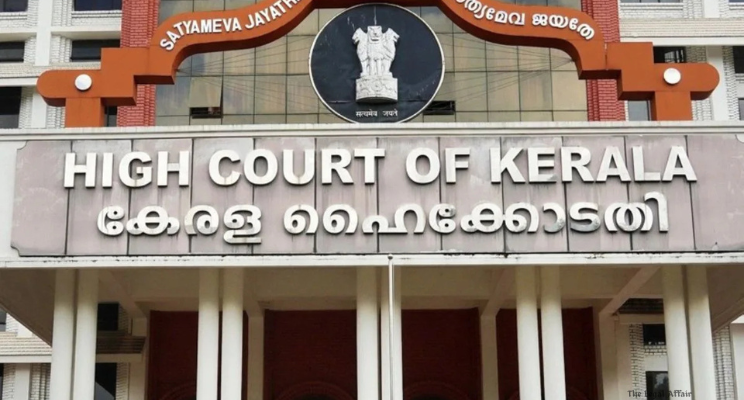
The Kerala High Court, through a Division Bench comprising Justice Raja Vijayaraghavan V and Justice K. V. Jayakumar, passed an important interim order on January 16 in the ongoing proceedings arising from allegations of embezzlement of ₹40 lakh from a petrol pump functioning at Nilakkal, the base camp for pilgrims visiting the Sabarimala temple, while hearing the matter titled Joint Director v. The Secretary, Travancore Devaswom Board in DBAR No. 2 of 2018, wherein the Court has been monitoring issues concerning financial transparency and administrative accountability within the Travancore Devaswom Board, the statutory body managing several temples in Kerala, including Sabarimala. In the present phase of proceedings, the Court had earlier issued directions for comprehensive digitisation of all temple accounts to prevent future financial irregularities and to ensure institutional transparency, following which the Travancore Devaswom Board informed the Court that it had resolved to engage Kerala State Information Technology Infrastructure Limited (KSITIL) as a technical consultant for preparing a Request for Proposal (RFP) and facilitating the selection of an IT service provider to execute the digitisation project. Based on this disclosure, and considering the scale of financial oversight and public interest involved, the Court impleaded KSITIL as an additional respondent to the proceedings, noting that the proposed digitisation initiative has far-reaching implications for governance, public faith, and institutional accountability of temple administration, particularly given the context of prior allegations of financial misappropriation at sensitive pilgrimage locations.
Arguments:
On behalf of the Travancore Devaswom Board, it was submitted by learned counsel that in compliance with the earlier judicial directions mandating digitisation of temple accounts, the Board had undertaken administrative deliberations and resolved to entrust KSITIL with the task of preparing the Request for Proposal as a technical consultant, following which an IT service provider would be selected through a transparent bidding process, and that the Board proposed to complete the selection and award the contract by April 30, 2026, thereby ensuring that the digitisation process would be completed in a structured and accountable manner. It was further implied that KSITIL, being a government-backed infrastructure entity with experience in implementing IT systems for public sector undertakings, would be suitably positioned to guide the Board through technical specifications, vendor qualification criteria, data security protocols, and integration frameworks required for enterprise-level digitisation. However, the Court, while acknowledging the administrative steps taken, expressed reservations regarding whether KSITIL indeed possessed the specific domain expertise, institutional experience, and technological depth required to design and structure an enterprise-grade RFP capable of addressing the complex operational realities of a temple administration system involving multiple temples, varied revenue streams, cash-based transactions, audit integration, and long-term data governance. The Bench highlighted that digitisation in such sensitive institutions cannot be reduced to routine software procurement and requires careful planning to avoid system vulnerabilities, operational failures, and governance blind spots. Though no opposing private party arguments were recorded at this stage, the Court’s own observations reflected serious concern that delegating such a critical reform exercise without verifying the technical preparedness of the implementing agency could undermine the very purpose of judicial intervention aimed at preventing future financial misconduct and enhancing transparency in public religious institutions.
Judgment:
After considering the submissions and the institutional implications of the digitisation initiative, the Division Bench held that KSITIL must be impleaded as an additional respondent to ensure that the Court can directly assess and monitor the technical competence and preparedness of the agency entrusted with framing the RFP, observing that the digitisation of temple accounts is not merely an administrative reform but a structural safeguard against financial mismanagement and requires demonstrable expertise in enterprise architecture, financial system integration, cybersecurity protocols, and scalable governance frameworks. The Court categorically recorded that it was not presently satisfied about KSITIL’s technical qualifications to conceptualise and prepare an enterprise-grade RFP of the nature required, given the scale and complexity of the Travancore Devaswom Board’s institutional ecosystem, and emphasized that inadequate system design could expose public funds to new risks rather than preventing embezzlement. Accordingly, the Court directed that the technical lead responsible for preparation of the RFP on behalf of KSITIL must appear virtually before the Court on January 28, 2026, so that the Bench can meaningfully evaluate the agency’s prior experience, technical capacity, and institutional readiness to execute such a mission-critical governance project. The Court clarified that its intervention was not meant to obstruct administrative processes but to ensure that digitisation, once undertaken, results in real accountability, audit compatibility, and transaction traceability, thereby fulfilling the objectives of transparency, public trust, and systemic integrity in temple administration. The matter was accordingly posted for further consideration on January 28, 2026, signalling that future progress of the digitisation plan will be subject to judicial scrutiny to prevent procedural shortcuts that could compromise financial safeguards in institutions managing public religious assets.