


Introduction:
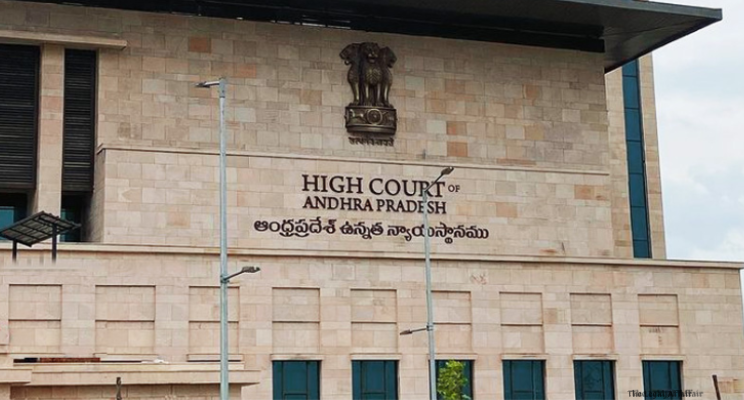
In Bora Narayanamma v. Union of India & Others (Writ Petition No. 9558 of 2019), a Division Bench of the Andhra Pradesh High Court comprising Justice Cheekati Manavendranath Roy and Justice Tuhin Kumar Gedela examined whether compassionate appointment can be rejected solely on the ground of delay when such delay is attributable to lack of awareness of procedural rules and when the family’s financial hardship is clearly established, the case arose from the service conditions of the petitioner’s father, who was employed as a Gangaman in the Railways and was later medically de-categorised, following which he opted for voluntary retirement and began receiving pension along with terminal benefits such as gratuity and provident fund, the family thereafter depended mainly on the pension, while also bearing significant medical expenses on account of the petitioner’s elder brother who was suffering from mental illness, in these circumstances, the petitioner-daughter applied for compassionate appointment seeking financial stability for the family, her application was initially recommended by the Divisional Railway Authorities who noted the financial distress, however, the General Manager of East Coast Railway rejected the request on the ground that the application was filed more than five years after the date of medical de-categorisation and was therefore time-barred under Railway Board policy, aggrieved by this rejection, the family approached the Central Administrative Tribunal, which initially set aside the rejection order, but thereafter the Railways again rejected the request citing delay and stating that the petitioner had attained majority prior to filing the application, when the petitioner again approached the Tribunal, her application was dismissed on the ground of inordinate delay, prompting her to approach the High Court under Article 226 seeking judicial review of the denial of compassionate appointment, raising significant questions on how procedural delay should be balanced against genuine financial hardship in compassionate employment schemes.
Arguments:
The petitioner contended that the delay in submitting the application was neither deliberate nor negligent but was solely due to lack of awareness of the rules governing compassionate appointment, both on the part of her and her father, who was medically de-categorised and unfamiliar with the procedural framework, she argued that compassionate appointment is intended as a social welfare measure to protect families from sudden economic collapse, and that rigid insistence on timelines without assessing ground realities defeats the humanitarian purpose of such schemes, she emphasized that the family was under continuous financial strain, relying only on pension while incurring medical expenses for her mentally ill brother, and that the initial recommendation by the Divisional Railway Authorities itself acknowledged financial hardship, she further argued that the General Manager mechanically rejected the application solely on limitation without applying mind to the family’s condition, thereby violating the requirement of balanced and objective consideration mandated under Railway Board Establishment instructions, she submitted that compassionate appointment cannot be treated as a mere technical claim governed strictly by limitation rules when the object of the scheme is to relieve distress, and that procedural delays due to ignorance of rules should not eclipse substantive justice, on the other hand, the Railway authorities argued that compassionate appointment is not a vested right but an exception to normal recruitment rules, and must be strictly regulated by policy conditions including prescribed time limits, they contended that under Railway Board policy applicable to medical de-categorisation cases, an application must be filed within five years, and the petitioner’s application was clearly beyond this period, making it legally untenable, they further submitted that the employee had received full retirement benefits including pension, gratuity and provident fund, and therefore the family was not left in penury warranting extraordinary relief, the respondents also pointed out that the petitioner had attained majority well before filing the application and hence could have applied earlier if she so desired, and that allowing delayed applications would open floodgates and dilute the immediacy principle underlying compassionate appointment schemes, they relied on several Supreme Court decisions holding that compassionate appointment is meant to address immediate financial crisis and cannot be claimed as a deferred benefit after the family has survived for several years, and therefore denial on grounds of delay was justified and in conformity with established law.
Judgment:
The High Court undertook a detailed examination of the principles governing compassionate appointment and the specific facts of the case, while acknowledging that the Supreme Court has repeatedly emphasized the element of immediacy in compassionate appointment through judgments such as Sushma Gosain v. Union of India, Haryana State Electricity Board v. Hakim Singh, State of Jammu and Kashmir v. Sajad Ahmed Mir, and State of West Bengal v. Debabrata Tiwari, where it was held that delayed claims generally weaken the justification for compassionate appointment as they indicate that the family has managed to survive without immediate assistance, the Division Bench clarified that these judgments do not lay down an inflexible rule that delay alone is sufficient to reject every claim, and that each case must be examined on its own facts, the Court gave significant importance to the petitioner’s explanation that neither she nor her father was aware of the compassionate appointment procedure at the time of medical de-categorisation, and noted that lack of awareness among low-level employees cannot be equated with willful neglect or abandonment of rights, the Court further observed that the Divisional Authorities had in fact recommended the petitioner’s case and had recorded the family’s financial distress, which the General Manager failed to consider while rejecting the application, instead adopting a narrow and mechanical approach by citing delay alone, the Bench relied on Railway Board Establishment instructions which mandate authorities to conduct a balanced and objective assessment of financial and other conditions of the family while deciding compassionate appointment requests, and held that such assessment was completely absent in the impugned rejection orders, the Court emphasized that compassionate appointment is not a matter of charity but a welfare mechanism intended to mitigate hardship, and administrative authorities are duty-bound to apply humane consideration rather than strict technicality, the Bench held that when financial distress is clearly established and delay is reasonably explained by lack of awareness, rejection solely on the ground of limitation defeats the very object of the scheme, the Court also rejected the argument that receipt of pension and terminal benefits automatically disqualifies a family, observing that pension alone cannot be presumed sufficient when there are ongoing medical expenses and dependent family members, and that financial hardship must be evaluated holistically, the Court found that the Tribunal erred in endorsing the rejection without scrutinizing whether the authorities had discharged their obligation to objectively assess the family’s condition, consequently, the High Court set aside the Tribunal’s order and the rejection of compassionate appointment, and directed the Railway authorities to consider the petitioner for compassionate appointment within three months in accordance with law, reaffirming that compassionate appointment decisions must balance policy requirements with human realities, and that procedural rigidity must not override substantive justice in welfare schemes.