


Introduction:
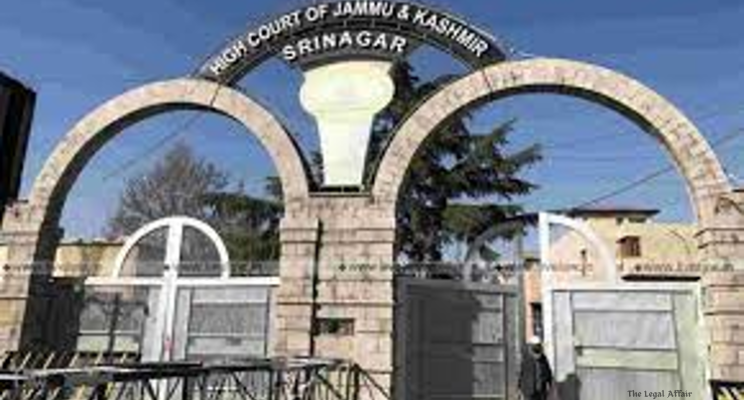
In Ghulam Rasool Baba v. Principal Secretary to Government & Another [2025 LiveLaw (JKL)], the Jammu and Kashmir and Ladakh High Court delivered an important ruling clarifying the scope and duration of statutory protection relating to sanction for prosecution under corruption laws. The judgment arose from a challenge mounted by Ghulam Rasool Baba, a retired Accounts Officer from the office of the Director, Health Services, Kashmir, against criminal proceedings initiated for alleged large-scale financial irregularities during his tenure in public service. The petitioner invoked the writ jurisdiction of the High Court under Articles 226 and 227 of the Constitution read with Section 282 of the Code of Criminal Procedure, seeking quashing of proceedings pending before the Special Judge, Anti-Corruption, Srinagar. Central to the controversy was the petitioner’s argument that the charge sheet had been filed without obtaining mandatory prior sanction for prosecution under Section 19 of the Prevention of Corruption Act, which, according to him, vitiated the entire proceedings. Justice Sanjay Dhar, while dismissing the petition, categorically held that the protection of prior sanction is available only so long as a public servant continues in service and that no such sanction is required once the official has demitted office or retired. The judgment assumes significance as it reiterates settled principles of law, prevents misuse of statutory protection as a shield against accountability after retirement, and reinforces the objective of anti-corruption legislation.
Arguments:
On behalf of the petitioner Ghulam Rasool Baba, it was contended that the criminal proceedings pending against him were legally unsustainable and amounted to abuse of process. The petitioner argued that he had been falsely implicated in the case without any concrete material demonstrating his involvement in the alleged misappropriation of funds. According to him, the preparation, verification, and passing of Leave Travel Concession adjustment bills were done at the block level, and he, as Accounts Officer, had no direct role in those processes. It was submitted that the allegations against him were vague, general, and based on conjectures rather than specific acts attributable to him. A major plank of the petitioner’s challenge was the absence of prior sanction for prosecution from the competent authority, as mandated under Section 19 of the Prevention of Corruption Act and Section 6 of the erstwhile J&K Prevention of Corruption Act. The petitioner argued that sanction is a condition precedent for taking cognizance of offences under the PC Act and that filing of the challan without such sanction rendered the entire proceedings void ab initio. He further contended that the trial court had framed charges mechanically without considering his application for discharge and without properly appreciating the legal infirmities in the prosecution case. Additionally, the petitioner raised the plea of inordinate delay in conclusion of the trial, submitting that the prolonged pendency of proceedings had violated his fundamental right to a speedy trial guaranteed under Article 21 of the Constitution. On these grounds, the petitioner sought quashing of the FIR, charge sheet, and all proceedings arising therefrom.
The respondent State, represented through the Vigilance Organisation Kashmir, strongly opposed the petition and supported the continuation of the criminal proceedings. It was argued that the investigation had unearthed clear and specific material showing the petitioner’s active role in facilitating fraudulent and illegal drawal of Leave Travel Concession amounts from the State Treasury. The respondents submitted that the allegations against the petitioner were not vague but were supported by documentary evidence and witness statements collected during investigation. It was highlighted that the petitioner had abused his official position by according sanctions for LTC without competence and by manipulating official records to extend benefits to ineligible persons. On the issue of sanction, the respondents argued that the charge sheet had been filed after the petitioner had already superannuated from service and therefore no sanction for prosecution was required in law. Reliance was placed on authoritative judicial precedents of the Supreme Court holding that protection of sanction is available only to serving public servants and does not survive retirement. As regards delay, the respondents contended that the pendency of proceedings was attributable to factors beyond the control of the prosecution or the trial court and that no deliberate or oppressive delay had been caused to prejudice the petitioner.
Court’s Judgment:
Justice Sanjay Dhar, after a detailed examination of the record and the rival submissions, dismissed the petition and upheld the continuation of criminal proceedings against the petitioner. The Court first dealt with the nature of allegations and the sufficiency of material to proceed against the petitioner. It noted that the allegations against the petitioner were twofold: firstly, that he facilitated illegal and fraudulent drawal of LTC amounting to ₹6,99,880 from the State Treasury by abusing his official position, and secondly, that he accorded sanctions for LTC without competence and by manipulating records. The Court observed that these allegations were clearly supported by the material collected during investigation. A crucial factor weighed by the Court was the statement of the then Director, Health Services, Kashmir, who categorically stated that the petitioner, while functioning as Accounts Officer, had accorded sanctions in favour of 18 employees without approval and without competence, including cases where even the Director himself lacked authority and sanction could have been granted only by the Government. The Director further stated that the petitioner had made insertions in records to grant approvals for additional employees and had even sanctioned LTC in favour of an employee on consolidated wages, who was not entitled to such benefit. In light of this material, the Court held that a strong prima facie case existed against the petitioner, justifying framing of charges.
On the issue of discharge, the Court held that merely because the discharge application was not expressly referred to in the order framing charges, it could not be said that the application was not considered. Since the contentions raised by the petitioner had been heard and rejected, the discharge application stood deemed dismissed. The most significant aspect of the judgment relates to the requirement of sanction for prosecution. Justice Dhar categorically held that the statutory protection of prior sanction under Section 19 of the Prevention of Corruption Act, which is pari materia with Section 6 of the J&K PC Act, is available only so long as the public servant remains in service. Relying on the Supreme Court’s decision in Station House Officer, CBI/ACB v. B.A. Srinivasan (2020) 2 SCC 153, the Court held that once a public servant demits office or retires, no sanction is required for his prosecution. Since the charge sheet in the present case was filed after the petitioner had superannuated from service, the objection regarding lack of sanction was held to be wholly meritless. As regards the plea of violation of the right to speedy trial, the Court found that the delay in trial was attributable to circumstances beyond the control of the prosecution or the trial court and that it could not be said that the petitioner’s right to a speedy trial had been infringed. For all these reasons, the Court concluded that the petition was devoid of merit and dismissed it.