


Introduction:
In a significant reaffirmation of the rule of law and administrative discipline, the Supreme Court of India held that the State Government of Rajasthan acted arbitrarily and illegally by naming newly created revenue villages after private individuals, in clear violation of its own binding policy. The Court restored the order of a Single Judge of the Rajasthan High Court which had quashed the impugned notifications, holding that executive policies, though not statutory, are binding on the Government unless lawfully amended or withdrawn.
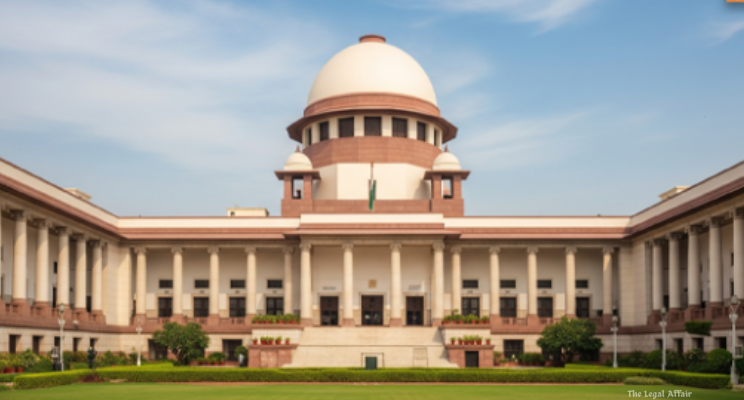
The judgment was delivered by a Bench comprising Justice Sanjay Kumar and Justice Alok Aradhe in the case of Bhika Ram v. State of Rajasthan, reported as 2025 LiveLaw (SC) 1247. The appeal arose from a dispute concerning the creation and naming of two revenue villages, “Amargarh” and “Sagatsar”, carved out of Meghwalo Ki Dhani in village Sohda, Barmer district. The central issue before the Court was whether the State could justify naming revenue villages after individuals despite an explicit government circular prohibiting such practice, and whether completion of the administrative process could cure an action that was illegal from its inception.
Background of the Case:
The controversy originated from a notification dated 31 December 2020, issued by the Government of Rajasthan under Section 16 of the Rajasthan Land Revenue Act, 1956, whereby several new revenue villages were constituted across the State. Among these were the revenue villages named “Amargarh” and “Sagatsar”, formed by carving out land from Meghwalo Ki Dhani, situated in village Sohda of Barmer district.
Prior to issuance of the notification, the statutory procedure appeared to have been followed. The Tehsildar (Land Records) certified that all formal requirements for the creation of the new revenue villages were fulfilled and that there were no disputes regarding their formation. Certain individuals also executed affidavits agreeing to donate land for the establishment of the new villages, which is a common practice in rural administrative reorganisation.
However, the matter took a contentious turn in 2025, when a subsequent exercise for reorganisation of Gram Panchayats was undertaken. During this process, objections were raised by residents of village Sohda, alleging that the names “Amargarh” and “Sagatsar” were not geographical or historical in nature but were derived from the names of private individuals, namely Amarram and Sagat Singh, who had also donated land for the villages. According to the objectors, this naming was in direct violation of a State Government circular dated 20 August 2009, which categorically prohibited naming revenue villages after any person, religion, caste or sub-caste, with the stated objective of preserving social harmony and preventing personality-based or identity-based glorification.
Proceedings Before the High Court:
Aggrieved by the naming of the two revenue villages, the appellants approached the Rajasthan High Court, challenging the 2020 notification insofar as it related to “Amargarh” and “Sagatsar”.
Single Judge’s Decision:
By an order dated 11 July 2025, the Single Judge allowed the writ petition. The Court held that the 2009 circular issued by the State Government was binding on all authorities and that its provisions clearly prohibited naming revenue villages after individuals. The Single Judge noted that the names “Amargarh” and “Sagatsar” were admittedly derived from the names of private persons and therefore violated Clause 4 of the circular.
Relying on earlier judicial precedents where similar naming practices had been struck down, the Single Judge quashed the 2020 notification to the extent it created the two revenue villages with the impugned names. At the same time, the Court granted liberty to the State Government to rename the villages in accordance with law and policy, thereby balancing administrative convenience with constitutional propriety.
Division Bench’s Reversal:
The State Government carried the matter in appeal. By a judgment dated 5 August 2025, a Division Bench of the Rajasthan High Court set aside the Single Judge’s order. The Division Bench took the view that since the process of creation of the revenue villages had already been completed and had attained finality, the benefit of earlier judgments could not be extended to the present case. According to the Division Bench, interference at a belated stage would disrupt settled administrative arrangements.
This reasoning prompted the appellants to approach the Supreme Court.
Arguments on Behalf of the Appellants:
The appellants contended before the Supreme Court that the Division Bench had committed a grave error in ignoring the binding nature of the 2009 Government circular. Their submissions can be summarised as follows:
First, it was argued that the circular dated 20 August 2009 was a clear and unequivocal policy decision of the State Government, prohibiting naming of revenue villages after individuals, religion, caste or sub-caste. The policy was framed to maintain communal harmony and prevent misuse of administrative power for personal glorification. Once such a policy was in force, the State was bound by it and could not act in derogation thereof.
Second, the appellants submitted that it was an admitted factual position that the names “Amargarh” and “Sagatsar” were derived from the names of individuals who had donated land for the villages. Merely because the individuals had contributed land could not justify violation of the policy, as public administration cannot be run on considerations of private benefaction.
Third, it was contended that illegality does not get cured by passage of time or completion of administrative process. If an action is illegal at its inception, it remains illegal, and the doctrine of finality cannot be invoked to protect an unconstitutional or arbitrary act.
Lastly, the appellants argued that the Division Bench’s approach undermined Article 14 of the Constitution, as it permitted the State to act arbitrarily by selectively ignoring its own binding policy without any lawful amendment or justification.
Arguments on Behalf of the State:
The State of Rajasthan defended the impugned notification and the Division Bench judgment on multiple grounds.
The primary contention of the State was that the process of creation of the revenue villages had been duly completed in 2020 after following the prescribed statutory procedure under the Rajasthan Land Revenue Act, 1956. Certifications had been issued by the Tehsildar, affidavits had been filed, and no objections had been raised at the relevant time. Therefore, reopening the issue after several years would lead to administrative uncertainty.
The State further argued that the naming of the villages did not cause any demonstrable prejudice and that the names had been in usage for some time. It was also suggested that the circular of 2009 was merely an executive instruction and not a statutory mandate, and therefore some flexibility was permissible in its application.
Additionally, the State supported the Division Bench’s view that since the creation of the villages had attained finality, the writ petition should not have been entertained, especially when the administrative action had already been implemented on the ground.
Supreme Court’s Judgment and Reasoning:
The Supreme Court allowed the appeal and delivered a clear and principled judgment reinforcing administrative accountability.
At the outset, the Court examined the 2009 circular and specifically referred to Clause 4, which categorically mandates that the name of a revenue village must not be based on any individual, religion, caste or sub-caste. The Bench noted that the purpose of the policy was to preserve social harmony and prevent divisive or personalised naming practices.
The Court reiterated a well-settled principle of administrative law: a policy decision of the Government, though executive in nature, is binding on the State and its instrumentalities. Unless such a policy is lawfully amended, modified or withdrawn, the Government cannot act contrary to it. Any action taken in derogation of a binding policy, without valid justification, would be arbitrary and hit by Article 14 of the Constitution of India.
The Court emphatically observed:
“It is well settled in law that a policy decision though executive in nature binds the Government, and the Government cannot act contrary thereto, unless the policy is lawfully amended or withdrawn. Any action taken in derogation of such a policy, without amendment or valid justification, is arbitrary and violative of Article 14 of the Constitution of India.”
On facts, the Court found it undisputed that the names “Amargarh” and “Sagatsar” were derived from the names of private individuals, namely Amarram and Sagat Singh, who had also donated land for the villages. This factual admission was sufficient to conclude that the 2020 notification was in clear contravention of the 2009 circular.
Rejecting the reasoning of the Division Bench, the Supreme Court held that a lis pending before a court must be decided on its merits, and the State cannot justify an illegal action by contending that the matter has attained finality. The doctrine of finality cannot be used as a shield to protect an action that is ex facie illegal and unconstitutional.
The Court also clarified that completion of an administrative process does not legitimise an act that violates binding policy. If the foundation of the action is unlawful, the superstructure built upon it cannot stand.
Accordingly, the Supreme Court quashed the Division Bench judgment dated 5 August 2025 and restored the Single Judge’s order dated 11 July 2025, which had set aside the notification creating the revenue villages “Amargarh” and “Sagatsar”, while leaving it open to the State to rename them in accordance with law and policy.