


Introduction:
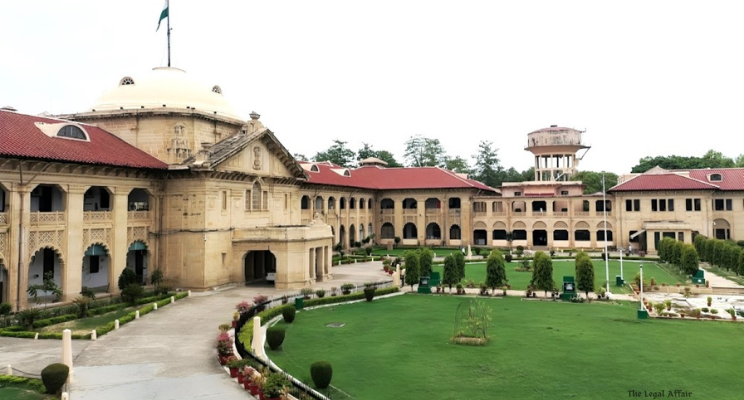
In a significant ruling reinforcing prosecutorial independence and judicial oversight, the Allahabad High Court, while deciding a criminal appeal arising out of proceedings under the Indian Penal Code and the Scheduled Castes and Scheduled Tribes (Prevention of Atrocities) Act, emphatically held that a mere expression of intention by the State Government to withdraw from a prosecution does not bind the Court. The case titled Chhote Lal Kushwaha and 3 Others v. State of Uttar Pradesh and Another came before a Bench presided over by Justice Shekhar Kumar Yadav, wherein the appellants sought to challenge the rejection of an application for withdrawal of prosecution under Section 321 of the Code of Criminal Procedure, 1973. The High Court upheld the order of the Special Judge, SC/ST Act, Kushinagar, which had refused to permit withdrawal, observing that the Public Prosecutor had failed to demonstrate independent application of mind and that the offences alleged were serious in nature, involving cheating and caste-based abuse against a member of a Scheduled Caste. The judgment reiterates that withdrawal of prosecution is not a matter of executive fiat but a statutory process requiring good faith, public interest, and judicial satisfaction.
Arguments on Behalf of the Appellants:
The appellants, four in number, assailed the Trial Court’s order primarily on the ground that the State Government had taken a conscious decision not to pursue the prosecution, and therefore, the courts below ought to have respected and given effect to such decision. It was argued that the Public Prosecutor had rightly moved an application under Section 321 CrPC on the basis of a communication dated January 5, 2024, issued by the State Government, wherein it was opined that the continuation of the criminal case was unnecessary.
Counsel for the appellants contended that the dispute essentially had civil overtones, arising out of a failed arrangement for overseas employment. It was submitted that the complainant’s husband had voluntarily chosen not to travel abroad and that the allegations of cheating were exaggerated. The appellants further argued that the ingredients of offences under the SC/ST Act were not made out, as the alleged caste-related abuses were levelled only to give a colour of seriousness to an otherwise private dispute.
It was also urged that once the State, as the prosecuting authority, had expressed its intent to withdraw, the Trial Court ought not to have substituted its own opinion in place of the executive decision. According to the appellants, refusal to permit withdrawal amounted to undue interference with prosecutorial discretion. They further submitted that continuance of the proceedings would amount to harassment and abuse of the process of law, especially when the State itself was no longer interested in prosecuting the case.
Arguments on Behalf of the State and the Complainant:
Opposing the appeal, the State as well as the complainant argued that Section 321 CrPC does not confer an unfettered right on the prosecution to withdraw a case, particularly where serious offences are involved. It was submitted that the present prosecution was initiated only after judicial intervention under Section 156(3) CrPC, which itself indicated that the allegations were not frivolous.
The complainant strongly opposed the withdrawal, contending that she had been cheated of ₹80,000 on the false promise of arranging a visa and employment in Qatar for her husband. Despite a visa allegedly being issued, it was claimed to be unusable, and the money was never returned. The situation escalated when she demanded her money back, at which point she was allegedly subjected to caste-indicative abuses and criminal intimidation, squarely attracting the provisions of the SC/ST Act.
It was further argued that the Public Prosecutor had merely acted as a post office for the State Government’s communication, without examining the case diary, FIR, or statements under Section 161 CrPC. The withdrawal application, it was contended, lacked reasons demonstrating how the withdrawal would serve the larger public interest, especially when the victim belonged to a vulnerable section of society.
The State supported the Trial Court’s reasoning, submitting that the Court has a statutory duty to ensure that withdrawal is not used as a tool to shield accused persons, particularly in cases involving social justice legislation like the SC/ST Act.
Court’s Judgment and Reasoning:
Justice Shekhar Kumar Yadav, after carefully examining the record, dismissed the criminal appeal and upheld the order of the Special Judge refusing withdrawal of prosecution. The High Court began by reiterating the settled legal position governing Section 321 CrPC, emphasizing that withdrawal of prosecution is permissible only when the Public Prosecutor acts independently, applies his mind to the facts of the case, and forms a bona fide opinion that such withdrawal is in public interest.
The Court noted that in the present case, the Trial Court had meticulously examined the FIR, charge-sheet, and statements recorded under Section 161 CrPC, all of which prima facie disclosed offences of cheating, criminal breach of trust, intimidation, and caste-based abuse. The allegations were not trivial and could not be brushed aside at the threshold.
A crucial aspect highlighted by the High Court was that the Public Prosecutor’s application was founded solely on the State Government’s communication, without reflecting any independent reasoning or assessment of evidence. The Court observed that the statutory scheme does not permit the Public Prosecutor to act merely on the dictates of the executive. Rather, he is an officer of the Court, duty-bound to assist the judiciary in the administration of justice.
Justice Yadav categorically held that:
“A mere expression of intention by the State Government for withdrawal of prosecution case does not bind the Court nor dilute the statutory requirement of independent scrutiny by both the Public Prosecutor and the Court, particularly in prosecutions under the SC/ST Act.”
The Court further observed that the role of the judiciary is not mechanical in such matters. It must examine whether the withdrawal is genuinely in public interest or whether it is an attempt to stifle a legitimate prosecution. In cases involving offences against members of Scheduled Castes or Scheduled Tribes, the Court held that greater caution is required, given the social purpose underlying the special legislation.
Rejecting the appellants’ contention that the complainant’s husband had voluntarily chosen not to travel, the Court held that these were disputed questions of fact, which could only be adjudicated during trial. Such defences could not form the basis for withdrawal at an interim stage.
Finding no illegality, perversity, or impropriety in the order passed by the Special Judge, the High Court dismissed the appeal as devoid of merit. However, noting that the Sessions Trial had been pending since 2020, the Court directed the Trial Court to conclude the proceedings preferably within six months, thereby balancing the rights of both the accused and the victim.