


Introduction:
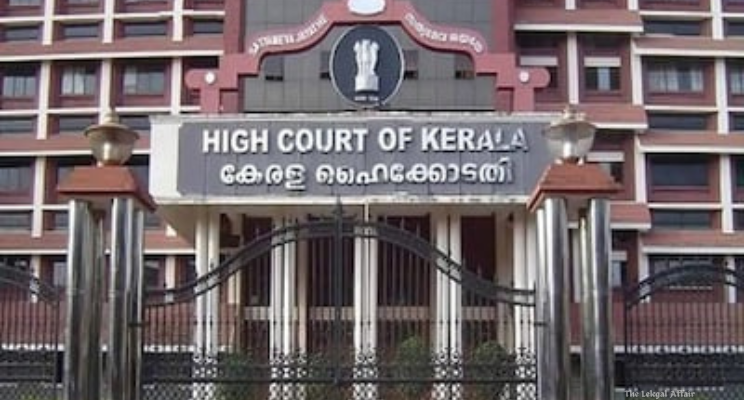
In Mohammed Abbas v. State of Kerala, Crl. R.P. No. 1227/2017, the Kerala High Court delivered an important judgment clarifying the scope of forgery under Section 465 of the Indian Penal Code. Justice P.V. Balakrishnan examined whether forgery can be proved even in the absence of financial loss or pecuniary injury, particularly when the act of producing forged documents undermines institutional credibility, academic integrity, or public confidence. The revision petitioner had earlier been convicted by the trial court and the appellate court for forging university certificates, though he had been acquitted of conspiracy and cheating-related charges. In revision, he contended that since the forged certificates were never used to secure wrongful gain, and no financial loss occurred, the charge of forgery should not stand. He further argued that the specimen handwriting obtained during investigation could not be relied upon under the Identification of Prisoners Act, 1920. The High Court examined the statutory definitions of “dishonestly” under Section 24 IPC and “fraudulently” under Section 25 IPC and analyzed the nature of injury contemplated under Section 465 IPC. The Court ultimately upheld the conviction but reduced the sentence, delivering significant guidance on the legal contours of forgery.
Arguments of the Revision Petitioner:
The revision petitioner, represented by Advocates Liji J. Vadakedom, Rexy Elizabeth Thomas, and Rajeev Jyothish George, submitted that the essential ingredient of forgery under Section 464 IPC requires that the false document must be made either “dishonestly” or “fraudulently.” He contended that the prosecution failed to establish any wrongful loss to any person, nor did he gain any advantage by possessing the forged certificates. Relying on the decision in Suresh K.K. v. State of Kerala (2022 KHC 8105), he argued that the specimen handwriting relied upon by the prosecution was taken during investigation and thus could not be used as evidence under the Identification of Prisoners Act, 1920. He maintained that the handwriting samples were obtained improperly, without legal sanction, and in violation of procedural safeguards. He also submitted that since no tangible economic injury had occurred, and the documents were not used for employment or benefit, the offence of forgery was not established. According to him, the absence of pecuniary loss negated the element of “dishonesty,” while there was no evidence of “fraudulent” intent or injury to any person. He therefore urged the Court to set aside the conviction entirely.
Arguments of the State:
The respondent State, represented by Public Prosecutor Maya M.N., argued that the absence of pecuniary loss does not negate the offence of forgery and that the petitioner’s conduct falls squarely within the meaning of making a false document “fraudulently” under Section 25 IPC. Relying on the Supreme Court’s judgment in Santosh @ Bhure v. State (GNCT) of Delhi (2023 SCC OnLine SC 538), the State submitted that there is no statutory bar preventing the police from obtaining handwriting specimens during investigation when voluntary or taken in accordance with investigative necessity. The State further argued that the forged university certificates caused significant non-pecuniary injury, including erosion of academic integrity, harm to institutional credibility, and potential adverse consequences for genuine students. It contended that the law recognizes intangible injuries such as harm to reputation, public confidence, and institutional trust as falling within the meaning of “injury” under Section 25 IPC. The prosecution maintained that the mere possession of forged academic certificates is a direct assault on the sanctity of educational systems and must be treated as a punishable offence irrespective of economic injury. Accordingly, the State argued that the conviction was rightly upheld by both lower courts and required no interference, except on the question of sentencing.
Court’s Judgment:
The Kerala High Court, in a comprehensive examination of the legal principles governing forgery, upheld the conviction under Section 465 IPC while clarifying that pecuniary loss is not a prerequisite for establishing the offence. Justice P.V. Balakrishnan embarked on a detailed analysis of the statutory provisions, beginning with Section 464 of the IPC, which defines the making of a false document and requires that the act be done either “dishonestly” or “fraudulently.” The Court observed that the two words are used in the alternative, indicating that proof of one excludes the necessity of proving the other. Turning to Sections 24 and 25 IPC, the Court explained that “dishonestly” requires a wrongful gain or loss of a pecuniary or economic nature, whereas “fraudulently” carries no such requirement, instead focusing on the intention to cause injury, whether pecuniary or non-pecuniary. The Court relied significantly on the Supreme Court’s seminal decisions in Dr. Vimla v. Delhi Administration and State of U.P. v. Ranjith Singh, both of which clarified that the term “injury” in Section 25 IPC includes not only economic harm but also harm to body, mind, reputation, and “such other” injuries. The High Court emphasized that the phrase “such other” functions as a residual category designed to encompass all non-pecuniary injuries that are real, direct, and attributable to deceit. Elaborating on this, the Court reasoned that forgery of academic certificates inherently causes injury to institutional credibility and the sanctity of academic processes, thereby undermining public confidence in educational qualifications. The Court noted that academic certifications command trust, and their falsification strikes at the very integrity of the education system, harming genuine students whose degrees lose value when forged certificates proliferate. Therefore, even if no financial loss is demonstrated, the act constitutes a fraudulent act capable of causing injury within the meaning of Section 25 IPC. Addressing the petitioner’s argument regarding handwriting specimens, the Court firmly rejected the contention that the Identification of Prisoners Act, 1920 prohibited the police from obtaining handwriting samples during investigation. By relying on the Supreme Court’s decision in Santosh @ Bhure, the Court held that in the absence of a statutory prohibition, the investigating agency is fully entitled to collect handwriting specimens from an accused during investigation and rely upon them as evidence. Justice Balakrishnan observed that the Act of 1920 regulates the taking of measurements of convicted persons and certain categories of arrested individuals but does not restrict the police from obtaining specimen handwriting for investigation. Consequently, the opinion of PW18, the handwriting expert who compared the forged documents with the petitioner’s specimen, was valid and admissible. The Court further noted that both the trial court and appellate court had thoroughly evaluated the evidence, including the expert opinion, and correctly concluded that the petitioner had made the forged documents. It rejected the defense argument that the forged certificates were never used, observing that the law does not require actual use or gain for the offence of forgery to be complete. The offence is established the moment a false document is made with fraudulent intent. The Court emphasized that forging a university certificate is not a trivial act but an offence impacting the credibility of academic institutions, risking significant consequences for society at large. The Court therefore upheld the conviction under Section 465 IPC but found merit in reconsidering the sentence, noting that although the act was serious, the petitioner had not used the forged certificates to secure employment or cause identifiable harm to any individual. In balancing these considerations, Justice Balakrishnan reduced the sentence from two years of simple imprisonment to one year of simple imprisonment. The Court concluded by affirming that the conviction was legally sound, supported by statutory interpretation, judicial precedent, and principles of social integrity.