


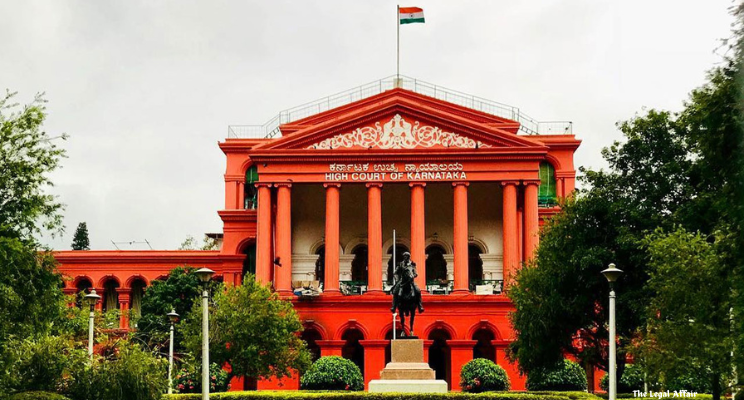
Introduction:
In Revanna H. D. v. State of Karnataka & Anr., the Karnataka High Court delivered a nuanced and legally significant order concerning charges levelled against Janata Dal (S) leader H. D. Revanna by his former house help, who had alleged sexual harassment and assault. The criminal petition, filed by Revanna seeking quashing of the FIR, evolved procedurally as the police submitted a chargesheet during the pendency of the petition, and the trial court subsequently took cognizance of offences including Section 354 of the Indian Penal Code, which criminalizes outraging the modesty of a woman, and Section 354A, which deals with sexual harassment. Justice M. I. Arun, hearing the matter, examined both the initial complaint and the contents of the police report, ultimately holding that the allegations against Revanna did not meet the legal threshold required to invoke Section 354 IPC, but squarely attracted the ingredients of Section 354A. The Court further observed that since offences under Section 354A carry a maximum punishment of three years, the limitation period prescribed under Section 468 CrPC became relevant, because the complaint was filed after more than three years from the date of the alleged incident. Nevertheless, rather than quashing the proceedings outright on the ground of limitation, the High Court remanded the matter back to the trial court to examine whether the delay could be condoned under Section 473 CrPC. Notably, the prosecution had initially objected to the maintainability of the criminal petition on the ground that the filing of the police report rendered the petition infructuous, but the Court rejected this argument by relying on the Supreme Court’s decision in Anand Kumar Mohatta v. State (NCT of Delhi) (2019), holding that a petition under Section 482 CrPC to quash an FIR can still be maintained even after a chargesheet has been filed. The Court’s order underscores the importance of examining the exact allegations made in the complaint rather than mechanically accepting charges included in the police report, especially where the primary allegations are directed against a co-accused, in this case Revanna’s son, while the allegations against Revanna differ in substance and intensity.
Arguments of the Petitioner:
The petitioner, represented by Senior Advocate C. V. Nagesh and counsel Prabhuling K. Navadgi along with Girish Kumar B. M., argued that the allegations made against H. D. Revanna were both factually unsustainable and legally insufficient to attract the offences charged, particularly Section 354 of the Indian Penal Code. It was emphasized that the FIR was filed after an inordinate delay of more than three years from the date of the alleged incident, and therefore the trial court could not have taken cognizance in view of the bar of limitation prescribed under Section 468 of the Code of Criminal Procedure, which prohibits courts from taking cognizance of offences punishable with imprisonment up to three years after a lapse of the same period. The petitioner further contended that the complaint itself did not disclose essential ingredients of Section 354 IPC, which requires use of criminal force with an intention or knowledge that the woman’s modesty would be outraged, and that at best, the complaint might attract Section 354A relating to sexual harassment. It was also argued that the police had modified the allegations in the chargesheet, incorporating new details not present in the original complaint, specifically to strengthen the case against the petitioner, and that this amounted to misuse of investigatory powers. The petitioner submitted that the police report relied heavily on a narrative directed against the co-accused, the petitioner’s son, whereas the complaint itself provided a limited set of allegations against Revanna that did not support the more serious charge under Section 354 IPC. Additionally, the petitioner argued that the criminal petition did not become infructuous after the filing of the police report because the inherent power of the High Court under Section 482 CrPC extends to quashing the FIR, chargesheet, or any stage of criminal proceedings where justice so requires. It was urged that prosecuting Revanna based on time-barred allegations and charges unsupported by the complaint would amount to a miscarriage of justice and an abuse of legal process, and therefore the FIR and chargesheet ought to be quashed to prevent unnecessary harassment and wrongful prosecution.
Arguments of the Respondents:
The respondents, represented by Senior Advocate Professor Ravivarma Kumar along with Additional Special Public Prosecutor B. N. Jagadeesh and advocates Urmila Pullat and Inchara H. M., argued that the criminal petition filed by Revanna had become infructuous due to the subsequent filing of the police report and the trial court taking cognizance, contending that once cognizance is taken, the remedy lies in challenging the order of cognizance rather than seeking quashing of the FIR. They maintained that the High Court should refrain from invoking its inherent powers when the trial court had already applied its mind to the police report. The prosecution submitted that the complaint clearly established conduct that could amount to outraging the modesty of a woman as well as sexual harassment, and thus the charges under Section 354 and Section 354A were rightly included in the chargesheet. It was further argued that the complainant’s statements before the police provided sufficient material evidence to substantiate the charges, and that the allegations against the petitioner were serious in nature and should be tried in court rather than dismissed on technical grounds. With respect to limitation, the respondents contended that even if the complaint had been lodged after the statutory period, Section 473 CrPC permitted courts to condone the delay in the interests of justice, especially in cases involving offences pertaining to the modesty or dignity of women. The prosecution also emphasized that while some allegations might relate more directly to accused No. 2, the son of the petitioner, the complaint against the petitioner was sufficiently detailed and consistent to sustain the charges. They asserted that the police had not modified or fabricated allegations, but had merely elaborated upon the victim’s statements recorded during investigation. The respondents urged that the High Court should allow the matter to proceed to trial rather than interfere at the threshold, especially when the alleged conduct involved a vulnerable complainant and a powerful political figure, and that quashing the proceedings would cause irreparable harm to the complainant’s quest for justice.
Court’s Judgment and Analysis:
The Karnataka High Court, after evaluating the complaint, the police report, and the procedural objections raised by both parties, held that the allegations against H. D. Revanna did not satisfy the legal requirements of Section 354 IPC but did attract Section 354A IPC, which pertains to sexual harassment. Justice M. I. Arun observed that the ingredients of Section 354 require use of criminal force or assault with the intention or knowledge of outraging a woman’s modesty, and a careful reading of the complaint revealed that the allegations against Revanna were not of such nature. Instead, the allegations described conduct falling squarely within Section 354A, which includes physical contact, advances, sexually coloured remarks, or other unwelcome behavior of a sexual nature. Importantly, the Court noted discrepancies between the initial complaint and the police report, stating that the prosecution had included a “slightly varied” version in the chargesheet that was not present in the original complaint, particularly expanding the allegations against the petitioner despite the major allegations being directed at the co-accused, his son. The Court clarified that when the allegations in the complaint differ from the police report, the Court should rely on the complaint, not the modified version prepared by the police. On the issue of limitation, the Court held that since Section 354A carries a maximum punishment of three years, the cognizance taken by the trial court appeared prima facie barred by limitation under Section 468 CrPC. However, instead of quashing the proceedings outright, the High Court remanded the matter to the trial court to determine whether the delay in filing the complaint could be condoned under Section 473 CrPC, which permits condonation if sufficient cause is shown or if it is necessary in the interests of justice. Addressing the prosecution’s contention that the criminal petition became infructuous after the police report was filed, the Court rejected the argument and relied on the Supreme Court’s ruling in Anand Kumar Mohatta v. State (NCT of Delhi) (2019), which held that a petition seeking quashing of FIR remains maintainable even after chargesheet is filed. Consequently, the Court partially allowed the petition by setting aside the charge under Section 354 IPC while upholding the applicability of Section 354A and directing the trial court to decide on condonation of delay before proceeding further.