


Introduction:
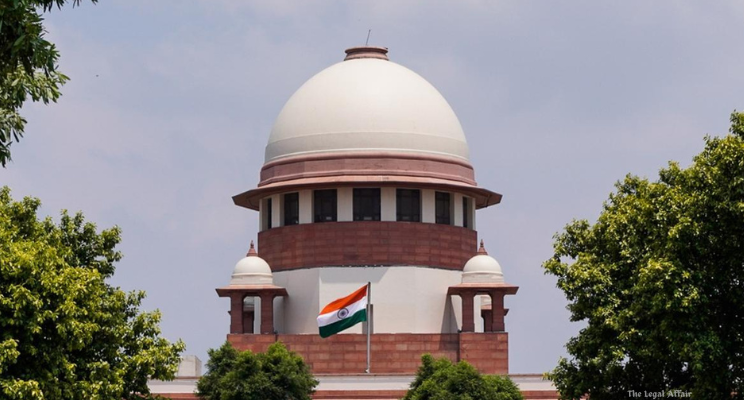
In In Re: Assent, Withholding or Reservation of Bills by the Governor and the President of India, a Constitution Bench of the Supreme Court comprising Chief Justice BR Gavai, Justices Surya Kant, Vikram Nath, PS Narasimha and AS Chandurkar delivered a landmark advisory opinion on a Presidential reference made under Article 143 by the President of India, Droupadi Murmu, seeking clarity on the contentious issue of timelines, constitutional discretion, and justiciability of decisions taken by Governors and the President under Articles 200 and 201 of the Constitution, following a two-judge bench decision in the Tamil Nadu Governor case that had attempted to impose judicial timelines for executive assent.
Arguments:
The States of Tamil Nadu, Kerala, Punjab, West Bengal and Karnataka appeared through senior advocates such as Kapil Sibal, Dr AM Singhvi, KK Venugopal, Gopal Subramanium and Arvind Datar, while the Union of India was represented by Attorney General R Venkataramani and Solicitor General Tushar Mehta, assisted by senior advocates Harish Salve and Mahesh Jethmalani for supporting States, creating one of the most significant federal-constitutional debates in recent years, prompting the Court to examine the delicate balance of separation of powers, federalism, constitutional morality and the scope of judicial intervention in the legislative process. The President’s fourteen questions required the Court to interpret the scheme of Articles 200 and 201, the nature of discretion vested in constitutional authorities, the contours of Article 361 immunity, the possibility of judicially imposed timelines, the permissibility of “deemed assent”, the reach of Article 142, and the circumstances in which judicial review could validly be exercised before a Bill becomes law.
The States argued forcefully that Governors in several instances have been sitting indefinitely on Bills, paralysing the legislative process, undermining representative democracy and frustrating the federal structure, thereby justifying judicially prescribed timelines or recognition of “deemed assent” after unreasonable delay. They contended that the constitutional design does not contemplate indefinite inaction and that the words “as soon as possible” in the provisos to Article 200 implicitly require timely action. Senior advocates for the States urged that the Governor’s role is not that of a parallel legislative authority but a constitutional sentinel expected to work harmoniously with the elected government, and that prolonged delays in providing assent, returning Bills, or reserving them for the President’s consideration effectively amount to veto power, which the Constitution expressly denies. They emphasised that allowing Governors unfettered discretion to indefinitely withhold Bills risks turning the office into an adversarial political veto point, distorting the Westminster structure adopted in India. Several States cited instances of Bills pending for years, sometimes returned only after judicial intervention, and argued that inaction is antithetical to constitutional governance and warrants judicial correction through reasonable timelines or the doctrine of deemed assent.
On the contrary, the Attorney General and Solicitor General maintained a firm stand that judicial timelines and deemed assent are constitutionally impermissible. They argued that Articles 200 and 201 intentionally preserve institutional elasticity because the President and the Governor must evaluate multiple factors, including legality, constitutionality, and federal implications, before deciding to assent, return or reserve Bills. To judicially impose deadlines would amount to rewriting the constitutional text. The Union further argued that discretion under Articles 200 and 201 is an essential executive function, not subject to judicial micro-management, and that “deemed assent” would amount to the judiciary substituting its decision for the constitutionally assigned role of the Governor or President, violating separation of powers. They stressed that while Governors should not unduly delay Bills, the remedy for political dysfunction lies not in judicial timelines but in constitutional mechanisms, faith in high offices and political accountability. They emphasised that Article 361 grants complete immunity to the Governor’s personal acts, making judicial review impermissible except in cases of patent abuse of discretion resulting in inaction so prolonged that it undermines constitutional functioning. Both the Attorney General and Solicitor General argued that Article 142 cannot be used to override substantive constitutional provisions and create new doctrines like deemed assent. They warned that such judicial innovations would fundamentally alter the legislative process and distort basic structure principles.
Judgement:
Against this backdrop, the Supreme Court examined each of the fourteen questions. The Court first clarified the three options available to the Governor under Article 200: assent, withhold assent or reserve the Bill for the President; but it emphasised that withholding of assent is not a standalone power — it must necessarily be accompanied by returning the Bill to the Legislature under the first proviso to Article 200. The Court categorically rejected the Union’s contention that the Governor can indefinitely withhold assent without returning the Bill, observing that such an interpretation would damage the federal balance and allow Governors to arbitrarily stall the legislative process. It held that returning the Bill to the Legislature is an essential constitutional requirement and not an optional act. On discretion, the Court held that the Governor is ordinarily bound by ministerial advice but Article 200 contains elements of personal discretion, particularly when deciding whether to return a Bill or reserve it for the President, as indicated by the phrase “in his opinion”, yet this discretion must be exercised constitutionally, not arbitrarily or politically. On justiciability, the Court held that the merits of decisions taken under Article 200 are not subject to judicial review, but prolonged and unexplained inaction is justiciable to the limited extent that the Court can issue a mandamus directing the Governor to decide “within a reasonable time” without expressing any opinion on the merits of the decision itself. Thus, Article 361 immunity protects the Governor personally but does not shield the office from judicial direction. With respect to timelines, the Court firmly held that neither the Constitution nor constitutional principles contemplate judicially imposed deadlines for the Governor or the President. Articles 200 and 201 deliberately do not fix timelines to preserve flexibility and avoid undue rigidity in federal functioning. Consequently, the Court held that it cannot prescribe deadlines and that the timelines fixed in the earlier Tamil Nadu Governor judgment were erroneous. Equally, the Court rejected the doctrine of “deemed assent”, calling it a “judicial takeover” of executive functions and wholly inconsistent with the constitutional scheme, emphasising that a Bill cannot become law without the constitutionally mandated assent. It further held that Article 142 cannot be used to override the Constitution and impose deemed assent or alter the constitutional process. The Court clarified that decisions of the Governor or President under Articles 200 and 201 cannot be challenged before a Bill becomes law; judicial review at the pre-enactment stage is impermissible. The President, it held, is not obligated to seek the Court’s opinion under Article 143 every time a Bill is reserved; Article 143 is a permissive, not mandatory, power. The Court declined to answer questions unrelated to the reference, such as the one regarding Article 131 jurisdiction. Ultimately, the Supreme Court reaffirmed a balanced middle path — absolute judicial timelines and deemed assent are unconstitutional, but constitutional authorities cannot paralyse the legislative process through indefinite delay; hence, judicial review remains available in cases of prolonged inaction to nudge the process without substituting the decision itself. This landmark opinion thus recalibrates the delicate federal equilibrium, preserving constitutional roles while preventing abuse through inaction, ensuring that legislative intention is neither hijacked by political discord nor overridden by judicial enthusiasm.