


Introduction:
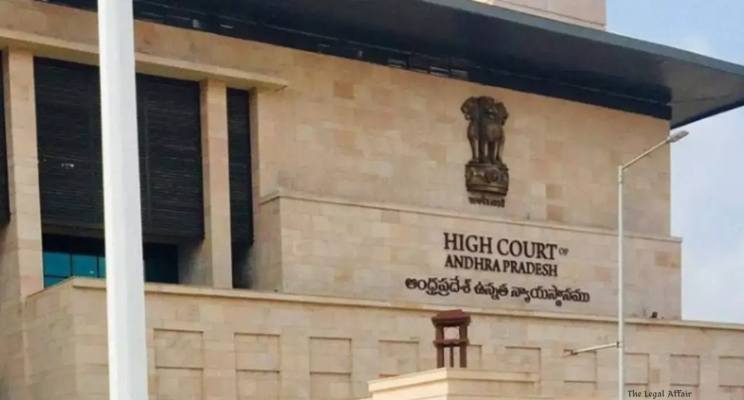
In Krishnamsetty Praneetha v. The State of Andhra Pradesh & Others, Writ Petition No. 31326 of 2025, the Andhra Pradesh High Court, through a Division Bench comprising Chief Justice Dhiraj Singh Thakur and Justice R. Raghunandan Rao, delivered a significant ruling addressing the intersection of sports administration, recognition norms of sporting bodies, and the rights of students seeking admissions under the sports quota for professional courses, particularly where bureaucratic lapses by State-level sports associations come into conflict with the rights of meritorious sportspersons.
Arguments:
The petitioner, an MBBS aspirant for the academic session 2025-26, approached the High Court contending that her placement at Priority Number 91 in the sports-quota merit list was erroneous and that she rightfully deserved to be placed at Priority Number 53 based on her participation in the Senior National Fencing Championship for the year 2024-25, an achievement that should have earned her a higher rank under the rules governing sports quota admissions. The petitioner argued that she had indeed participated in the Senior National Championship and had produced the requisite certificate along with the corresponding backup certificate issued by the Fencing Association of Andhra Pradesh, which had conducted the State-level event that qualified her for the Nationals. However, the Sports Authority of Andhra Pradesh (Respondent No. 3) refused to consider her State-level participation or her backup certificate on the ground that the Fencing Association of Andhra Pradesh (Respondent No. 6) had not renewed its recognition for the academic year 2024-25 and, therefore, any certificate issued by it lacked legal validity, rendering the petitioner ineligible to receive sports-quota credit. The State grounded its objections in terms of a 2019 Government Order stipulating that only certificates issued by recognised associations could be accepted for availing the benefit of sports-quota reservations in education and employment; the Sports Authority also relied on the National Sports Development Code and the criteria therein for renewal of recognition, submitting that since the Association was not recognised at the relevant time, its certification had no legal standing. Consequently, the petitioner’s rank was lowered substantially, jeopardising her chance of securing a medical seat. Opposing this, the petitioner argued that de-recognition of the Association was merely a technical administrative lapse attributable solely to the Association and that such failure could not, in law or equity, be used to deny the petitioner the benefit of her genuine sporting achievement at the National Level. She submitted that she was duly permitted to participate in the Senior National Fencing Championship, and that participation could not have taken place without a legitimate State-level qualification event; therefore, to later invalidate her achievement based on the non-renewal of recognition of the State Association was unfair, arbitrary, and violative of Articles 14 and 21 of the Constitution. The petitioner further argued that the purpose of a backup certificate is only to verify that a candidate who participated in Nationals had a prior State-level participation; thus, when her National-level participation was unquestioned, and when she had indeed attended the sanctioned State-level event, the Association’s internal issues or administrative failures should not prejudice her rights. The Sports Authority, however, argued that the renewal process for recognition is mandatory and dependent on compliance with the checklist under the National Sports Development Code; hence, once the Association failed to renew its recognition, its certificates could not be accepted, irrespective of whether the athlete actually participated at the national level. The Sports Authority also cast doubt on the authenticity of the certificate produced by the petitioner, submitting that unless verification confirmed its genuineness, it could not be relied upon blindly.
Judgement:
Addressing these competing claims, the Division Bench undertook a detailed examination of the regulatory framework, the rationale behind backup certificates, and the constitutional need to balance administrative discipline with fairness to athletes. The Court reasoned that the purpose of requiring a backup certificate from a State Association is not to elevate the State-level achievement itself but solely to ensure that the candidate’s participation at the National Level is genuine and procedurally justified; the credits allotted in the sports quota are based entirely on National-level performance, not on State-level competitions. Therefore, the failure of the State Association to renew its recognition for the year 2024-25 cannot be used retrospectively to deprive the petitioner of her legitimately earned National-level achievement, particularly when she was formally permitted to participate in the Senior National Championship 2024-25. The Court noted that the Fencing Association of Andhra Pradesh had been duly recognised from 2019 until 2024, and the failure to renew for the subsequent period was not because of any fault or omission of the petitioner. To penalise her for an administrative default that occurred outside her control would be manifestly unjust. The Bench categorically held that recognition issues cannot retrospectively nullify a sportsperson’s participation in a legitimate national-level event; once an athlete has participated at that level, the achievement stands on its own merit. The Court, therefore, directed the Sports Authority to consider the petitioner’s Senior National Championship certificate for the purpose of determining her priority number in the sports quota. However, the Court also acknowledged the State’s concern regarding the authenticity of the certificate and held that while the Association’s de-recognition cannot be a ground to invalidate the petitioner’s achievement, the Sports Authority retains the power and duty to verify the genuineness of the certificate. If, upon verification, it is discovered that the certificate is forged or manipulated, then the State is free to cancel the petitioner’s admission. This balanced approach ensured that the rights of the petitioner were protected while preserving the integrity of the admission process. Ultimately, the Court disposed of the writ petition by directing the authorities to reconsider the petitioner’s case strictly on the basis of her National-level participation and without being influenced by the Association’s failure to renew its recognition. This decision reaffirms the judiciary’s commitment to principles of fairness, reasonableness, and proportionality, ensuring that technical lapses by administrative bodies do not deprive deserving students of academic opportunities earned through genuine merit and sporting excellence.