


Introduction:
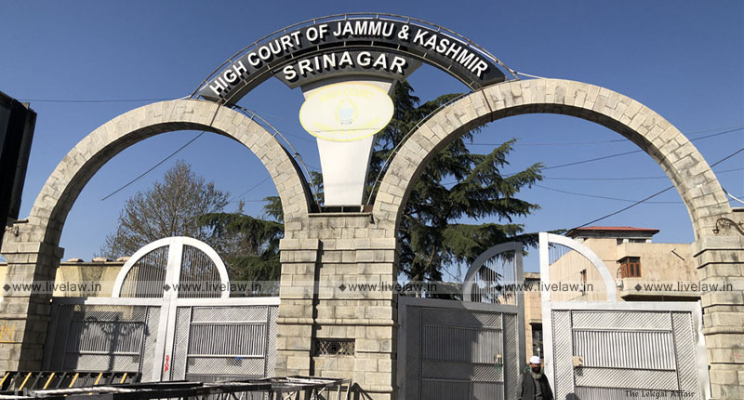
In Akhand Prakash Shahi v. Union of India & Another, the High Court of Jammu & Kashmir and Ladakh examined a significant and often misunderstood area of service jurisprudence—whether departmental proceedings must be stayed merely because an employee is simultaneously facing a criminal trial based on the same allegations. The petitioner, a Border Security Force Assistant Commandant, challenged the departmental enquiry initiated under Rule 173 of the BSF Rules and the continuation of his suspension, arguing that the pendency of a criminal case under Section 376 IPC should automatically stall the departmental mechanism. Justice Sanjay Dhar, however, clarified through an extensively reasoned judgment that the law does not mandate halting departmental proceedings in every such instance; rather, a stay is justified only in exceptional situations involving grave charges and complicated factual and legal issues, where departmental adjudication may genuinely prejudice the defence of the accused in the criminal trial. The Court’s decision revisits and synthesizes binding Supreme Court precedents, reaffirming the principle that criminal prosecutions and departmental proceedings serve different purposes and can proceed simultaneously unless specific prejudice is demonstrated.
Arguments of Both Sides:
The petitioner, represented by counsel, argued that the allegations forming the basis of both the departmental enquiry and the criminal case were identical, arising from a complaint by a woman ASI who alleged sexual exploitation under the pretext of marriage. He contended that allowing the departmental proceedings to continue during the pendency of the criminal trial would substantially prejudice his defence, especially considering the seriousness of the charge under Section 376 IPC. He further submitted that the allegations were based on private and personal matters that did not relate to service discipline, making the departmental action unwarranted. The petitioner also challenged the repeated extension of his suspension, arguing that it was punitive in nature, unjustified, and violative of the principle that suspension should not be prolonged unnecessarily. He asserted that the Staff Court of Enquiry and subsequent disciplinary action were initiated mechanically and without proper application of mind, and that the disciplinary authority failed to consider his representations or the circumstances under which the complaint was lodged.
On the other hand, the Union of India and BSF authorities argued that there was no legal bar to conducting departmental proceedings even when a criminal case is pending on identical facts, relying on well-settled jurisprudence. They submitted that departmental and criminal proceedings serve different objectives—the former maintaining discipline, efficiency, and integrity in service, and the latter determining guilt and awarding punishment for offences. They contended that staying the departmental enquiry would adversely affect the disciplinary framework of the Force, especially where allegations concern conduct unbecoming of an officer. The respondents maintained that the charge under Section 376 IPC did not involve complicated questions of law or facts warranting the postponement of the departmental process. They also pointed out that the petitioner had already disclosed his defence in various legal documents, including writ petitions and bail applications, leaving no possibility of prejudice. Regarding suspension, the respondents highlighted that the delay in departmental proceedings was caused entirely by interim orders obtained by the petitioner himself, and therefore, he could not claim prejudice or misuse of power by the authorities.
Court’s Judgment:
Justice Sanjay Dhar delivered a comprehensive judgment grounded in the established jurisprudence governing simultaneous criminal and disciplinary proceedings. Citing landmark decisions such as State of Rajasthan v. B.K. Meena, Capt. M. Paul Anthony v. Bharat Gold Mines Ltd., and Depot Manager, APSRTC v. Mohd. Yousuf Miya, the Court reiterated the principle that there is no legal prohibition against conducting departmental proceedings parallel to criminal prosecution. The Court emphasized that the disciplinary system of an organization, especially a uniformed service like the Border Security Force, cannot be held hostage to the delays inherent in criminal justice administration.
The Court elaborated that a stay of departmental proceedings is warranted only where the criminal charge is of a grave nature and involves complicated questions of fact and law such that continuation of the disciplinary enquiry would seriously prejudice the employee in defending himself. However, the Court found that the allegations against the petitioner—that he induced a woman ASI into sexual relations on a false promise of marriage—did not raise complex factual or legal issues. Instead, they hinged on testimonies and evidence that would be evaluated independently in both proceedings. The Court also noted that the petitioner had already exposed his defence strategies in various documents, eliminating any genuine apprehension of prejudice.
Further, the Court underscored that the criminal trial and departmental enquiry operate in distinct spheres. Criminal prosecution seeks to ascertain guilt beyond reasonable doubt and impose penal consequences, whereas disciplinary proceedings are concerned with conduct unbecoming of an officer and maintaining organizational discipline. Therefore, the standards of proof, procedural requirements, and objectives differ altogether.
With regard to the petitioner’s suspension, the Court observed that departmental proceedings had remained stalled solely due to interim orders obtained by the petitioner himself. Therefore, he could not blame the authorities for alleged delays or seek relief on that basis. The Court held that suspension was neither punitive nor baseless, especially in light of the serious nature of allegations and the necessity for maintaining the credibility and discipline of the Force.
Finally, the Court found that the petitioner failed to demonstrate any exceptional circumstances to justify staying the departmental proceedings or interfering with suspension orders. The Bench concluded that the writ petitions lacked merit and dismissed them, vacating all interim directions. This judgment reinforces the principle that administrative discipline must not be compromised merely because criminal proceedings are pending, unless strict criteria set out in judicial precedents are satisfied.