


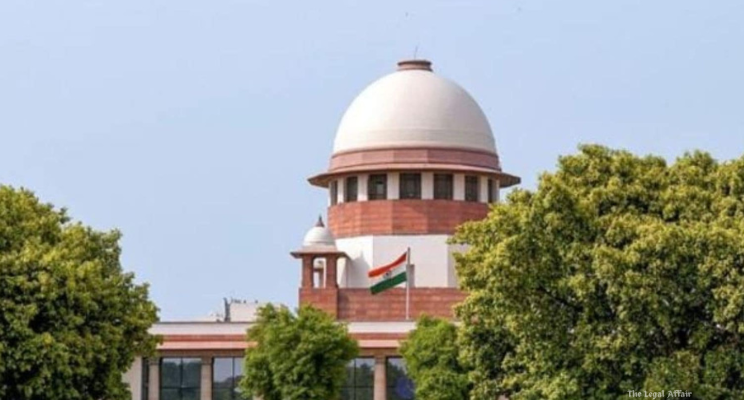
Introduction:
The case of Pogadadabnda Revathi and Another v. The State of Telangana, SLP (Crl) No. 16536 of 2025 came before the Supreme Court after two women journalists from Pulse News challenged an order of the Telangana High Court which had allowed the State police to take them into custody despite their earlier grant of bail. The petitioners, Pogadadabnda Revathi, the Managing Director of Pulse TV, and another woman reporter from the same media outlet, approached the Supreme Court alleging gross abuse of power by the police and judicial overreach by the High Court, asserting that their right to personal liberty under Article 21 of the Constitution had been violated. The case arises from an FIR registered over the circulation of an allegedly objectionable video against Telangana Chief Minister Revanth Reddy, which went viral on social media platform X (formerly Twitter). The FIR accused the journalists of producing and publishing a video where provocative questions were asked, leading a respondent in the video to make abusive and derogatory remarks against the Chief Minister. The petitioners were booked under Section 67 of the Information Technology Act, and Sections 11, 61(2), 352, and 353(2) of the Bharatiya Nyaya Sanhita (BNS). While the Judicial Magistrate’s Court had granted them bail on March 17, 2025, nearly 200 days later, the police sought to take them into custody again for “further questioning,” despite no cancellation of bail. Feeling aggrieved by this attempt to detain them without lawful justification, the journalists approached the Supreme Court, contending that the order of the Telangana High Court violated settled principles of criminal jurisprudence.
Arguments Advanced by the Petitioners:
Senior Advocate Siddharth Dave, appearing on behalf of the women journalists, argued that once bail is granted and is still operative, the police cannot take an accused person into custody unless the bail is formally cancelled by a competent court. He stressed that the power of investigation does not override the judicial protection conferred by an order of bail, which is a manifestation of the right to personal liberty. Dave contended that the State police, under the guise of investigation, were attempting to subvert the judicial order granting bail and punish the petitioners without trial. He emphasized that the petitioners had been cooperating with the investigation and had appeared regularly before the Investigating Officer whenever summoned. Their attendance and compliance had never been questioned, and hence, there was no justification to seek their custody after almost 200 days since the grant of bail.
He further argued that the FIR and subsequent proceedings appeared politically motivated, intended to intimidate journalists who were merely performing their professional duties. The alleged objectionable video, according to him, was a piece of journalistic content involving a public figure, and it was not created with an intent to insult or malign. The petitioners had no role in scripting or prompting abusive remarks made by the interviewee, and the clip had been misrepresented by political interests to target the journalists.
Dave also submitted that the High Court’s order allowing police custody was passed in a mechanical and unreasoned manner, without application of judicial mind. It ignored the fact that the petitioners’ devices, including their laptops, office computers, and personal phones, had already been seized during the initial investigation, leaving no basis for further custodial interrogation. He characterized the move as an act of “state vengeance,” aimed at silencing critical journalism and pleasing political superiors. He also reminded the Supreme Court that such misuse of power sets a dangerous precedent, especially against journalists who perform the vital democratic function of holding those in authority accountable.
Relying on precedents such as State of Rajasthan v. Balchand (1977) and Gudikanti Narasimhulu v. Public Prosecutor, A.P. (1978), he underscored that bail once granted should not be interfered with except on cogent grounds, and that the right to personal liberty cannot be curtailed by executive or investigative whim. He also highlighted the Supreme Court’s ruling in Arnesh Kumar v. State of Bihar (2014), which directed that arrests should not be made mechanically and only when necessary for investigation. The petitioner’s counsel thus prayed for immediate stay of the High Court’s order permitting police custody, protection from further coercive action, and reaffirmation of the principle that liberty once granted by a court cannot be nullified without due process.
Arguments Advanced by the Respondent-State:
On behalf of the Telangana Government, the State counsel defended the High Court’s decision and argued that the police custody was necessary to ensure a fair and complete investigation. The prosecution contended that the petitioners had editorial control and decision-making authority in Pulse News, and therefore bore direct responsibility for approving, editing, and telecasting the allegedly objectionable video. It was asserted that the content was not an innocent piece of journalism but a calculated attempt to incite public hatred and defame the Chief Minister through offensive and abusive commentary.
According to the prosecution, the need for custody arose because certain electronic devices, mobile phones, and data storage units that may contain the raw footage, edited versions, and other objectionable material had yet to be recovered. The police believed these devices could reveal the involvement of other individuals or organizations working behind the scenes to spread defamatory content online. It was argued that custodial interrogation was essential to trace the digital trail, identify the original source of the viral video, and ensure the integrity of the investigation.
The State counsel also asserted that the grant of bail does not automatically prohibit the police from seeking custody if fresh investigative needs arise later. They cited the principle that bail does not mean immunity from investigation, and if new evidence or leads are discovered, the police may move for custody upon obtaining judicial approval. The State emphasized that the High Court had exercised its discretion judiciously, keeping in view the necessity of ensuring transparency and thoroughness in a case involving sensitive political overtones.
Moreover, the prosecution denied allegations of political vendetta, claiming that the case had nothing to do with silencing the media. It was merely a matter of law enforcement against an instance of cybercrime and defamation. The State urged the Supreme Court not to interfere with the ongoing investigation, asserting that judicial interference at this stage could hinder the police’s ability to retrieve crucial digital evidence. In essence, the State attempted to justify its actions as being in the larger public interest and within the legal framework governing the powers of investigation under the Code of Criminal Procedure.
Court’s Observations and Judgment:
After hearing both sides, a Bench of Justices Vikram Nath and Sandeep Mehta examined the core issue—whether a person who has been granted bail can be taken into police custody without the bail having been cancelled. The Court acknowledged that while the police have a statutory right to investigate, that power must operate within the limits prescribed by law and respect judicial orders safeguarding an individual’s liberty.
The Supreme Court found merit in the arguments advanced by Senior Advocate Siddharth Dave, particularly the contention that bail once granted creates a protective umbrella around the accused, insulating them from arbitrary arrest or detention unless the bail is revoked or cancelled through proper legal procedure. The bench noted that the High Court’s order permitting police custody of the petitioners was prima facie inconsistent with the concept of bail as recognized under criminal law and the constitutional guarantee of personal liberty.
Justice Vikram Nath observed that it was well-settled that when bail is operative, the person cannot be re-taken into custody merely for the convenience of investigation. If the prosecution believes that further custodial interrogation is essential, it must first seek cancellation or modification of bail by demonstrating that the accused have violated bail conditions or interfered with the investigation. In the present case, no such allegation was made. On the contrary, the petitioners had been cooperating with the investigation, attending summons, and making themselves available whenever required.
The Court took particular note of the fact that the petitioners were women journalists with no prior criminal record and that most of the electronic evidence, including computers and mobile devices, had already been seized months earlier. The Court found no justification for the police to seek their custody after an inordinate delay of nearly 200 days, especially when the investigation had already progressed substantially. Such action, the Court remarked, appeared more punitive than investigative.
The Supreme Court further observed that investigative powers cannot be exercised in a manner that nullifies the judicial protection of bail. To allow police custody in such circumstances would effectively reduce the concept of bail to a meaningless formality. Referring to the constitutional mandate under Article 21, the Bench reaffirmed that personal liberty cannot be curtailed except by following procedure established by law. The Court cited its earlier judgments in Kartar Singh v. State of Punjab (1994) and P. Chidambaram v. Directorate of Enforcement (2019), emphasizing that the rule of law requires that investigative necessity cannot override judicial protection.
The Bench also considered the larger implications for freedom of the press and observed that journalists performing their professional duties should not be subjected to undue harassment or coercion. While the media is not above the law, any criminal action against journalists must be handled with sensitivity to ensure that the exercise of free speech is not chilled. The Court said that in a democracy, criticism of public figures, even if sharp, cannot automatically attract criminal liability unless it crosses into clear illegality under statutory provisions.
On these grounds, the Supreme Court issued notice to the State of Telangana and stayed the Telangana High Court’s order allowing police custody of the petitioners. The Court directed that the petitioners shall not be taken into custody until further orders and that the State should file its detailed response within a specified time frame. The Bench also clarified that the petitioners must continue cooperating with the investigation as they had been doing.
In essence, the Supreme Court reinforced that bail once granted cannot be undermined through indirect executive actions. Any attempt to place a bailed-out individual back in custody without cancellation of bail amounts to a violation of the fundamental right to liberty and due process. The order also served as a subtle reminder to law enforcement authorities that investigative powers must not become tools of intimidation, especially against journalists who function as watchdogs of democracy.
Significance of the Judgment:
This interim order, while limited to the specific facts of the case, carries broader implications for both criminal procedure and media freedom. It clarifies the legal boundary between the power of investigation and the sanctity of judicial protection through bail. By staying the High Court’s order, the Supreme Court effectively reaffirmed a vital safeguard against arbitrary arrest—an accused cannot be taken into custody while the bail order remains valid unless the bail is formally cancelled.
The case also highlights ongoing tensions between State authorities and the media, particularly in politically sensitive contexts. The journalists’ assertion that their prosecution was politically motivated underscores how investigative powers can sometimes be misused to suppress dissenting voices. The Supreme Court’s intervention thus serves as a protective reminder that the freedom of the press, though not absolute, deserves robust protection against executive overreach.
The order also emphasizes the principle of proportionality in criminal law: investigation must be balanced against the fundamental right to liberty. Custodial interrogation is justified only when essential for the purpose of discovery or recovery, and not merely as a means of intimidation or coercion. The decision reinforces judicial oversight over police powers and upholds the rule that bail conditions cannot be circumvented by administrative tactics.
Furthermore, by highlighting the delay of almost 200 days between the grant of bail and the attempt to secure custody, the Supreme Court implicitly criticized the State for lack of diligence. If custody was truly necessary, the police should have sought it at an earlier stage when such action could have had investigational value. Instead, the belated move appeared vindictive.
Overall, the case strengthens the jurisprudence surrounding bail and reaffirms the judiciary’s role as the ultimate guardian of personal liberty. It also subtly underscores that while investigative agencies have legitimate duties, their actions must remain anchored in legality, fairness, and respect for constitutional rights.