


Introduction:
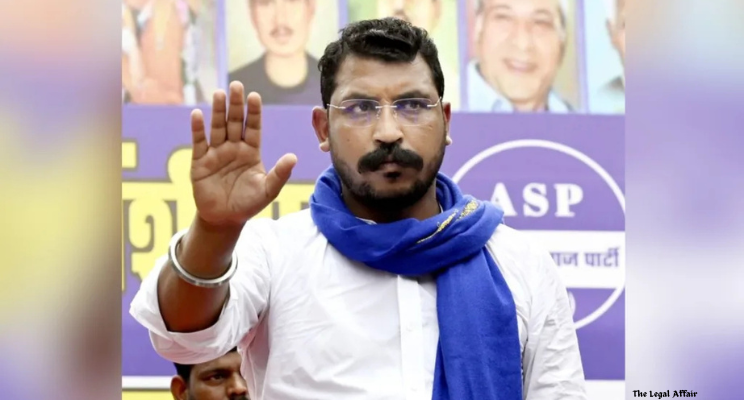
The Allahabad High Court recently delivered an interim order granting relief to a petitioner embroiled in a criminal case arising out of an allegedly inflammatory WhatsApp group message. The matter, titled Nitish Agrawal Alias Sona Pandey v. State of Uttar Pradesh and Another, came before Justice Ram Manohar Narayan Mishra, who was tasked with assessing whether coercive measures against the accused should continue while legal and procedural questions surrounding the First Information Report (FIR) and the nature of the alleged offence remained unresolved. The case stemmed from allegations that Nitish Agrawal, also known as Sona Pandey, had threatened to kill Aazad Samaj Party MP Chandrashekhar Azad, popularly known as Chandrashekhar Azad ‘Ravan’, by posting a remark in a WhatsApp group titled “Gau Raksha Saharanpur.” The FIR claimed that his message not only carried criminal intimidation but also incited hatred and enmity, potentially provoking unrest in society. The defense, however, painted a very different picture, insisting that the allegations were exaggerated, that the offence invoked was legally non-cognizable and bailable, and that the entire process had been mishandled by the police in violation of statutory safeguards and judicial precedents. Faced with competing arguments, the Court decided to extend interim protection against coercive action until further consideration, reflecting its cautious approach to balancing individual liberty with public order.
Arguments of the Petitioner:
Counsel for the petitioner, Advocate Sumit Goyal, mounted a detailed and multi-layered defense on behalf of Nitish Agrawal. At the heart of his submission was the contention that his client had been falsely implicated and that the factual narrative built by the prosecution was inflated beyond proportion. He argued that the alleged WhatsApp message — “uska ilaj karna padega” (“his treatment will have to be done”) — was neither a direct death threat nor a call for violence. According to the defense, the remark was ambiguous and did not meet the threshold of criminal intimidation under Section 351(2) of the Bharatiya Nyaya Sanhita (BNS), which corresponds to Section 503 of the Indian Penal Code (IPC).
Goyal highlighted that Section 351(2) BNS, like its IPC counterpart, was designed to punish criminal intimidation that creates genuine fear of harm. However, he insisted that the language used by his client was vague, lacked specificity, and could not reasonably be interpreted as a threat to commit murder. He emphasized that courts must be cautious in criminalizing ambiguous remarks, especially when made in informal digital settings like WhatsApp groups.
A second pillar of his argument was based on the procedural nature of the offence. He asserted that Section 351(2) BNS was a non-cognizable and bailable offence, punishable by a maximum term of two years. In such cases, police do not have the authority to proceed with a full-fledged investigation without prior approval from a Magistrate. He relied heavily on the Supreme Court judgment in B. N. John v. State of UP & Anr., 2025 LiveLaw (SC) 4, where the Apex Court held that for non-serious and non-cognizable offences, the police cannot begin investigation without the sanction of a Magistrate. In his view, the local police had overstepped their jurisdiction by registering the FIR, filing a chargesheet, and treating the case as a regular cognizable offence.
Furthermore, the defense argued that since the police treated a non-cognizable case as cognizable, the chargesheet filed in the matter was legally defective. Such a chargesheet, he explained, should be treated only as a complaint, not as a police report. Therefore, the trial could not proceed in the manner it currently was, and any coercive process based on such a flawed prosecution would amount to grave injustice.
The petitioner also relied on the principles laid down in the Supreme Court’s Arnesh Kumar judgment, which mandated that in offences punishable with less than seven years of imprisonment, arrest should not be automatic and coercive measures should be sparingly used. Since his client was already on bail and had cooperated fully with the investigation, there was no justification for continuing to subject him to harassment or coercive processes.
Finally, Goyal pointed to the broader social context, noting that the alleged remark was made in reaction to controversial comments made by MP Chandrashekhar Azad about devotees attending the Kumbh fair. According to the defense, the FIR attempted to frame this personal opinion as a communal conspiracy, thereby exaggerating the incident into a law-and-order crisis. He insisted that his client neither harbored nor spread communal hatred, and the charges of inciting riots were wholly baseless.
Arguments of the Prosecution:
On the other hand, counsel for the State of Uttar Pradesh painted a grave picture of the petitioner’s conduct. They argued that the language of the WhatsApp message, when viewed in context, was unmistakably threatening and fell squarely within the definition of criminal intimidation. By stating “his treatment will have to be done,” the accused was not merely engaging in casual banter but was clearly hinting at violent action against a sitting Member of Parliament. The prosecution emphasized that such remarks could not be trivialized, especially in the volatile socio-political climate of Uttar Pradesh, where inflammatory statements on social media platforms often escalate into real-world violence.
The State further asserted that the petitioner’s conduct amounted to hatching a conspiracy within a group named “Gau Raksha Saharanpur,” which itself suggested a communal context. The FIR alleged that the group was being used to mobilize sentiments against MP Azad, and that the accused’s statements had the potential to ignite hatred and riots across the State and even the country. The prosecution argued that in a nation as diverse as India, any attempt to provoke communal disharmony must be dealt with sternly, and granting protection to such an accused would send the wrong message to society.
Responding to the defense’s claim that the offence was non-cognizable, the State argued that the matter went beyond a simple case of criminal intimidation. The accused’s actions, in their view, amounted to a conspiracy to commit a serious offence, which elevated the gravity of the charges and justified police intervention. The FIR had not been registered in isolation but as part of a broader context of preventing law-and-order breakdown. Therefore, the police had acted within their authority in investigating and filing a chargesheet.
The prosecution also dismissed the reliance on B. N. John as misplaced, arguing that the facts of that case involved trivial non-serious offences, whereas the present case involved a direct threat to the life of a public representative. Similarly, they claimed that the Arnesh Kumar guidelines did not create a blanket immunity from coercive action, especially in cases where threats could destabilize public order. According to the State, the accused could not be allowed to hide behind technical arguments when his words clearly endangered social harmony.
Court’s Judgment:
After hearing both sides, Justice Ram Manohar Narayan Mishra issued a carefully balanced interim order. The Court acknowledged the seriousness of the allegations and the potential consequences of inflammatory remarks made on digital platforms. However, it also recognized the procedural irregularities raised by the defense and the legal ambiguities regarding the classification of the offence under Section 351(2) BNS.
The Court noted that the petitioner’s argument that Section 351(2) was analogous to Section 503 IPC, and thus bailable and non-cognizable, was not without merit. The reliance on B. N. John was significant, as the Supreme Court had indeed cautioned against unauthorized police investigations in cases of non-cognizable offences. Moreover, since the petitioner was already on bail and the FIR’s validity had previously been scrutinized, there was no pressing need to subject him to coercive action while the matter awaited fuller consideration.
Accordingly, the Court granted interim protection to the petitioner, directing that no coercive processes should be initiated by the trial court until the next date of listing. It also issued notice to respondent no. 2, giving them time to file a counter affidavit. By doing so, the Court preserved the rights of the petitioner while also ensuring that the allegations were not summarily dismissed without full examination. The matter was scheduled for further hearing on October 30, 2025.
In effect, the Court struck a balance: it did not exonerate the accused nor trivialize the allegations, but it also did not allow procedural lapses to trample upon the principles of liberty and due process. The order reflects the judiciary’s nuanced approach in cases where criminal law intersects with free speech, digital communication, and political sensitivities.