


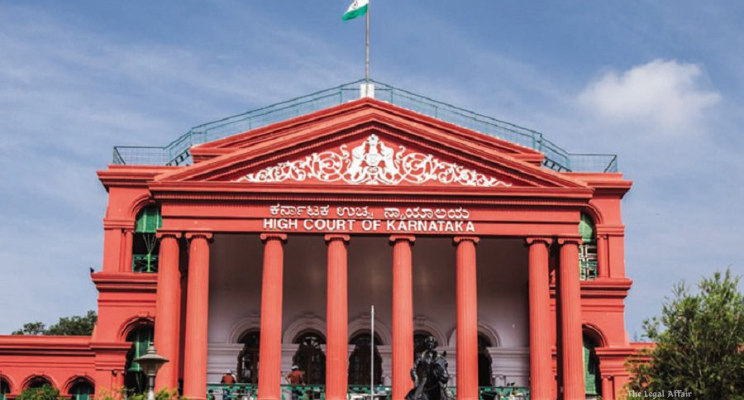
Introduction:
The Karnataka High Court, in a significant ruling, quashed a criminal case filed against BJP Member of Parliament Dr. K. Sudhakar, who was booked in connection with allegations of attempting to influence an IAS officer during the 2024 Lok Sabha elections after the Election Commission seized ₹4.8 crore from the residence of a co-accused. The case, titled Dr K Sudhakar v. State of Karnataka (WP 18910/2025, citation: 2025 LiveLaw (Kar) 327), was heard by Justice M.I. Arun. The magistrate had earlier taken cognizance of offences punishable under Sections 171B (bribery), 171C (undue influence at elections), and 511 (attempt to commit offences) of the Indian Penal Code along with Section 123 of the Representation of People Act, 1951, and directed summons to be issued to the petitioner. However, the High Court quashed the case, observing that the allegations made against the petitioner did not constitute the essential ingredients of the offences under which he was charged. Senior Advocate Prabhuling K. Navadgi, representing the petitioner, argued that the case was unsustainable even if the complaint and charge sheet were taken at face value, while the state was represented by HCGP Thejesh. The judgment raises important questions on how the judiciary interprets criminal liability in cases where allegations of electoral malpractices are made without direct evidence connecting a political leader to seized cash.
Arguments of the Petitioner:
On behalf of Dr. K. Sudhakar, the primary argument centered around the absence of a direct nexus between the seized cash and the petitioner. The petitioner pointed out that the ₹4.8 crore seized from the residence of Govindappa, a co-accused, was neither linked to him personally nor proven to be intended for use in his election campaign. His counsel emphasized that mere association or acquaintance with an individual from whose house money is seized does not automatically translate into culpability under provisions of bribery or undue influence during elections. The petitioner also argued that his act of sending a WhatsApp message to an IAS officer, requesting assistance for Govindappa, cannot amount to bribery or undue influence since no evidence suggested that the money was to be distributed as bribes or inducements for voters.
The message in question, sent on WhatsApp, read: “Madhavara Govindappa IT Team” and “Pls help I will be very grateful to you. Regards.” The defense asserted that the message merely sought assistance during an income tax raid and did not contain any indication of corrupt electoral practice. Moreover, the petitioner submitted that even if the allegations in the FIR, complaint, and chargesheet were accepted as true, they did not satisfy the statutory requirements for charging someone under Sections 171B, 171C, 511 IPC, or Section 123 of the Representation of People Act. The petitioner relied on the legal principle that in criminal cases, the charges must be specific and supported by material evidence demonstrating intent and culpability; otherwise, prosecuting an individual would amount to abuse of process.
The counsel further highlighted that the Election Commission’s flying squad and the Income Tax authorities, who seized the money, never attributed the cash to the petitioner. This was crucial because the foundational requirement of establishing ownership, control, or intended use of money for bribing voters was missing. Thus, the case against him rested solely on a WhatsApp message, which could not be stretched to satisfy criminal provisions meant to safeguard free and fair elections. The petitioner therefore requested the High Court to exercise its inherent jurisdiction under Article 226 of the Constitution to quash the proceedings, contending that the continuation of the trial would cause unnecessary harassment and damage to his reputation as a sitting MP.
Arguments of the Respondent:
On the other hand, the prosecution, represented by the High Court Government Pleader, maintained that the petitioner’s conduct raised serious questions regarding electoral integrity. It was argued that the WhatsApp message sent by the petitioner to an IAS officer, who was part of the Election Commission’s administrative machinery, suggested an attempt to interfere with official proceedings and protect a co-accused during a sensitive period of elections. The prosecution stressed that any attempt by a candidate to seek favors from government officials during elections can potentially fall under the category of “undue influence,” which is prohibited under Section 171C IPC and Section 123 of the Representation of People Act.
The state’s counsel further pointed out that the timing of the message—just after the seizure of ₹4.8 crore cash from a co-accused’s house—strengthened the suspicion of involvement. The prosecution argued that election-related offences must be viewed with greater seriousness, as they strike at the root of democracy. Even indirect attempts to interfere with lawful seizure operations or inquiries could potentially be considered corrupt practices, thereby warranting a trial to uncover the true nature of the petitioner’s involvement.
The prosecution also emphasized the need for allowing the trial court to conduct a full-fledged inquiry rather than quashing the case at the threshold. According to them, premature quashing would send a wrong signal that influential politicians could escape scrutiny by relying on technicalities, thereby undermining the objectives of the Representation of People Act. It was submitted that circumstantial evidence, such as the petitioner’s communication with an IAS officer during the seizure, was enough to justify trial proceedings and determine whether the conduct amounted to a corrupt practice.
However, upon instructions from the government, the advocate conceded before the High Court that apart from the WhatsApp message, no other material evidence existed linking the petitioner with the seized cash or establishing corrupt electoral intent. This concession effectively weakened the prosecution’s case, as it admitted that there were no direct allegations or witness statements attributing the money to the petitioner’s campaign.
Court’s Judgment:
After carefully hearing both sides and examining the records, the Karnataka High Court quashed the criminal case against Dr. K. Sudhakar. Justice M.I. Arun observed that the essence of the charges under Sections 171B, 171C, and 511 IPC as well as Section 123 of the Representation of People Act was missing in the complaint, FIR, and chargesheet. The Court noted that while ₹4.8 crore had indeed been seized from Govindappa’s residence, there was no evidence to show that the money belonged to the petitioner or that it was intended for bribing voters. Without such material evidence, the basic ingredients of bribery or undue influence were not satisfied.
The Court specifically addressed the WhatsApp message sent by the petitioner to the IAS officer. It held that merely requesting help for a co-accused during an income tax raid does not amount to bribery, undue influence, or an attempt to commit such offences. The Court reasoned that criminal liability cannot be imposed on an elected representative based solely on presumptions or assumptions, especially when no direct nexus between the seized money and the petitioner was established. Justice Arun emphasized that criminal law demands clear evidence of intent and participation in the alleged offence, and in the absence of such evidence, the proceedings could not be sustained.
The Court also highlighted that the prosecution had conceded there were no further allegations beyond the WhatsApp message. This fact sealed the matter in favor of the petitioner, as no substantive case existed against him. The bench observed that allowing the case to proceed despite the lack of foundational allegations would amount to harassment of the petitioner and misuse of criminal law. Accordingly, the Court allowed the petition, quashed the proceedings initiated by the magistrate, and set aside the summons issued to the petitioner and co-accused.
This judgment carries broader implications on how courts assess allegations of electoral malpractice. It reinforces the principle that while free and fair elections are a cornerstone of democracy, criminal law cannot be invoked on tenuous grounds without concrete evidence connecting an accused to alleged corrupt practices. The Court’s reasoning underscores judicial restraint in ensuring that politically motivated or weakly supported cases do not result in prolonged litigation against elected representatives.