


Introduction:
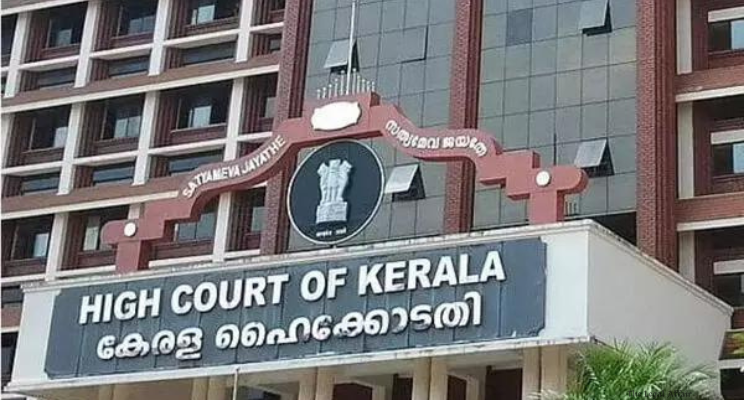
In the matter of M/s. Kalpetta Janakshema Maruthi Chits Pvt. Ltd. (In Liquidation), Report No. 32/2025 in Company Petition No. 43/2016, citation 2025 LiveLaw (Ker) 614, the Kerala High Court, through Justice Viju Abraham, delivered a significant ruling clarifying the jurisdictional overlap between the High Courts and the National Company Law Tribunal (NCLT) in the context of winding-up proceedings and criminal complaints. The case arose from a report filed by the Official Liquidator seeking clarity and permission to proceed with certain criminal complaints pending before the Chief Judicial Magistrate (CJM) without obtaining leave from the NCLT. The CJM had directed that the company under liquidation obtain such leave. The Official Liquidator, represented by counsel K. Moni, approached the High Court with the request to determine whether such leave was necessary in circumstances where the winding-up order had already been passed under the Companies Act, 1956 and remained with the High Court. The Court, after examining statutory provisions, case law, and the nature of the proceedings, held that the leave of the NCLT was not required in such cases.
Arguments:
The Official Liquidator’s submissions revolved around the argument that since the winding-up order in respect of the company was passed by the High Court on 04.02.2019 in CP No. 43 of 2015 under the provisions of the Companies Act, 1956, the subsequent provisions of the Companies Act, 2013 and the requirement of obtaining leave under Section 279 of the 2013 Act were not applicable. Instead, the proceedings continued under the old regime, namely the Companies Act, 1956 and the Companies (Court) Rules, 1959, as contemplated by Section 434 of the Companies Act, 2013 and the Companies (Transfer of Pending Proceedings) Rules, 2016. Section 434 specifically provided that winding-up proceedings which had not been transferred from the High Courts would continue under the 1956 Act. Since the winding-up was ordered under the 1956 Act and remained pending before the High Court, jurisdiction rested with the High Court and not the NCLT. Therefore, the requirement to seek leave from the Tribunal was not attracted in the instant matter.
The Official Liquidator also placed reliance on judicial precedents to argue that criminal complaints, particularly under Section 138 of the Negotiable Instruments Act (NI Act), were not covered within the ambit of “suit or other legal proceedings” requiring leave under Section 446 of the Companies Act, 1956 (the provision analogous to Section 279 of the Companies Act, 2013). In Jose Antony v. Official Liquidator [1998 (2) KLT 176], the Kerala High Court had held that only criminal proceedings relating to the assets of the company would come within the ambit of Section 446. Similarly, the Bombay High Court in M/s. Indorama Synthetics (I) Ltd v. State of Maharashtra and another [AIR OnLine 2016 Bom 1] held that the phrase “suit or other proceedings” in Section 446 did not include criminal complaints filed under Section 138 of the NI Act. By relying on these authorities, the Official Liquidator emphasized that criminal complaints filed under the NI Act could proceed independently and did not require prior leave either from the High Court or the NCLT.
On the other hand, the issue arose because the CJM had directed that the company in liquidation must obtain leave from the NCLT to continue with the complaints. This indicated a judicial understanding at the trial court level that once the Companies Act, 2013 came into force, the NCLT became the exclusive authority to grant leave under Section 279. The apparent argument, implicit in the CJM’s order, was that since the Companies Act, 2013 governs the present legal regime, all matters of winding-up and legal proceedings against companies under liquidation must require leave of the Tribunal. The reasoning followed that Section 279, being the successor to Section 446 of the 1956 Act, extended to all such cases regardless of whether the winding-up was initiated under the older law.
Judgement:
The High Court, however, decisively rejected this view. Justice Viju Abraham clarified that the winding-up order in the instant case was passed under the Companies Act, 1956 and the matter remained pending before the High Court. In such cases, by virtue of Section 434 of the Companies Act, 2013 and the Transfer of Pending Proceedings Rules, 2016, the old Act continued to govern the proceedings. Therefore, the Companies Act, 1956 along with the Companies (Court) Rules, 1959 remained applicable. The Court observed that since the matter was not transferred to the NCLT, the provisions of the 2013 Act requiring leave from the Tribunal did not apply. The corresponding provision in the 1956 Act, Section 446, also had no application to criminal complaints under Section 138 of the NI Act.
Justice Abraham drew attention to the earlier rulings. In Jose Antony v. Official Liquidator, the Kerala High Court had held that criminal proceedings unrelated to the company’s assets fall outside the scope of Section 446. Likewise, the Bombay High Court in Indorama Synthetics had clarified that Section 446 did not cover NI Act complaints. Applying this settled position, the Court reasoned that the Official Liquidator did not require leave from the NCLT or even the High Court to proceed with the criminal complaints already pending before the CJM. These complaints were independent of the winding-up process and did not directly impinge on the assets of the company.
The Court further emphasized that the interpretation of “suit or other proceedings” in Section 446 must be restricted to proceedings concerning civil liabilities and the assets of the company, not to penal proceedings like those under Section 138 of the NI Act. The legislative intent was to ensure that civil suits or recovery actions that might deplete the company’s assets were subject to the oversight of the winding-up court, thereby protecting the collective interest of creditors. However, criminal prosecutions under the NI Act serve a different function of penalizing dishonor of cheques and ensuring commercial discipline, and hence do not require such leave.
Ultimately, the High Court disposed of the matter by allowing the Official Liquidator to proceed with the pending criminal complaints under Section 138 of the NI Act without obtaining leave from the NCLT. The judgment reaffirmed the principle that where winding-up proceedings were initiated and ordered under the Companies Act, 1956, they remain governed by that Act unless specifically transferred to the NCLT. Additionally, it reinforced the judicial consensus that criminal complaints under the NI Act do not fall within the ambit of provisions requiring leave in winding-up matters.
This ruling carries important implications for winding-up proceedings and the role of the NCLT. First, it provides clarity to Official Liquidators, creditors, and courts dealing with pending cases under the 1956 Act, affirming that unless transferred, these proceedings remain under the old regime. Second, it distinguishes between civil and criminal proceedings in the context of winding-up, ensuring that the protective mechanisms of Section 446/279 are not over-extended to cover penal actions. Third, it preserves the independence of criminal complaints under Section 138 of the NI Act, which are intended to uphold financial integrity in commercial transactions and should not be stalled by winding-up technicalities.
In conclusion, the Kerala High Court’s ruling in M/s. Kalpetta Janakshema Maruthi Chits Pvt. Ltd. (In Liquidation) underscores the importance of legislative clarity and judicial consistency in corporate law. By harmonizing the provisions of the Companies Act, 1956, the Companies Act, 2013, and precedents, the Court ensured that the Official Liquidator could perform duties effectively without unnecessary procedural hurdles. The judgment reinforces the principle that criminal proceedings under the NI Act are distinct from civil suits and need not be subjected to leave requirements meant for asset-protection in winding-up contexts.