


Introduction:
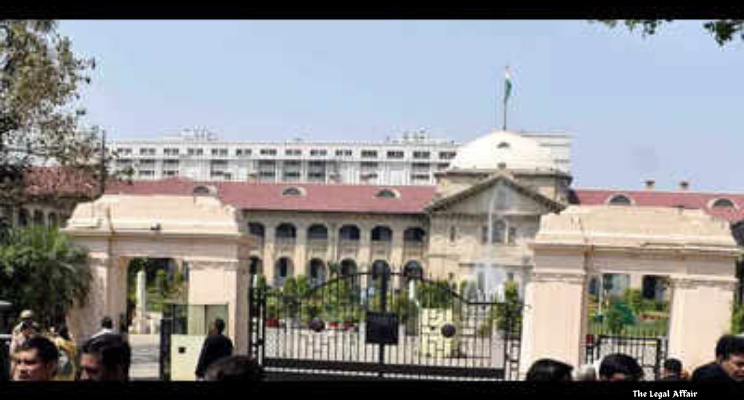
The case of Kumari Sonam vs. State of U.P. and 4 Others, 2025 LiveLaw (AB) 325, decided by the Allahabad High Court, raises significant questions regarding the interpretation of the term “same family” under Clause 12(iv) of the Government Order dated May 21, 2023, which governs the recruitment of Anganbari Workers and Assistants. The petitioner, Kumari Sonam, challenged the cancellation of her appointment as Anganbari Worker by the District Programme Officer, Bareilly, on June 13, 2025. The cancellation was premised on the fact that her jethani (sister-in-law), the wife of her husband’s elder brother, was already serving as an Anganbari Assistant at the same centre. According to the District Programme Officer, the Government Order prohibited two women of the same family from holding such posts within the same centre. The petitioner, however, argued that her jethani was not part of her immediate family as she lived in a separate house with a different household number, and therefore, the cancellation was arbitrary and unsustainable. The matter reached the Allahabad High Court before Justice Ajit Kumar, who examined not only the procedural irregularities in the cancellation order but also the substantive meaning of the phrase “same family.”
Arguments:
The petitioner, through her counsel, asserted that the impugned order was passed in blatant violation of the principles of natural justice, as she was not given any notice or an opportunity of hearing before her appointment was annulled. Since the cancellation carried adverse civil consequences affecting her livelihood, such omission rendered the decision procedurally defective. Beyond this preliminary objection, the petitioner also focused on the core issue of whether her jethani could be regarded as belonging to the “same family” under Clause 12(iv) of the Government Order. Her counsel argued that family definitions in various government policies and statutory frameworks consistently recognize only immediate dependents such as spouse, children, and parents. By no reasonable stretch of interpretation could a sister-in-law (jethani) be treated as part of the nuclear family unit for the purpose of employment restrictions.
In further support, the petitioner’s counsel relied on family registers maintained by the local authorities, which showed that her jethani lived in a separate house, with a separate house number, separate kitchen, and distinct ration card. This clearly demonstrated that the two women were not members of the same household, despite being related by virtue of marriage. Counsel also cited the definition of “family” provided under the rules applicable to government employees in the medical department, where family for medical assistance purposes is restricted to direct dependents. Similarly, under Order XXXII-A, Rule 6 of the Code of Civil Procedure, the definition of family emphasizes the nuclear unit rather than extended relations. Applying these definitions, counsel submitted that there was no legal or logical basis to categorize a jethani as part of the same family unless the brothers and their families resided under one roof with a common kitchen. Therefore, the cancellation order, which was based purely on the assumption that the two women were members of the same family, was wholly misconceived.
On the other hand, the State defended the order by arguing that the Government Order of May 21, 2023 was designed to avoid concentration of benefits within one family and to ensure equitable distribution of employment opportunities among different households in a village. According to the State, if two women belonging to the same extended family were permitted to occupy posts of Anganbari Worker and Anganbari Assistant within the same centre, it would frustrate the objective of fair distribution. The State contended that “same family” had to be interpreted broadly to include not only immediate members but also relations such as sisters-in-law, particularly in rural settings where joint families are prevalent. In such contexts, even though family members may occasionally live in separate houses, they are still considered part of one extended family structure. The State’s position was that allowing multiple appointments from such related households would be inequitable and would violate the spirit of Clause 12(iv). The District Programme Officer, therefore, acted correctly in cancelling the appointment to maintain the integrity of the recruitment process.
Judgement:
Justice Ajit Kumar, while analyzing the rival contentions, first addressed the preliminary issue of procedural fairness. The Court observed that the cancellation of the petitioner’s appointment had been carried out without giving her any notice or opportunity of hearing. Such a step was contrary to well-settled principles of natural justice, especially since the order carried grave civil consequences, depriving the petitioner of her right to employment and livelihood. The Court held that even before delving into the substantive issue, the impugned order was vitiated on procedural grounds and thus could not be sustained. This threshold finding itself was sufficient to quash the cancellation. However, the Court went further to address the larger interpretative question to provide clarity for future cases.
Turning to Clause 12(iv) of the Government Order, the Court examined the phrase “same family.” The Court observed that family is a contextual term, and its meaning varies depending on the statutory or policy framework. In the context of Anganbari appointments, the bar was intended to prevent monopolization of benefits within a single household. However, the Court clarified that this did not mean all extended relatives could be automatically treated as belonging to the same family. Specifically, the Court stated that a daughter-in-law (jethani) would not ordinarily be considered a member of the petitioner’s family unless the two brothers lived together with a common house and kitchen. Where the households were separate in terms of residence, ration, and day-to-day living, the jethani could not be treated as belonging to the same family as the petitioner.
The Court underscored that in rural areas of Uttar Pradesh, it was not uncommon for brothers to set up separate households after marriage, even though they belonged to the same ancestral family. In such cases, their wives could not be said to fall within the definition of “same family” for employment restrictions. The Court thus rejected the State’s expansive interpretation, holding that it would lead to arbitrary exclusion of eligible candidates merely because of distant or extended familial relations. Such a broad approach would be inconsistent with the purpose of the Government Order, which was only to prevent concentration of employment within a single household, not to penalize distant relatives living independently.
Consequently, the Court held that both on procedural grounds (violation of natural justice) and on merits (misinterpretation of “same family”), the cancellation order was unsustainable. The writ petition was accordingly allowed, and the District Programme Officer was directed to reinstate the petitioner as Anganbari Worker forthwith so that she could continue discharging her duties.
This judgment carries significant implications. It affirms the principle that livelihood decisions cannot be taken without affording individuals an opportunity of hearing. It also provides an important clarification on the scope of “same family” in service law contexts, particularly in schemes aimed at rural welfare. The Court struck a balance by recognizing that while nepotism must be curbed, eligibility cannot be denied on the basis of extended relationships that do not constitute a common household. This ensures fairness in recruitment while respecting the diversity of family structures in rural India.
The decision is also noteworthy in its broader implications for women’s employment rights. Anganbari services, being part of the Integrated Child Development Services (ICDS), are crucial for rural health, nutrition, and early childhood education. Arbitrary cancellation of appointments on vague grounds like extended family relations would disproportionately affect women who depend on such employment for livelihood and empowerment. By clarifying that a jethani does not automatically qualify as part of the same family, the Court has protected women workers from being unfairly disqualified due to extended kinship ties.
Another dimension of the judgment lies in the way it harmonizes administrative efficiency with individual rights. The Court acknowledged the objective of the Government Order in preventing undue advantage to one household but ensured that its application does not become overbroad or mechanical. By tying the definition of family to the practical test of “common house and common kitchen,” the Court provided a workable standard that can guide administrators in similar cases. This approach reduces ambiguity while safeguarding fairness in selection processes.
Overall, the ruling in Kumari Sonam vs. State of U.P. highlights the judiciary’s role in interpreting government policies in a manner consistent with constitutional values, particularly the right to livelihood under Article 21. It reinforces that executive orders, however well-intentioned, cannot be applied arbitrarily to deprive individuals of their rights. Instead, such orders must be construed reasonably, keeping in mind the social and familial realities of Indian society.