


Introduction:
In a significant judgment reiterating the protective scope of the Protection of Children from Sexual Offences Act, 2012 (POCSO Act), the Himachal Pradesh High Court refused to grant regular bail to an accused facing charges under Sections 363 and 376 of the IPC along with Section 4 of the POCSO Act. The case titled Rishi Kumar vs. State of Himachal Pradesh came before Justice Rakesh Kainthla, who firmly ruled that neither a victim’s representation of herself as an adult nor an entry in the Aadhaar card indicating a higher age can exonerate or protect an accused from charges of sexually assaulting a minor. The FIR, lodged on May 20, 2024, by the victim’s father, alleged that his daughter, born in August 2007, had left home without informing anyone, and he suspected that she had been kidnapped by the petitioner. The subsequent investigation revealed far graver facts, with DNA analysis linking the accused directly to the crime. Against this factual backdrop, the accused sought bail by arguing that the victim presented herself as an adult, while the prosecution vehemently opposed, asserting the seriousness of the offence. The High Court, however, rejected the accused’s pleas, holding that statutory protection under POCSO is absolute and cannot be diluted by misrepresentation or Aadhaar entries.
Arguments on Behalf of the Accused:
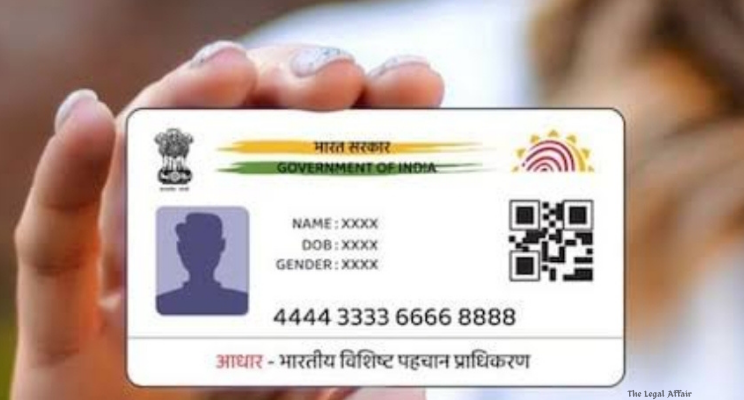
The accused, through his counsel, advanced several arguments to secure bail. First and foremost, it was argued that the victim herself had carried an Aadhaar card showing her date of birth as January 1, 2005, which indicated that she was 19 years old on the date of the alleged incident. Further, the victim had misrepresented her age to the accused and claimed that she was a major. On this basis, the defence submitted that the petitioner had reasonable grounds to believe that the victim was not a minor, and therefore the offences under the POCSO Act, which are contingent on the victim being a child below 18 years, could not be sustained. The defence contended that when the victim voluntarily accompanied the accused and projected herself as an adult, no case of kidnapping or statutory rape could be made out against him.
Secondly, the petitioner’s counsel argued that initially the victim herself denied any illegal act by the accused when recovered by the police, and admitted that she had left her home of her own volition. This, according to the defence, weakened the prosecution’s claim of sexual assault. It was further submitted that the subsequent supplementary statement of the victim alleging rape was unreliable as it contradicted her earlier stance. The defence stressed that consent was evident in the victim’s conduct, and even if her age was under dispute, her own representation as an adult should mitigate the culpability of the petitioner.
Thirdly, the defence maintained that in bail proceedings, the Court must consider the possibility of false implication. The petitioner, it was claimed, had been implicated only on the basis of the victim’s subsequent statement and forensic evidence, which could not be conclusively relied upon before trial. They urged that the delay in trial and prolonged incarceration would cause irreparable hardship to the petitioner, who deserved to be released on bail pending trial.
Arguments on Behalf of the State:
Opposing the plea for bail, the Additional Advocate General (AAG) of Himachal Pradesh submitted that the accused had committed a heinous crime of sexually assaulting a minor, which is punishable under both the IPC and the POCSO Act. It was emphasized that the forensic report categorically established that the DNA profiles obtained from the victim’s body and clothes matched the petitioner’s blood samples. This scientific evidence, coupled with the victim’s supplementary statement, clearly established that the offence of rape was committed.
The prosecution rejected the defence plea regarding the Aadhaar card and the victim’s misrepresentation of her age. The AAG argued that the date of birth of the victim, as verified from her school records and her father’s statement, conclusively showed that she was born in August 2007, making her a minor at the time of the incident. It was stressed that under the scheme of the POCSO Act, consent is irrelevant when the victim is a child below 18 years, and even voluntary participation by the victim does not absolve the accused.
Further, the State submitted that the reliance on the Aadhaar card was misplaced since the Supreme Court itself has held in Saroj & Ors. v. Iffco-Tokio General Insurance Co. & Ors., 2024 LiveLaw (SC) 837 that Aadhaar cannot be treated as proof of date of birth. The AAG argued that accepting such a document as proof of age would not only be legally untenable but would also open avenues for misuse, thereby frustrating the very object of the POCSO Act.
Finally, the prosecution highlighted that only one out of 31 prosecution witnesses had been examined so far, and releasing the petitioner on bail at this stage would seriously compromise the fair conduct of the trial. It was submitted that the seriousness of the offence, the gravity of allegations, and the risk of the accused tampering with evidence warranted rejection of the bail plea.
Court’s Findings and Judgment:
Justice Rakesh Kainthla, after hearing both sides, delivered a reasoned order rejecting the bail petition. The Court held that the Aadhaar card could not be relied upon for determining the age of the victim, citing the Supreme Court’s ruling in Saroj that Aadhaar is not a valid proof of date of birth. The Court observed that the correct determination of age must be based on school records, birth certificates, or matriculation certificates, and in this case, the victim’s date of birth was conclusively established as August 2007, making her a minor on the date of the incident.
The Court also dismissed the defence plea that the victim misrepresented her age to the petitioner. Referring to the English case of Reg. v. Prince ([LR] 2 CCR 154), which has long been treated as a locus classicus, the Court observed that even if a girl falsely represents herself to be older, it does not absolve the accused if she is, in fact, under the statutory age. Justice Kainthla emphasized that the POCSO Act was enacted not just to protect children from exploitation by others but also to protect them from their own vulnerability and immaturity. The Court reiterated that children are legally deemed incapable of giving valid consent, and therefore, consent or misrepresentation is no defence in cases involving minors.
Additionally, the Court considered the forensic evidence, which scientifically linked the accused to the crime. The DNA report corroborated the victim’s later statement of sexual assault, and the Court held that such evidence could not be brushed aside at the bail stage.
Finally, noting that the trial was at a preliminary stage with only one prosecution witness examined, the Court ruled that releasing the petitioner on bail would adversely affect the progress and fairness of the trial. The gravity of the offence, the vulnerability of the victim, and the public interest in protecting minors weighed heavily against granting bail. Accordingly, the bail petition was dismissed. The Court clarified, however, that its findings were limited to the consideration of bail and would not prejudice the merits of the trial.