


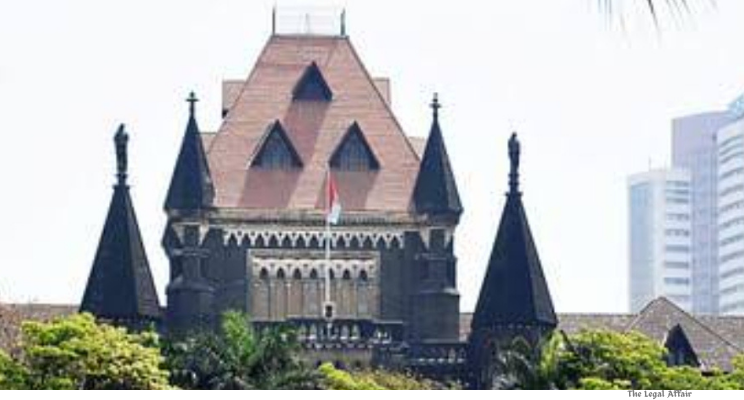
Introduction:
The Bombay High Court recently heard a sensitive petition filed by members of the Jain community, who sought the closure of slaughterhouses across Mumbai for the entire duration of the sacred festival of Paryushan Parva. The plea came after the Brihanmumbai Municipal Corporation (BMC) Commissioner issued an order on August 14, 2025, restricting slaughterhouse closure to only two days—August 24 and August 27, the latter coinciding with Ganesh Chaturthi. Dissatisfied, the Jain community approached the Court arguing that the order failed to recognize the sanctity and significance of the week-long religious observance that runs from August 20 to August 27.
Represented by senior advocate Prasad Dhakephalkar and advocate Abhinav Chandrachud, the community stressed that their faith and long-standing tradition deserved respect, pointing out that other cities such as Ahmedabad had granted a complete ban on slaughterhouse operations during Paryushan. The case was heard by a division bench comprising Chief Justice Alok Aradhe and Justice Sandeep Marne, who carefully balanced religious sentiments with constitutional, statutory, and civic obligations before issuing notice to the State and the BMC.
Petitioners’ Submissions:
Advocate Abhinav Chandrachud, appearing for the petitioners, opened the arguments by emphasizing that the order of the BMC Commissioner demonstrated a failure to apply a sensitive and fair approach. He argued that while the Jain community forms a relatively small proportion of Mumbai’s overall population, its religious significance cannot be diluted. Chandrachud highlighted that in Ahmedabad, where the Jain population is numerically smaller than in Mumbai, authorities had closed slaughterhouses for the entire duration of Paryushan. Thus, he argued, Mumbai’s civic authorities should have taken a similar decision.
Senior advocate Prasad Dhakephalkar supplemented the arguments by questioning the rationale of the Commissioner’s order. He pointed out that the civic body erred in calculating Jain population as a fraction of the entire city’s population. According to him, the real comparison ought to have been between the Jain community and the population of non-vegetarians who consume meat. By adding vegetarians to the larger denominator, the BMC artificially diluted the community’s relative demographic weight. Dhakephalkar argued further that, with the holy month of Shravan already being observed in Maharashtra, even many non-vegetarians abstain from consuming meat during this time. Therefore, the civic body’s reliance on statistics was not only faulty but also misleading.
Taking the argument to a symbolic level, Dhakephalkar reminded the Court that even Emperor Akbar, during his reign, was persuaded by the Jain community to close slaughterhouses in Gujarat during Paryushan. He lamented that while convincing the Mughal Emperor was possible, persuading a democratic government and a municipal authority in independent India appeared far more difficult. According to him, the reluctance of civic authorities displayed a lack of sensitivity towards minority rights and religious practices.
BMC and State’s Position:
While the BMC and State Government had not yet formally replied (as the matter was at the notice stage), their stance was indirectly reflected in the arguments addressed during the hearing. The order of August 14, 2025, reflected the BMC Commissioner’s view that Mumbai’s Jain population is comparatively low when measured against the city’s total population. On this basis, a two-day closure was considered sufficient to balance religious sentiments with the daily needs of the city, particularly given Mumbai’s cosmopolitan demographic and dependence on diverse food choices.
The State and civic authorities also indirectly relied upon the absence of a statutory provision or legal mandate requiring mandatory closure of slaughterhouses during Paryushan. The Constitution protects religious freedom under Article 25, but this right is subject to public order, health, and morality. From the State’s standpoint, while it could show respect to Jain sentiments by accommodating partial closure, a complete ban across all days might infringe upon the dietary practices and food rights of other communities. Thus, the order sought to strike a pragmatic balance.
Court’s Observations:
The bench, led by Chief Justice Alok Aradhe, engaged in a careful dialogue with the petitioners. The Court asked pointedly whether the Jain community could point to any statutory right that guaranteed closure of slaughterhouses during Paryushan. The Chief Justice referred to earlier judicial precedents, including cases from Ahmedabad that had even reached the Supreme Court, noting that no enforceable legal right had been established in law mandating such closures.
The Court also observed that while there are fundamental duties enshrined in the Constitution—such as compassion towards animals under Article 51A(g)—these cannot be directly enforced as legal rights unless incorporated into statutory law. The bench emphasized that while the sentiments of the Jain community deserve respect, courts must operate within the “four corners of law.”
Chief Justice Aradhe further remarked that while the Court could quash an order on grounds of non-application of mind, the petitioners were going beyond that by seeking a positive direction for a full closure across all seven days. The Court highlighted the difference between reviewing an existing administrative order for arbitrariness and issuing new directives that have no basis in statutory law. Justice Marne, concurring, pointed out that the grounds advanced by the petitioners appeared unconvincing from a strictly legal standpoint.
Symbolism vs. Legality:
A striking aspect of the arguments was Dhakephalkar’s repeated reliance on historical precedent, particularly the example of Emperor Akbar’s decision centuries ago. The Court, while acknowledging the cultural and moral force of the submission, noted that historical persuasion cannot substitute for legal enforceability in a constitutional democracy. As Chief Justice Aradhe put it, “If it is left to us and people will listen to us we will ask everyone to be vegetarian. But the order needs to be within the four corners of law.” This statement captured the delicate balance between judicial empathy and constitutional restraint.
Judicial Restraint and Deference:
The Court made it clear that while it understood the religious sentiments of the Jain community, judicial intervention in matters of administrative discretion requires clear legal backing. The BMC, being the local authority, is empowered to make decisions on slaughterhouse closures. Unless its order is arbitrary, discriminatory, or ultra vires, courts cannot substitute their judgment for that of civic authorities.
The Court thus refrained from passing any immediate direction to extend the closure beyond the two days already ordered. Instead, it issued notice to the State and the BMC, seeking their response, while keeping the matter pending for future consideration, particularly for the next year’s Paryushan observance.
Adjournment and Future Course:
The Court adjourned the matter for two weeks, indicating that while the petitioners had raised important issues of cultural and religious sensitivity, the matter ultimately required statutory backing or policy determination by the State, rather than judicial fiat. The Court signaled its openness to review the matter in the broader context of religious accommodation but underscored that it could not create new rights through judicial pronouncement in the absence of law.
Conclusion of the Narrative:
This case highlights the tension between religious sentiments, administrative discretion, and constitutional principles. On one side stands the Jain community, seeking respect for its centuries-old tradition of non-violence during Paryushan, and on the other, civic authorities bound to manage a city as diverse and vast as Mumbai. The Bombay High Court’s interim approach reflects judicial restraint, recognizing that while courts can strike down arbitrary orders, they cannot invent rights where none exist in law. For now, the debate continues, as the matter awaits responses from the State and the BMC.