


Introduction:
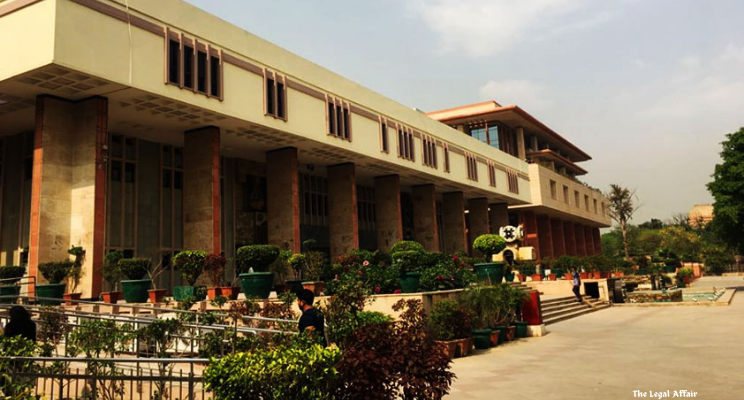
The Delhi High Court, in its decision dated August 2025 in Geeta Sharma v. Kanchana Rai & Ors., delivered a significant ruling reinforcing the rights of widowed daughters-in-law under the Hindu Adoption and Maintenance Act, 1956 (HAMA). A division bench comprising Justice Anil Kshetarpal and Justice Harish Vaidyanathan Shankar dealt with an appeal filed by a woman who became a widow in March 2023 after her husband’s death, while her father-in-law had already passed away in December 2021. The appellant had sought maintenance under Sections 19, 21, 22, and 23 of HAMA, but her petition was dismissed by both the family court and the single judge of the High Court, leading her to file the present appeal. The case raised the core legal issue of whether a widowed daughter-in-law is entitled to claim maintenance from the estate of her deceased father-in-law, particularly when her husband predeceased his father. The Court, interpreting Sections 19 and 21(vii) of HAMA, upheld her right to seek maintenance from the estate derived out of the father-in-law’s coparcenary property, while clarifying that no such enforceable right exists over his separate or self-acquired property.
Arguments of the Appellant:
The appellant, represented by counsel, argued that the statutory framework of HAMA confers upon a widowed daughter-in-law the right to claim maintenance from her father-in-law, irrespective of whether the claim arises during his lifetime or after his death from his estate. Relying heavily on Section 19(1), which provides that a widowed daughter-in-law may claim maintenance from her father-in-law if she is unable to obtain it from her late husband’s estate or from her children, the appellant contended that her position as a dependent under Section 21(vii) gave her an enforceable claim against her father-in-law’s estate. She argued that this statutory recognition of her dependency was a necessary social safeguard intended to protect widows from destitution, in line with the welfare objectives of the legislation. The appellant further emphasized that the wording of Section 21(vii), which includes “the widow of the son of the deceased” within the definition of dependents, clearly envisages her right to approach the estate of her father-in-law once her husband had passed away. The counsel stressed that since her husband had left no independent estate and she lacked financial support from children or other relatives, her entitlement under HAMA must be enforced to ensure her sustenance. She also submitted that the interpretation advanced by the family court and the single judge was overly restrictive and inconsistent with the legislative intent of HAMA, which was to infuse Hindu family law with fairness, compassion, and equity. The appellant urged the bench to recognize that denying her maintenance would effectively negate her statutory rights and leave her vulnerable, contrary to the principles of social welfare underlying the enactment.
Arguments of the Respondents:
The respondents, including representatives of the deceased father-in-law’s estate, opposed the claim by contending that the statutory right of a widowed daughter-in-law is not absolute and is circumscribed by the express limitations under HAMA. They argued that Section 19(1) of HAMA specifically restricts the liability of the father-in-law to his coparcenary property and does not extend to his self-acquired or separate property. Since the father-in-law in this case had left behind substantial self-acquired assets in addition to coparcenary property, the respondents contended that no claim could be enforced against those self-acquired assets, as such an extension would go beyond the statute and unfairly burden the estate. The respondents also emphasized that the obligation of a father-in-law to maintain his widowed daughter-in-law arises only when she is unable to obtain maintenance from her husband’s estate or from her children’s estate. They contended that the appellant had not demonstrated with sufficient evidence that she had exhausted all potential claims against her husband’s estate, and therefore her direct approach against the father-in-law’s estate was premature and unsustainable. Moreover, they argued that the single judge and family court had correctly dismissed her petition by interpreting HAMA in a manner that avoids over-expansion of liability upon estates, since such expansion could create uncertainty for legal heirs and successors. The respondents highlighted that HAMA, while a welfare legislation, balances equity with property rights, and therefore it cannot be interpreted to impose obligations beyond the scope intended by Parliament.
Court’s Judgment:
The division bench of the Delhi High Court, after examining the arguments, statutory provisions, and the scheme of HAMA, partly upheld the appellant’s claim by recognizing her right to maintenance but limiting its scope to the coparcenary property of her deceased father-in-law. The Court referred to Section 21(vii) of HAMA, which defines “dependents” to include the widow of a son of the deceased, but only to the extent that she is unable to secure maintenance from her husband’s estate or from her children or their estates. The bench observed that the plain language of this provision indicates that the widowed daughter-in-law acquires the status of a dependent and is entitled to claim maintenance from her father-in-law’s estate, but such liability is not personal to the father-in-law beyond his coparcenary property. Referring to Section 19(1), the Court clarified that the legal obligation of the father-in-law to provide maintenance arises during his lifetime but survives after his death as a claim enforceable against his estate. However, this obligation is subject to a significant restriction—the liability extends only to coparcenary property and not to separate or self-acquired assets. The Court stressed that the legislative intent behind this restriction was to preserve the sanctity of self-acquired property rights while ensuring that a widow is not left destitute if her father-in-law leaves behind coparcenary property forming part of his estate. Interpreting the statute as a social welfare legislation, the Court emphasized the need to construe its provisions liberally in favor of widowed daughters-in-law to secure their sustenance and dignity, but within the framework expressly set by Parliament. It noted that a restrictive interpretation denying widows access even to the father-in-law’s coparcenary estate would frustrate the object of HAMA, which was enacted to integrate traditional Hindu family obligations with principles of equity and fairness. At the same time, the Court recognized that extending the liability to self-acquired property would amount to judicial legislation, which is impermissible. Therefore, the bench disposed of the appeal by setting aside the reasoning of the single judge and family court that completely denied relief to the appellant, and instead affirming her right to claim maintenance from the coparcenary estate of her father-in-law. The judgment serves as a significant precedent clarifying the extent of liability under Section 19(1) and balancing the widow’s right to sustenance with the statutory limits on the obligation of the father-in-law’s estate.