


Introduction:
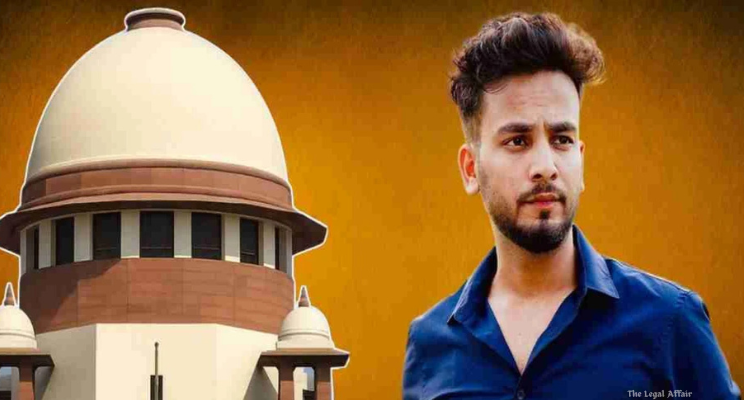
In a high-profile legal development, the Supreme Court of India on August 6, 2025, granted an interim stay on the trial court proceedings against YouTuber and influencer Elvish Yadav in connection with a case involving alleged misuse of snakes and snake venom for video content and alleged participation in organising rave parties where foreign nationals reportedly supplied venom and narcotic substances. The matter reached the Supreme Court via a Special Leave Petition (SLP) after the Allahabad High Court had, on May 12, 2025, refused to quash the chargesheet and summoning order issued under several statutes, including the Wildlife Protection Act, Indian Penal Code (IPC), and Narcotic Drugs and Psychotropic Substances (NDPS) Act.
A division bench comprising Justice MM Sundresh and Justice Joymalya Bagchi issued notice in Yadav’s plea and clubbed it with another pending case by a complainant who had sought personal protection. That matter is listed for hearing on August 29, 2025. Meanwhile, Yadav’s legal team, led by Senior Advocate Mukta Gupta, sought an interim stay to avoid the imminent framing of charges scheduled before the trial court on Friday. The Court acceded to the request and granted a stay.
Background of the Case:
The controversy erupted after an FIR was filed at Police Station Sector-49 in Noida, alleging that Elvish Yadav had procured snakes and snake venom for a YouTube video and was involved in planning rave parties with international attendees where snake venom and other intoxicants were allegedly circulated. Based on this FIR, the police filed a chargesheet invoking Sections 9, 39, 48A, 49, 50, and 51 of the Wildlife Protection Act; Sections 284, 289, and 120B of the IPC; and Sections 8, 22, 29, 30, and 32 of the NDPS Act. The First Additional Chief Judicial Magistrate of Gautam Buddha Nagar subsequently took cognisance of these charges and issued a summons to Yadav.
The FIR was filed by a complainant who claimed to be an Animal Welfare Officer; however, Senior Advocate Navin Sinha, representing Yadav before the High Court, contested this by asserting that the informant was no longer legally competent to file such a complaint under the Wildlife Protection Act. This contention formed one of the pillars of the defence’s argument to invalidate the proceedings.
Arguments by the Petitioner:
The petitioner’s legal team, which included notable advocates such as Raman Yadav and Aman Jha, argued that Yadav was being unfairly targeted due to his fame as a social media personality and former reality TV show winner. They submitted that no poisonous snakes, venom, or narcotic substances were recovered from Yadav’s possession or during the alleged rave parties he was accused of organizing. It was emphasized that Yadav was not even physically present at the party in question.
The defence also highlighted that the charges under Sections 27 and 27A of the NDPS Act, initially included in the case, were later dropped by the authorities due to lack of evidence, indicating an attempt to sensationalize the matter post-arrest. They maintained that the snakes featured in the alleged video were non-poisonous, domesticated reptiles belonging to the producers of the song Yadav had been invited to shoot. There was no harm caused to either animals or humans during the filming.
Additionally, the legal team underlined procedural violations, particularly the incompetency of the informant under the Wildlife Protection Act and absence of direct evidence linking Yadav to any illicit substance trade or animal cruelty. They contended that the case was primarily built on conjecture and media pressure.
Arguments by the State:
Representing the State of Uttar Pradesh, Additional Advocate General Manish Goyal opposed the plea and supported the ongoing proceedings. He asserted that investigations had traced the snakes used in the video back to individuals associated with Yadav, suggesting an element of complicity. The prosecution argued that the defence’s points regarding evidence and involvement could be appropriately examined only during the trial.
The State also held that the FIR was valid on face value and the High Court was right in not quashing the case prematurely, as doing so would short-circuit the evidentiary process that is integral to judicial scrutiny. Furthermore, the prosecution emphasized that being a celebrity or having a large public following does not provide immunity from legal accountability, and courts must not treat such individuals differently from ordinary citizens.
High Court’s Observations:
The Allahabad High Court had earlier dismissed Yadav’s plea to quash the proceedings. It noted that although some of the allegations might appear flimsy, the ultimate determination of culpability must be left to the trial court. The High Court concluded that the FIR and chargesheet presented a prima facie case worthy of examination through legal trial. It declined to interfere merely based on technicalities or claims about the informant’s competence, especially in light of broader allegations under the NDPS Act and the Wildlife Protection Act.
It further commented that Yadav’s public stature could not justify any special treatment or deviation from due process. The trial court, it held, was the appropriate forum to resolve factual disputes concerning presence, possession, and the actual use of wildlife or venom.
Supreme Court’s Decision:
When the matter came up before the Supreme Court, Senior Advocate Mukta Gupta reiterated the core issues raised earlier and stressed that the trial court’s impending charge framing could prejudice Yadav, especially since the statutory violations alleged were unfounded. The bench considered these submissions and granted a stay on the trial court proceedings until further hearing, while also tagging it with another related case scheduled for hearing on August 29.
The apex court emphasized the importance of procedural fairness and agreed that in the absence of direct recovery or proof of involvement, it would be premature to subject the accused to the rigors of criminal trial without first adjudicating the statutory validity of the FIR and subsequent investigation.
Thus, the Supreme Court’s interim relief not only gives Yadav temporary respite but also provides an opportunity to scrutinize the broader legal questions around informant validity, media influence on investigation, and misuse of stringent statutes like the NDPS Act in high-profile cases.