


Introduction:
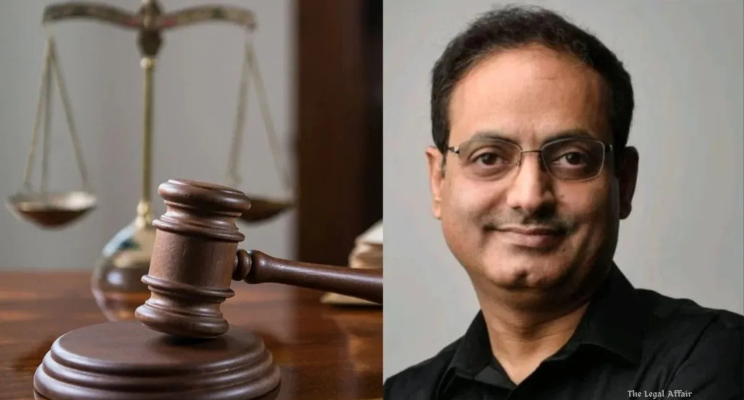
In a significant order dated July 23, 2025, the Rajasthan High Court, presided over by Justice Sameer Jain, stayed further proceedings in a defamation complaint pending before the Ajmer Court against Drishti IAS founder Vikas Divyakirti. The complaint alleged that Divyakirti made derogatory and sarcastic remarks against the judiciary in a motivational video titled “IAS vs Judge: कौन ज्यादा ताकतवर है | Who is more powerful?” uploaded on YouTube. The Ajmer Court had previously taken partial cognizance of the complaint under Sections 353(2) (public mischief), 356(2), 356(3) (defamation) of the Bharatiya Nyaya Sanhita (BNS), 2023, and Section 66A(b) of the Information Technology Act. Earlier, the Additional Civil Judge and Judicial Magistrate No. 02, Ajmer, in an order dated July 8, 2025, observed that there was strong prima facie evidence that Divyakirti, with malicious intent to gain petty publicity, used derogatory and sarcastic language aimed at discrediting the judiciary, which includes judges and advocates. The Magistrate opined that such statements could potentially damage the credibility, impartiality, and dignity of the judicial institution, thereby affecting public trust. However, Dr. Divyakirti has consistently denied these allegations, asserting that he had no involvement with the YouTube channel that uploaded the contested video and that his right to free speech had been misinterpreted. Represented by Senior Counsel V.R. Bajwa and advocates Sumeer Sodhi and Punit Singhvi, approached the Rajasthan High Court challenging the lower court’s order and sought quashing of the proceedings.
Arguments of Both Sides:
The complainant, who initiated the defamation case in Ajmer, argued that Divyakirti’s video content was not only offensive but also deliberately aimed at ridiculing and undermining the judiciary. According to the complainant, the remarks made in the video compared IAS officers and judges in a disparaging manner, thereby hurting the sentiments of the legal fraternity and eroding public confidence in the justice delivery system. The complainant stated that the derogatory tone and sarcastic language used by Divyakirti were intended to sensationalize the content for personal publicity, at the cost of the judiciary’s reputation. Furthermore, it was argued that the widespread circulation of the video on social media platforms had caused significant harm to the image of the judiciary as an institution, affecting not just judges but also advocates who are considered officers of the court. The complainant also highlighted that such remarks, if left unchecked, could potentially lead to confusion and distrust among the general public toward the judicial system, which would be detrimental to the rule of law.
On the other hand, Dr. Vikas Divyakirti, through his counsel, refuted all allegations of wrongdoing and maintained that the complaint was frivolous and devoid of merit. He categorically denied having any connection, control, or association with the YouTube channel that had uploaded the alleged video. He asserted that the video in question had been edited and uploaded by an unaffiliated third party without his knowledge or consent, and therefore, he could not be held responsible for its contents or dissemination. Divyakirti’s legal team emphasized that the complainant lacked locus standi to file the defamation complaint under Section 356 of the BNS since the complainant was neither personally named nor specifically targeted in the video. The defense argued that a general commentary on public administration, even if critical, cannot be construed as defamation unless it is directed toward an identifiable individual or group.
Additionally, Divyakirti invoked his constitutional right to freedom of speech and expression under Article 19(1)(a) of the Constitution of India, contending that his statements were general observations meant for motivational and educational purposes, and were not intended to malign or ridicule the judiciary. The defense further pointed out that the Ajmer Court had taken cognizance of the complaint without adequately considering the absence of intent to defame, which is a crucial element in a criminal defamation case. The defense also relied on judicial precedents that have consistently upheld the principle that mere criticism of an institution does not amount to defamation unless it crosses the threshold of malice and is backed by evidence of deliberate intent to harm.
Court’s Judgment:
Justice Sameer Jain of the Rajasthan High Court, after hearing the submissions fromMadras High Court Grants Bail in Hate Speech Case Linked to Hijab Protest both sides, stayed further proceedings in the defamation complaint pending before the Ajmer Court. While the detailed reasoning of the High Court’s order is awaited, the stay order reflects a prima facie finding that the lower court may not have sufficiently considered the broader constitutional principles surrounding freedom of speech and the thresholds for criminal defamation. The High Court appeared to acknowledge that the mere presence of critical or sarcastic language in a video cannot automatically constitute defamation unless it is proven that the accused intended to cause harm to the reputation of a specific person or identifiable group.
The bench took note of Divyakirti’s contention that he had no control over the uploading of the video and that it may have been edited by a third party. It also observed that the Ajmer Court’s cognizance order, which relied heavily on the notion of prima facie evidence, did not delve into whether the statutory requirements of defamation under BNS Sections 356(2) and (3) were met. Justice Jain emphasized the importance of carefully balancing the right to freedom of speech with the protection of institutional dignity, particularly when the accused is a public educator whose statements are often made in the context of motivational lectures rather than personal attacks.
The High Court also took into consideration the fact that Drishti IAS, the institution founded by Divyakirti, is a reputed educational platform, and any hasty criminal proceedings against its founder without proper examination of facts could have broader repercussions on academic freedom and expression. While staying the proceedings, the High Court implicitly questioned whether the Ajmer Court had applied the legal tests for defamation appropriately, especially the requirement of proving that the complainant is an “aggrieved person” as defined under law.
Furthermore, the High Court highlighted that at the stage of cognizance, the court is indeed not required to conduct a detailed evaluation of evidence but must still ensure that the basic ingredients of the alleged offences are satisfied. The order observed that when the allegations pertain to statements made in a public forum, courts must exercise caution to ensure that criminal law is not used as a tool to stifle dissent or legitimate criticism.
The stay granted by the High Court effectively halts the ongoing proceedings in Ajmer until further orders, giving Divyakirti temporary relief and an opportunity to challenge the cognizance order more comprehensively. The matter has now been scheduled for detailed hearing on a later date, where the High Court will examine whether the complaint satisfies the legal criteria for defamation, public mischief, or violations under the IT Act.
This order is significant not only for Divyakirti but also for public discourse on the limits of free speech, particularly when it involves commentary on institutions like the judiciary. It reinforces the principle that while institutions must be respected, criticism that is not maliciously intended cannot automatically be equated with criminal defamation. The outcome of this case is expected to provide important guidance on how courts interpret and apply defamation laws under the newly introduced Bharatiya Nyaya Sanhita, 2023.