


Introduction:
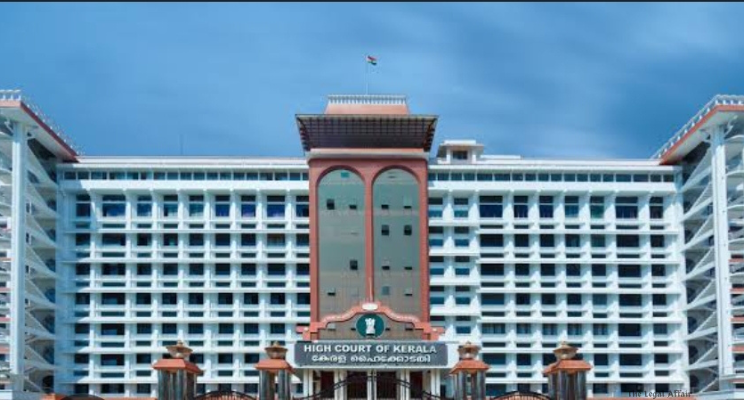
In the appeals arising out of Shaju v. Victory Granite Bricks Pvt. Ltd. & Anr. (RFA Nos. 593/2017 & 75/2019), a Division Bench of the Kerala High Court comprising Justice Satish Ninan and Justice P. Krishna Kumar addressed the significant question of whether an unregistered agreement for sale—which is otherwise a compulsorily registrable document under the Registration Act—can still be used as evidence to prove a contract in a suit seeking specific performance. The case revolved around an agreement for the sale of immovable property executed in 2014, wherein the plaintiff sought specific performance alleging full compliance with the terms of the agreement, while the defendant disputed both the binding nature of the agreement and the agreed price, arguing the agreement’s inadmissibility for want of registration. The High Court not only clarified the legal position on the admissibility of such unregistered agreements in the context of specific performance but also examined the legislative intent behind the Registration Act’s amendments, the scope of Section 49’s proviso, and the equitable consequences of the defendant’s refusal to honour the contract after accepting consideration, ultimately upholding the trial court’s decree granting specific performance to the plaintiff.
Arguments of Both Sides:
The dispute originated from a compromise agreement involving several parties, in which the plaintiff and others agreed to transfer certain immovable properties amongst themselves, including a sale agreement (Exhibit A2) executed by the defendant agreeing to sell his property at Rs. 9,000/- per cent within three months. The plaintiff claimed to have paid the entire sale consideration, purchased the requisite stamp paper, and fulfilled all obligations, but alleged that the defendant refused to execute the sale deed despite everyone else in the compromise fulfilling their parts. The plaintiff argued that the agreement, though unregistered, was valid evidence to prove the contract for specific performance because the Registration Act’s Section 49 expressly allows unregistered documents to be admitted in suits for specific performance. The plaintiff presented corroborative evidence of payment, the broader compromise, and testimonies demonstrating execution of the agreement and purchase of stamp paper, also arguing that the defendant’s Power of Attorney holder had participated in the compromise, indicating defendant’s assent.
The defendant, on the other hand, raised multiple defenses. First, he argued that he was not bound by the compromise agreement involving the other parties as he never consented. Second, he challenged the enforceability of Exhibit A2 by arguing it was compulsorily registrable and thus inadmissible since it was unregistered. Third, he disputed the agreed price, contending that the true agreement fixed the price at Rs. 61,000/- per cent and accused the plaintiff of trespass and altering the property before the expiry of the agreement period. Based on these allegations, the defendant also filed a counterclaim seeking recovery of possession and restoration of the land to its original state.
Judgement:
The trial court examined the evidence, found the execution of Exhibit A2 and payment of consideration to be proved, rejected the defendant’s claim regarding the alleged agreed price of Rs. 61,000/- per cent, and dismissed the counterclaim, granting the decree for specific performance in favour of the plaintiff. Aggrieved, the defendant appealed.
Before the High Court, the appellant repeated his core arguments, focusing heavily on the inadmissibility of the unregistered agreement post the 2013 amendment inserting Section 17(1)(f) mandating compulsory registration of sale contracts. The Division Bench undertook a detailed analysis of Sections 17 and 49 of the Registration Act. It noted that while Section 17(1)(f) makes sale agreements compulsorily registrable post-2013, Section 49 expressly provides exceptions allowing admission of unregistered documents as evidence of a contract in a suit for specific performance or for proving collateral transactions not required to be in writing. The Court underscored that although Section 17 was amended by introducing clause (f), Section 49’s proviso was left intact, reflecting legislative intent to preserve the exception for suits of specific performance, in line with the Apex Court’s decision in R. Hemalath v. Kasthuri, where a similar amendment by Tamil Nadu inserting clause (g) in Section 17 was examined.
Applying these principles, the Court held that an unregistered agreement for sale can be admitted as evidence to prove the contract in a suit seeking specific performance because the proviso to Section 49 remains unaffected. The Court observed that while an unregistered sale agreement cannot affect immovable property rights or be used as evidence of transfer, it can still serve as proof of a contract to enforce specific performance. Addressing the merits of the case, the Court found no merit in the defendant’s claim of a higher agreed price of Rs. 61,000/- per cent, especially given the evidence corroborating the agreed consideration at Rs. 9,000/- per cent, the payments made, and the plaintiff’s substantial compliance with obligations under the compromise agreement. The evidence showed that the plaintiff transferred his property as agreed, purchased stamp paper, and fulfilled his contractual obligations, while the defendant alone reneged on his promise. The Court emphasized that denying specific performance in such circumstances would cause the plaintiff undue hardship and financial loss, considering the plaintiff’s irreversible acts under the compromise agreement. The Court also rejected the counterclaim of trespass and alteration of property, holding it to be unsubstantiated.
Concluding that the trial court’s decree was correct, the Division Bench dismissed the appeals, confirming the decree for specific performance, and thus reaffirming that an unregistered agreement for sale, though compulsorily registrable, can be validly admitted in evidence to prove a contract for specific performance, preserving the exception in Section 49’s proviso despite amendments to Section 17.