


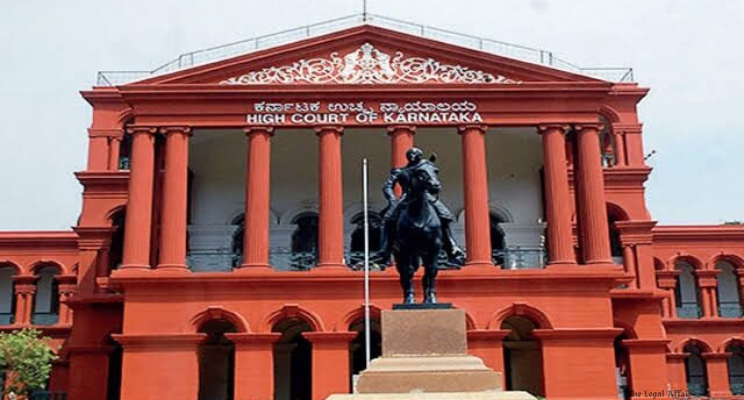
Introduction:
In the matter of Prajwal Revanna v. State of Karnataka (Criminal Petition 3292/2025), the Karnataka High Court heard arguments on the maintainability of a successive bail petition filed by former Member of Parliament, Prajwal Revanna, who is facing serious allegations in a rape case. The State government, represented by Special Public Prosecutor Professor Ravivarma Kumar, objected to the petition being directly filed before the High Court without the petitioner first approaching the sessions court. The case is politically sensitive, involving allegations of absconding, media manipulation, and forum shopping. The matter was heard by Justice S R Krishna Kumar, who posed questions regarding procedural propriety, especially concerning the ladder of judicial hierarchy and the conduct of the accused. The case has now been posted for further hearing on July 2, 2025.
Arguments by the State:
Special Public Prosecutor Professor Ravivarma Kumar strongly opposed the maintainability of the successive bail petition. The first line of argument was procedural. Kumar argued that the petitioner had bypassed the sessions court and approached the High Court directly for bail. He emphasized that a successive bail application must first be filed before the sessions court, particularly in the absence of any exceptional circumstances or change in material facts. Referring to binding precedents from the Supreme Court and various High Courts, he contended that a direct approach to the High Court was not legally tenable. Kumar also pointed out that the current petition made no mention of any prior attempt before the sessions court or explanation as to why it was being bypassed. In such circumstances, Kumar argued that the petition should be dismissed on the ground of maintainability alone.
The second argument advanced by Kumar pertained to the conduct of the petitioner. He submitted that Revanna had demonstrated a pattern of conduct aimed at obstructing the course of justice. He reminded the Court that Revanna had fled the country on April 26, 2024, anticipating arrest, which was evident from the fact that he purchased an international ticket to Germany on the same day. Kumar characterized this as a calculated act of evasion and labelled the petitioner a flight risk. He also referenced Revanna’s prior civil suit seeking a temporary injunction against the publication of adverse content in the media, which included a video he claimed was morphed. According to Kumar, this suit, which resulted in an ex-parte injunction, demonstrated that Revanna had prior knowledge of the evidence against him since May 2023—contradicting the narrative of political vendetta now being spun in the criminal proceedings.
The prosecutor emphasized that this conduct must weigh heavily against the petitioner, particularly when assessing bail. Moreover, Kumar highlighted that the delay argument raised by the defense was without merit. Of the four cases registered against the petitioner, trials had already commenced in two. The only reason the third case had not proceeded at the same pace was due to a stay order passed in a related petition filed by accused number one, H.D. Revanna. The State maintained that procedural delays were not attributable to prosecutorial inaction but rather to strategic litigation moves by the defense.
Additionally, Kumar accused the petitioner of engaging in forum shopping by attempting to exploit a change in the judicial bench. He suggested that Revanna had timed the petition to ensure it landed before a bench perceived to be more favorable. This, he said, was yet another indication of mala fide intent.
Arguments by the Petitioner:
Appearing for Prajwal Revanna, Senior Advocate Prabhuling K Navadgi refuted the State’s objections. On the maintainability question, Navadgi cited a Supreme Court judgment stating that successive bail applications may be heard by a different bench where a change in roster had occurred. He explained that the current petition was filed following due notice to the court regarding this procedural change and that the defense had been transparent throughout.
Addressing the procedural objection, Navadgi asserted that the High Court had inherent powers under Section 439 of the Code of Criminal Procedure to entertain successive bail petitions where necessary. He submitted that given the political and media-sensitive nature of the case, the petitioner had legitimate apprehensions regarding fairness and security in the lower judiciary, which justified the direct approach to the High Court. Furthermore, Navadgi emphasized that successive bail applications are not barred in law if there is a change in circumstances. He argued that significant changes had occurred since the first bail rejection, including the framing of charges and the appearance of new evidence, which merited a fresh evaluation of bail.
On the conduct issue, Navadgi strongly contested the claim that Revanna was a flight risk. He argued that the petitioner had not fled but had traveled abroad with legitimate reasons and had returned to cooperate with the investigation. He further clarified that the civil suit concerning the morphed video was a preventive measure taken in good faith to protect the petitioner’s privacy and reputation, and not indicative of guilt or evasion. Navadgi also pointed out that the trial’s delay was primarily due to procedural and institutional reasons, including the stay order in the connected petition, rather than the petitioner’s conduct.
As for the allegation of forum shopping, Navadgi firmly rejected the claim, stating that the change in bench was administrative and that the defense had complied with all procedural requirements. He stressed that the right to seek bail was a fundamental right, and the Court must assess the merits rather than dismiss the plea on technicalities. He urged the Court to consider the petitioner’s willingness to cooperate, the progress in trial, and the presumption of innocence while deciding the application.
Court’s Observations and Adjournment:
Justice S R Krishna Kumar, after hearing extensive submissions from both sides, posed critical questions about the maintainability of the successive bail plea. The Court enquired whether the hierarchical ladder had to be followed even in the second bail application, and if the petitioner was required to first approach the sessions court again. When Kumar affirmed that the law mandates the same ladder, the Court appeared inclined to accept that argument but did not pass any conclusive order. The judge acknowledged that while some delay in proceedings had occurred, it was due in part to a stay order in a petition filed by another co-accused and possibly due to the petitioner’s own conduct.
The matter has now been adjourned to July 2, 2025, for further hearing. The High Court is expected to decide whether the bail plea is maintainable before it and, if so, proceed to evaluate the merits of the application in light of the serious allegations, the petitioner’s past conduct, and the progress in the trial proceedings.