


Introduction:
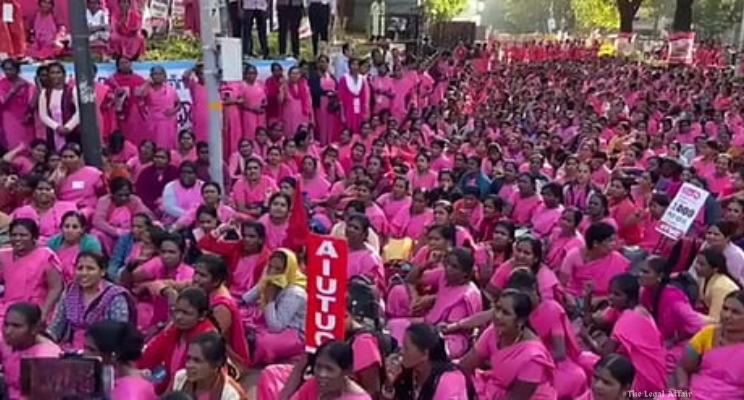
In the case titled Savita & Others v. Union of India & Others, WP No. 103940/2025, the Karnataka High Court has intervened to stay the controversial termination of 195 ASHA Mentors by the State Government through an order dated June 12, 2025. The interim relief was granted by Justice Pradeep Singh Yerur, who issued notice to the respondents and directed that the operation of the impugned order be stayed until the next hearing. The development marks a significant step in the long-standing grievances of Accredited Social Health Activists (ASHAs) working across Karnataka, particularly those who have functioned as ASHA Mentors for more than a decade. The petitioners, represented by Advocate Shridhar Prabhu, challenged the sudden move of the government which, without issuing individual show-cause notices or offering alternate placements or benefits, rendered the services of these mentors terminated abruptly and informally. According to the petition, many of the ASHA Mentors received their termination communication through unofficial modes like WhatsApp, further compounding the arbitrary nature of the decision. The petitioners submitted that this action is not only devoid of rationale but also ultra vires to constitutional guarantees under Articles 14, 16, and 21, violating their right to equality, livelihood, and dignity.
Arguments:
The petitioners, through their counsel, submitted that the ASHA Mentors are a critical part of the public health infrastructure and have been the invisible but effective driving force behind the success of the ASHA programme, especially in rural and underserved areas. Over the years, they have been engaged by the State Government to train, supervise, and mentor other ASHA workers, ensuring effective last-mile delivery of primary healthcare services, particularly to women and children. The plea emphasized that these mentors have dutifully completed all required training and certifications and have functioned with utmost dedication and professionalism, often beyond their formal call of duty. Despite their long tenure and contributions, their roles were never regularized by the State. It was contended that the government failed to take any positive steps toward integrating them into the permanent workforce or offering them security of tenure or social protection, leaving them vulnerable to arbitrary actions. The petitioners further submitted that the decision to abolish their positions entirely, without any assessment of individual performance or alternative measures of employment, is not only legally untenable but morally unsound, particularly when their services are being relieved via non-official communication channels without formal termination letters or severance procedures.
The petition prayed for a declaration that the June 12, 2025 order terminating the services of ASHA Mentors is illegal, arbitrary, and unconstitutional. The petitioners also sought directions from the Court to regularize their appointments from the date of their initial engagement and to confer upon them the applicable pay scale, emoluments, and all service-related benefits in accordance with law. The plea emphasized that the government has acted in clear violation of principles laid down by the Supreme Court and various High Courts regarding the regularization of long-serving contract or ad hoc employees. The petition invoked the constitutional jurisprudence that recognizes the right to livelihood as a facet of Article 21, asserting that the arbitrary deprivation of employment of these women, who have dedicated over ten years to the state’s health mission, deserves judicial protection. It was further submitted that the ASHA Mentors are distinct from ASHA workers, as they possess more training, perform supervisory duties, and have greater responsibilities, making the decision to eliminate their posts without absorption all the more egregious. The petitioners’ side drew the court’s attention to prior government assurances and policy commitments towards the welfare and stability of ASHA cadres, which have now been disregarded without justification.
In response to the plea, while the State Government has yet to file a formal affidavit or detailed objections, the issuance of a stay by the High Court itself reflects the prima facie seriousness and urgency of the matter. The Court acknowledged that the petitioners have been engaged for over a decade, have undergone required training, and have performed public functions critical to the success of state-run healthcare schemes. Justice Pradeep Singh Yerur observed that the impugned order, Annexure-A, appears to have far-reaching consequences and affects not only the livelihoods of the petitioners but also raises issues regarding procedural fairness, legality, and transparency in state decision-making. Recognizing the lack of immediate justification in the termination order and the absence of any offered alternative for re-deployment or absorption, the Court decided that the matter required deeper judicial scrutiny. Accordingly, a stay on the operation of the termination order was granted until the next date of hearing. This interim protection ensures that the petitioners will not be forcibly relieved or replaced during the pendency of the matter, thereby preventing irreparable harm to their employment status.
Judgement:
The Court’s intervention comes at a crucial juncture when ASHA workers across India are voicing growing demands for recognition, formalization of services, and social security. The ASHA programme, launched under the National Health Mission, relies heavily on female health workers who act as the frontline of India’s community health systems. Over the years, several High Courts and the Supreme Court have emphasized the need for fair treatment, proper wages, and minimum labor protections for these workers. In the present case, the decision to terminate 195 mentors without a formal show-cause process or a clear administrative rationale raises questions about compliance with principles of natural justice. The Karnataka High Court’s willingness to examine the legality of such a blanket order reflects the judiciary’s role in checking executive overreach, especially when it concerns vulnerable and historically under-recognized sections of the public workforce. By granting an interim stay, the Court has ensured that these women, who form the backbone of primary healthcare delivery in Karnataka’s remote areas, are not discarded without due process or dignified alternatives. The judgment’s significance extends beyond the individual petitioners and symbolizes a broader recognition of the indispensable role played by grassroots health workers in India’s public health landscape.
The outcome of this writ petition could potentially set a precedent for similar ASHA and contractual employee matters in other states. If the Court eventually finds the termination order unconstitutional or procedurally flawed, it may pave the way for regularization or at least enforce minimum protections for long-term workers within government-run health schemes. The case represents a test of the State’s commitment to both constitutional values and its own health infrastructure policies. As the matter proceeds for final adjudication, all eyes will remain on whether the Karnataka High Court will ultimately grant the reliefs sought by the petitioners, including reinstatement, regularization, and benefits, thereby giving long-overdue recognition and justice to some of the most foundational yet invisible healthcare workers in the state.