


Introduction:
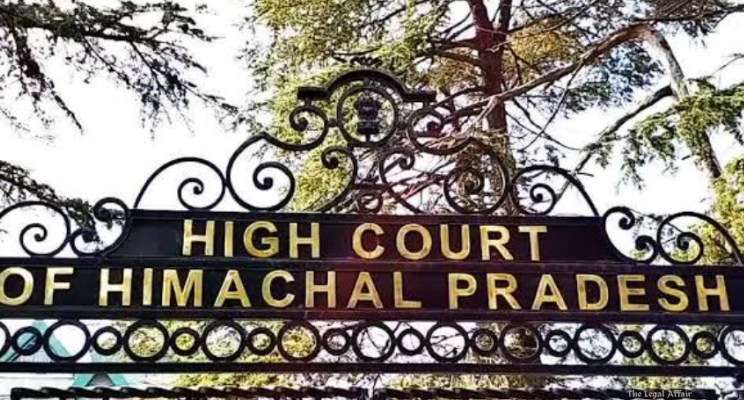
In the case Ishwar Dass v. State of Himachal Pradesh & Ors., decided on 18 June 2025 by the Division Bench of Justice Vivek Singh Thakur and Justice Ranjan Sharma, the Himachal Pradesh High Court issued a significant judgment emphasizing that once a medical reimbursement claim is admissible under a beneficial policy of the State Government, it cannot be denied or curtailed on flimsy or irrelevant grounds. The matter stemmed from a petition filed by Ishwar Dass, a retired government school teacher, who sought reimbursement of medical expenses incurred for his wife’s knee replacement surgery at the Postgraduate Institute of Medical Education and Research (PGIMER), Chandigarh. Initially processed through official channels in Kangra, his claim was arbitrarily reduced from the total expenditure of ₹2,93,295 to ₹2,08,495, and finally ₹1,43,495, before being rejected as time-barred. Even after prolonged correspondence and procedural compliance, only ₹2,08,495 was reimbursed during the pendency of proceedings before the Himachal Pradesh State Administrative Tribunal. Following the tribunal’s abolition, the case was transferred to the High Court under CWPOA No.6723 of 2020, where the issue revolved around whether such deductions and rejections based on outdated and non-applicable memorandums could withstand judicial scrutiny. The petitioner was represented by Advocate Ms. Sangeeta Vasudeva, and the State was represented by Deputy Advocate General Ms. Seema Sharma.
Arguments:
The petitioner Ishwar Dass contended that his wife underwent legitimate and medically necessary knee replacement surgery at PGIMER, Chandigarh, a prestigious government institution. All required documentation, including the bills and the certification from medical officers, was timely submitted to the concerned Block Elementary Education Officer in Kangra, who in turn sent it to the Deputy Director of Elementary Education for processing. Despite complete compliance and repeated follow-ups, objections were raised without legal backing, resulting in unwarranted deductions of ₹84,800 from his claim. The petitioner argued that since the claim had been verified by doctors and approved by local education officers, the arbitrary ceilings imposed by the Deputy Director—purportedly based on a 1995 Office Memorandum of the Government of India—were neither relevant nor applicable. He asserted that the said memorandum had already lapsed in 2000, and the surgery in question took place in 2016, when no such ceiling was legally enforceable. Moreover, even the 2017 revised memorandum issued under the Central Government Health Scheme was not applicable retroactively to surgeries performed in 2016, nor was it formally adopted by the Himachal Pradesh Government. Thus, he claimed that withholding the ₹84,800 balance constituted an unlawful denial of benefits to which he was entitled under the prevailing State policy.
In response, the State Government submitted that the deduction was made based on limits prescribed under the 1995 Office Memorandum issued by the Government of India, which set maximum reimbursement ceilings for orthopedic implants such as those used in knee and hip replacement surgeries. The State argued that in the absence of a more recent State-level directive, the said central memorandum served as a guiding framework for reimbursements and was being routinely applied in analogous cases. The State also contended that the memorandum’s intent was to maintain fiscal discipline and standardize claims, and that the revised 2017 memorandum applied only to cases after its issuance. While acknowledging that no specific Himachal Pradesh notification adopting the 1995 or 2017 circulars was produced, the State insisted that administrative prudence justified the adoption of central guidelines in the absence of a State-specific framework. Hence, according to the respondents, the reduction in reimbursement was neither arbitrary nor baseless but followed a uniform administrative practice.
Court’s Judgment:
The Division Bench of the Himachal Pradesh High Court unequivocally ruled in favor of the petitioner, observing that the reimbursement claim could not have been lawfully curtailed under the circumstances presented. The Court thoroughly reviewed the factual matrix and documentary submissions, particularly focusing on the legitimacy and legal validity of the 1995 and 2017 Office Memorandums. It observed that the 1995 circular—on which the State had based its deductions—explicitly stated it would be valid only for five years, i.e., up to March 30, 2000. Given that the petitioner’s wife underwent surgery in 2016, a full sixteen years after the expiration of the 1995 memorandum, reliance on it was not just misplaced but legally untenable. As for the 2017 memorandum, the Court highlighted that it applied only prospectively from 26 September 2017 and therefore had no relevance to medical procedures conducted in 2016. Furthermore, the bench emphasized that for such circulars to have binding authority over State Government employees, they must be expressly adopted through State notifications or departmental instructions, which had not been done in this case. The Court remarked that there was no trace of any formal order by the Himachal Pradesh Government that would extend the applicability of either the 1995 or the 2017 Office Memorandum to the employees of the State education department.
Critically, the Court reaffirmed the principle that medical reimbursement policies framed for the benefit of government employees must be interpreted liberally, especially when the expense is real, verified, and arises out of treatment in a recognized government institution like PGIMER. The Court observed: “Once a medical claim is admissible in terms of beneficial policy of the State, the same should not be denied on flimsy grounds or irrelevant factors.” It added that forcing employees to engage in prolonged litigation for genuine medical expenses defeats the welfare intent behind such schemes. The repeated objections and arbitrary reductions by the Deputy Director, despite satisfactory compliance by the petitioner and validation by attending medical officers, indicated administrative high-handedness and insensitivity. The Court held that there was no valid ceiling in force at the time of the surgery and hence the reduction and partial rejection of the claim had no legal foundation. Accordingly, the High Court directed the State to release the remaining ₹84,800 to the petitioner without further delay, along with any interest that may be statutorily payable under the applicable rules or policies.
This judgment reaffirms the judiciary’s commitment to employee welfare and governmental accountability in implementing medical reimbursement schemes. It sends a strong message to administrative bodies that they must act within the boundaries of applicable law and policy and avoid arbitrary decision-making that places unnecessary burdens on retired or serving employees seeking rightful dues.