


Introduction:
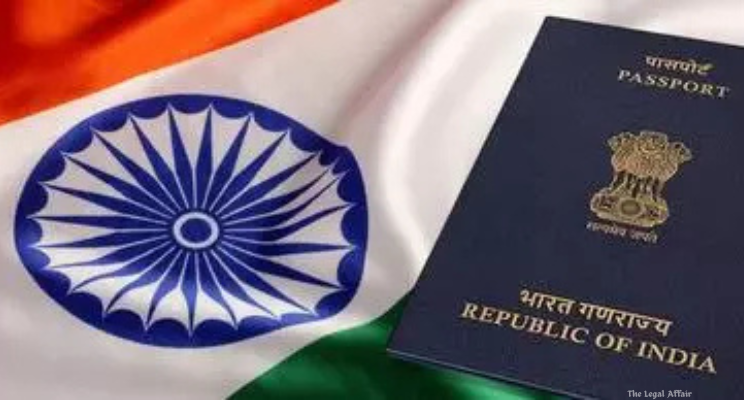
In an impactful judgment delivered by Justice Anand Venkatesh, the Madras High Court addressed the puzzling and unjust insistence of a Regional Passport Office on a married woman obtaining her husband’s signature and explicit consent before her application for a passport could proceed. The petitioner, a wife who married in 2023 and gave birth to a daughter in 2024, found herself embroiled in a matrimonial dispute initiated by her husband seeking dissolution of marriage. As a result, when she applied for a fresh passport in April 2025, her application was stalled due to the absence of her husband’s authorization on Form J. This demand came despite full disclosure of her ongoing marital conflict. The wife challenged the passport office’s practice—labeling it archaic, demeaning, and rooted in a mindset treating a married woman as the chattel property of her husband. In responding to this challenge, the Madras High Court reaffirmed the principle of individual autonomy, declaring the husband’s consent unnecessary—a significant stride in the journey toward women’s emancipation and gender equality.
Petitioner’s Argument:
The petitioner argued with resolute conviction that asking for her husband’s permission to obtain a passport not only violated her fundamental rights but also treated her as a subservient entity who loses her autonomy post-marriage. She contended that such a practice is grotesquely out of sync with constitutional mandates upholding gender equality and women’s independence. The petitioner stressed that she had fully disclosed the matrimonial discord to the passport authorities, rendering any insistence on spousal consent both impractical and unreasonable. She underscored that a passport serves as a travel document and identity document tied to individual identity and citizenship—not to her marital status. Demanding Form J in this context effectively empowered a spouse to veto her ability to travel—a gross infringement of her right to freedom of movement under Article 19(1)(d). Moreover, such insistence compelled her to seek impossible permission from an estranged husband in the course of divorce proceedings, exposing the deep-rooted patriarchy that sees women as property.
Respondent’s Argument:
On the other side, the Passport Authority, represented by the Regional Passport Office, defended the traditional practice, stating that Form J serves as a safeguard mechanism to prevent trafficking and human mobility-related abuses. They insisted that the form requires the spouse to confirm the marital bond and to help prevent misuse of passports. Citing administrative protocols, they argued that obtaining the spouse’s authorization ensures transparency and helps avoid contradictions in marital status, minimizing discrepancies or misrepresentations. The respondents emphasized that the form was not about undermining women’s autonomy but aimed at fulfilling due diligence for lawful issuance of passports in a context where marriage changes surname or marital status could create confusion or misuse. They claimed the rule was backed by policy and had no discriminatory intent, but was an integral part of verifying a married applicant’s information.
Court’s Judgment:
The Madras High Court, under the stewardship of Justice Anand Venkatesh, delivered a trenchant verdict that decisively framed the demand for a husband’s signature as ill-founded and discriminatory. The Court began by taking judicial notice of evolving societal norms—urging the state machinery to adapt to progressive gender dynamics rather than perpetuate regressive practices. It reiterated that marriage does not curtail a woman’s individuality, nor does it subordinate her legal identity to that of her husband. In particular, the Court emphasized that insisting on spousal consent for passport issuance reflected a patriarchal mindset that viewed women as dependent upon men long after marriage.
The Court criticized this requirement as manifestly unreasonable, especially in scenarios like the petitioner’s, where seeking the husband’s consent was not only impracticable but verged on the impossible due to ongoing matrimonial disputes. Accepting such necessity would lead to a situation where a husband could effectively control a married woman’s ability to travel internationally—even to the detriment of her career, safety, or liberty.
Further, the Court clarified that passport issuance is anchored in citizenship and individual legal identity—not marital status. The discretion to travel must, therefore, lie solely with the citizen concerned—including married women. The insistence on spousal consent lacked the legal basis to infringe on her rights under Articles 14, 15, and 19 of the Indian Constitution, which guarantee equality and freedom of movement.
Invoking international legal principles and India’s commitments to women’s rights and gender equality, the Court held that such demands undermine India’s constitutional and moral commitment to dismantling patriarchal constructs. The Court ruled unequivocally that a wife need not obtain her husband’s authorization or signature before applying for a passport. The petition was allowed, and the Regional Passport Office was directed to process her application on its merits—without delay, and irrespective of Form J—provided all other statutory requirements were met. The Court mandated issuance of the passport within four weeks from receipt of a compliant application.
In doing so, the Madras High Court issued a clarion call against gendered administrative practices and asserted a clear legal affirmation: married women retain full agency over identity documents and freedom of movement. The ruling sets a powerful precedent and urges passport authorities across India to recalibrate procedures in accordance with constitutional values of equality and autonomy.