


Introduction:
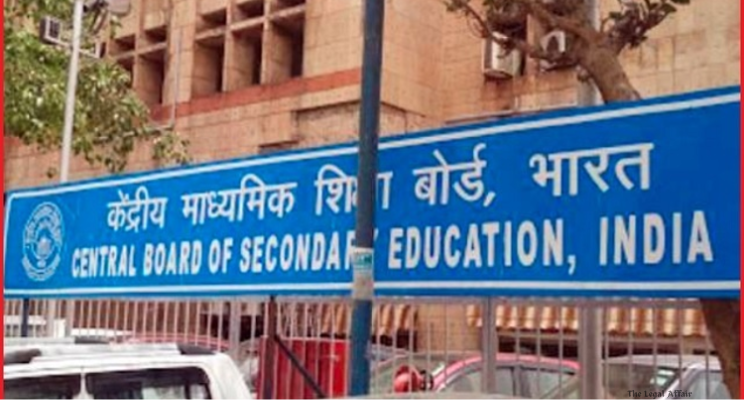
In Central Board of Secondary Education v. Prema Evelyn D Cruz & Anr. (LPA 171/2023), a Division Bench of the Delhi High Court—comprising Hon’ble Justices Subramonium Prasad and Harish Vaidyanathan Shankar—on June 4, 2025, dismissed CBSE’s appeal against a Single Judge order directing correction of the date of birth in Ms. Prema Evelyn D Cruz’s matriculation certificate.
Ms. Cruz had sought rectification to align her CBSE records with her birth certificate issued by the Greater Chennai Corporation, which was subsequently used to update her passport and other official documents. The CBSE opposed this on procedural grounds, citing limitations under its Bye-laws and record disposal under the 1998 Weeding Out Rules.
The High Court decisively held that statutory public documents such as birth certificates and passports carry a presumption of correctness and must prevail over internal administrative rules. It emphasized that inconsistencies between CBSE and passport records could seriously impact Ms. Cruz’s employment, immigration prospects, and general identity verification.
Arguments of the CBSE (Appellant):
The CBSE advanced the following arguments:
- Time-Barred Request: Citing Bye-law 69.2(vi), the Board argued that rectification of the date of birth must be sought within two years of the result declaration. Ms. Cruz’s application came well after this window had closed.
- Record Disposal: Under the 1998 Weeding Out Rules, records older than ten years are destroyed. CBSE claimed that no original records related to Ms. Cruz were available
- Preservation of Record Integrity: CBSE warned that permitting changes years after issuance undermines the sanctity and credibility of its certification process.
- Judicial Precedent: Relying on Jigya Yadav v. CBSE and Assam Board v. Md. Sarifuz Zaman, CBSE emphasized the need to maintain discipline in record-keeping and uphold the finality of academic records.
Arguments of Ms. Prema Evelyn D Cruz (Respondent):
Ms. Cruz, through counsel, made the following submissions:
- Supremacy of Public Records: She contended that her birth certificate, a statutory public document, enjoys a presumption of accuracy and must override internal procedural limitations.
- Passport Alignment: Her updated date of birth was accepted by the passport authority—an official recognition validating her claim.
- Fundamental Rights: Denial of correction would lead to identity mismatches, potentially impairing her employment, immigration, and verification processes, thus infringing upon her rights.
- Substance over Procedure: Citing Jigya Yadav, she argued that CBSE must prioritize factual correctness over procedural rigidity, especially where official public records are in place.
Court’s Observations and Judgment:
The Division Bench upheld the reasoning of the Single Judge and delivered the following key findings:
- Statutory Presumption of Accuracy: The Court reiterated that documents such as birth certificates and passports, issued by competent statutory authorities, carry legal presumption of correctness. These cannot be overridden by outdated or missing academic records.
- No Justifiable Refusal: CBSE’s resistance to correction, especially when supported by official documentation, lacked legal and moral justification.
- Real and Substantive Prejudice: The Court acknowledged that the discrepancy posed a genuine risk of future harm to Ms. Cruz’s employment, immigration prospects, and identity verification.
- Duty of Accuracy: As a public custodian of educational records, CBSE has a responsibility to ensure that its records reflect accurate information and are aligned with lawful documents—not bound solely by internal regulations.
Consequently, the Court dismissed CBSE’s appeal and affirmed the Single Judge’s direction to correct Ms. Cruz’s date of birth in the matriculation certificate.