


Introduction:
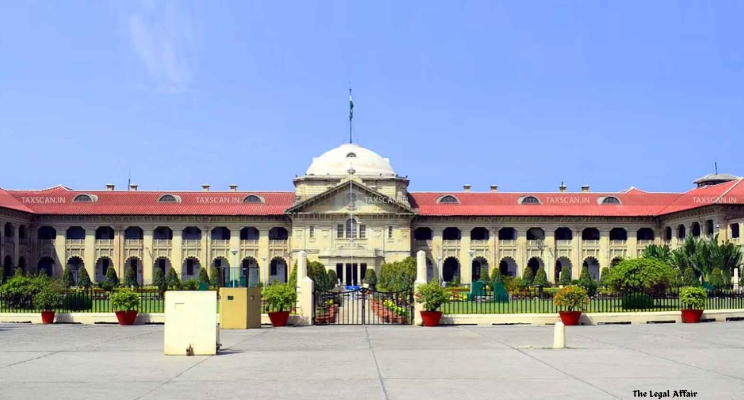
In the matter of Devendra Singh v. State of UP and 4 Others [Special Appeal No. 167 of 2024], the Allahabad High Court delivered a significant ruling upholding the service rights of employees who were initially appointed irregularly but were later absorbed into regular posts and continued working without interruption for decades. The Division Bench comprising Justice Siddhartha Varma and Dr. Justice Yogendra Kumar Srivastava ruled that once such employees were regularised against sanctioned vacancies, any initial irregularities in their appointments stood cured by the passage of time and absorption. The Court observed that where the State or its instrumentalities fail to act within a reasonable period regarding irregularities in appointment, the employees cannot be faulted for the procedural lapses that were not of their own making. This decision came in response to the special appeals filed by ad-hoc Assistant Teachers, originally appointed in 1987 and 1989 respectively, who were later absorbed in 2006 and continued service until being restrained from duty in 2017 after decades of service and even after their interim protection from termination had been in place since 1989. The Court concluded that the delay in challenging their service regularisation could not be allowed to result in undue hardship to the appellants, thus reinforcing principles of fairness, equity, and the doctrine of legitimate expectation in public employment.
Arguments by the Appellants:
The appellants—Devendra Singh and others—were appointed as Assistant Teachers on an ad-hoc basis in the years 1987 and 1989 respectively. Their appointments, however, were later challenged by the State authorities in 1989, contending that they were made on posts that exceeded the sanctioned strength of the institution. Accordingly, the petitioners were terminated. In response, they approached the High Court by filing writ petitions, which led to an interim order staying the termination. While the proceedings remained pending, in 2006, the appellants were absorbed against sanctioned and substantive posts, effectively regularising their services. Subsequently, in 2010, the initial writ petitions were dismissed as not pressed, considering the resolution of their employment status. They continued working in their teaching positions without interruption, performing all duties as regular employees. However, in 2017, the District Inspector of Schools (DIOS) issued a notice to the Principal of the concerned college, questioning the basis of the salaries paid to the petitioners. The appellants again approached the High Court, and the notice was stayed. Later, they were asked to withdraw their writ petition to facilitate regularisation, but after withdrawal, contrary actions followed, and they were restrained from continuing in service. They once again knocked on the doors of the High Court to challenge this adverse action. However, a Single Judge dismissed their writ petition. Aggrieved, the appellants filed a special appeal before the Division Bench.
The appellants argued that their initial ad-hoc appointments may have been irregular due to lack of sanctioned posts at that time, but this flaw was cured upon their absorption into substantive positions in 2006. They cited the Supreme Court rulings in Mansaram v. S.P. Pathak & Others and Madras Aluminium Company Limited v. Tamil Nadu Electricity Board to assert that if an appointment is irregular, the fault lies with the employer and action must be taken within a reasonable timeframe. They contended that after being allowed to continue for decades and having been officially absorbed, any retrospective challenge to their appointments was unfair and arbitrary. They also relied on Radhey Shyam Yadav & Anr. v. State of U.P. where the Apex Court held that where delay and inaction were attributable to the State, the employees should not be punished for irregularities that were not their doing. The appellants further cited Vinod Kumar & Ors. v. Union of India, where the Supreme Court acknowledged the transformation of temporary appointments into substantive roles due to the nature of long, continuous service and the expectation of stability in such employment.
Arguments by the Respondents:
The State respondents, including the District Inspector of Schools, contended that the original appointments of the appellants were made on posts that did not form part of the sanctioned cadre and thus were inherently void from the beginning. They argued that their continuation in service even after the initial termination orders were stayed was irregular and unsustainable in law. According to the respondents, mere passage of time could not legitimize an initially illegal appointment. Furthermore, they asserted that the appellants never underwent the due process of recruitment for sanctioned posts as per applicable rules and therefore their absorption in 2006 could not rectify the original defect. The State maintained that the High Court’s interim protection granted in 1989 could not serve as a basis for granting them permanent status in defiance of service regulations. The respondents took the stand that public employment must strictly follow procedural mandates to uphold the sanctity of equal opportunity in public service and that deviation from this would not only violate the law but also prejudice the rights of other eligible candidates who might have been denied opportunity.
Court’s Judgment and Reasoning:
The Division Bench examined the circumstances of the case in detail and concluded that the action of the State in attempting to dislodge the petitioners from service after three decades of employment, including their regularisation in 2006, was unjustified. The Court held that though their initial appointments were irregular on account of being made against unsanctioned posts, their eventual absorption on sanctioned vacancies remedied the irregularity. Relying upon the judgments in Mansaram and Madras Aluminium, the Court reiterated the legal position that irregular appointments, if not challenged within a reasonable time, especially after the employees are absorbed in regular sanctioned positions, would be deemed to be valid. It noted that such appointments may not be illegal per se but irregular due to procedural shortcomings, which are curable. Once an employee is absorbed in a sanctioned post and performs his duties for a substantial period, his services attain a regular character, particularly when the State raises no objection for years and even facilitates the continuation of such employment.
The Court rejected the argument of the respondents that the appointment process had to be revisited after several decades and instead gave primacy to the principles of equity, natural justice, and legitimate expectation. The judgment also underscored that the doctrine of fairness demands that employees who have spent the majority of their professional lives in a particular role should not be thrown out merely due to technical irregularities that were never pointed out at the right time. The Court further observed that the State’s action of first issuing a notice, then suggesting withdrawal of legal proceedings for the sake of regularisation, and subsequently initiating steps to remove the employees, amounted to acting in bad faith and violated the trust of the appellants. Drawing from the principles laid down in Radhey Shyam Yadav, the bench held that the State could not be allowed to take advantage of its own inaction and irregularities, especially when the employees had not committed any fraud or misrepresentation in obtaining the appointment.
Finally, placing reliance on Vinod Kumar, the Court held that the appellants’ continuous and uninterrupted service for decades, performance of duties, and absorption on sanctioned posts all demonstrated that they had acquired a legitimate expectation of continuity. Their termination, therefore, could not stand the test of fairness. The Court categorically stated that the State’s failure to challenge their regularisation in a timely manner amounted to an implicit endorsement, and thus the petitioners’ rights could not be disregarded after years of recognised service. The Division Bench allowed the special appeals, set aside the single judge’s dismissal order, and granted relief to the appellants, thereby directing the State not to interfere with the employment status of the petitioners, treating them as regularly appointed teachers.