


Introduction:
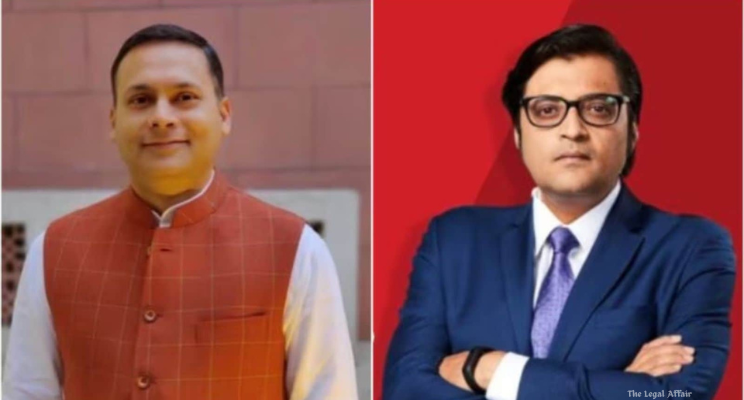
The Karnataka High Court recently delivered an interim order staying the investigation in an FIR filed against two prominent public figures: Arnab Goswami, Editor-in-Chief of Republic TV, and Amit Malviya, chief of the BJP IT Cell. The case arose after a complaint was lodged alleging that they spread false information claiming that the Istanbul Congress Centre in Turkey serves as the international office of the Indian National Congress (INC). The complaint was filed by Shrikant Swaroop B N, head of the legal cell of the Indian Youth Congress, at the High Grounds police station in Bangalore. The FIR charges the accused under sections 192 and 352 of the Bharatiya Nyaya Sanhita, concerning provocation intended to cause riot and intentional insult provoking breach of peace. The interim stay came through the vacation bench of Justice S Rachaiah on May 22, 2025, while hearing the petition filed to quash the FIR and the ensuing investigation. The case raised important issues regarding the balance between media freedom, the right to express opinion, and the need to prevent misinformation that may potentially incite unrest.
Arguments of Both Sides:
On behalf of the accused, Senior Advocate Arun Shyam argued that the contested content was an opinion aired on a news channel questioning why a political party would have an office in Turkey, especially when the country’s interests were seen as conflicting with India’s national interests. He emphasized that the coverage and digital publications were opinions rather than factual assertions. A misrepresented image of the political party’s office was inadvertently posted by a junior editor, which was quickly rectified through a clarification. He stressed that the intent was not to spread misinformation but rather to engage in political discourse, and thus no offense was made out. The petitioners sought to highlight that this was a case of journalistic expression and political commentary falling within the ambit of free speech protected by the Constitution.
Opposing the plea, Additional State Public Prosecutor B N Jagadeesha contended that false information had indeed been disseminated, causing harm and misleading the public. Though a corrigendum was issued, the contested programme and related content continued to be aired and published both in print and electronic media, potentially escalating tensions. Jagadeesha cited the Supreme Court’s precedent in the case of Madhya Pradesh Minister Vijay Shah, where it was held that investigations into such matters should not be prematurely halted. He underscored that the police had actively pursued the investigation, including traveling to Delhi to serve notices, and that the continuation of the probe was essential to uphold law and order and to hold those responsible accountable for deliberate misinformation designed to provoke unrest.
Court’s Judgment:
After reviewing the submissions and records, the Karnataka High Court, through Justice S Rachaiah, granted an interim stay on further investigation pending the disposal of the petition. The bench issued notices to the respondents, thereby allowing the petitioners temporary relief from the FIR’s consequences. The court’s order reflects a cautious approach to the case, balancing the fundamental rights of free expression and the necessity of investigating alleged criminal conduct related to public order. The stay signifies the judiciary’s recognition of the gravity of restricting speech, especially when it pertains to political commentary and the press, while also ensuring that the investigation process respects due legal procedures. The final outcome remains pending, but the interim order protects the petitioners from immediate harassment or arrest until the court fully considers the merits of their arguments.
Conclusion:
This case underscores the complex intersection of media freedom, political expression, and legal accountability in India’s vibrant democracy. The interim stay granted by the Karnataka High Court highlights the need to carefully scrutinize complaints against journalists and political commentators to avoid misuse of legal provisions that may stifle free speech. At the same time, it recognizes the serious concerns about misinformation that can inflame public sentiment and disrupt peace. The court’s measured approach exemplifies the judiciary’s role as a guardian of constitutional rights while safeguarding societal order. As the matter proceeds, it will set important precedents on how courts address allegations involving political discourse and media representations, balancing democratic freedoms with responsibilities. This judgment also sends a message to media houses and political entities alike about the importance of accuracy, accountability, and respect for public order in the age of instant information dissemination.