


Introduction:
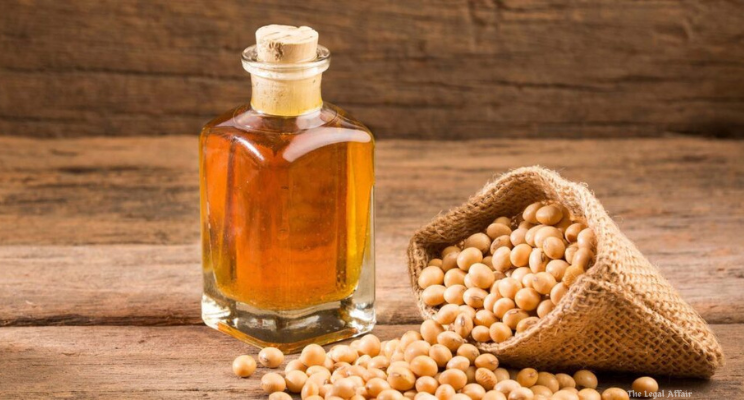
In a significant ruling addressing the classification of processed commodities within the import framework, the Supreme Court of India in the case of Noble Resources and Trading India Private Limited (Earlier Known as Andagro Services Pvt. Ltd.) versus Union of India & Ors. rendered a definitive interpretation on whether crude degummed soybean oil retains the status of an agricultural product. The bench comprising Justices Abhay S. Oka and Ujjal Bhuyan reversed the judgment of the Gujarat High Court, which had held that crude degummed soybean oil maintained its agricultural character by virtue of being derived from soybeans. The Supreme Court, however, rejected this rationale and held that due to the manufacturing process which significantly alters the character and identity of soybeans into a commercially distinct product, crude degummed soybean oil cannot be considered an agricultural product. This classification bears critical consequences for customs exemptions, as agricultural products enjoy a specific tax treatment and import benefit structure under applicable notifications. The appeal was argued for the petitioner company by senior advocate Mr. Vikram S. Nankani and his team, while the Union of India was represented by Additional Solicitor General Mr. S. Dwarakanath and other counsels.
Arguments of Both Sides:
The petitioner, Noble Resources and Trading India Pvt. Ltd., contended that crude degummed soybean oil undergoes substantial processing involving degumming, a chemical and mechanical transformation which results in a product that is distinct from its original raw material—soybean. It was argued that the resulting oil is commercially recognized and traded as a separate commodity, and hence it fulfills the test of ‘manufacture’ as enunciated in key precedents such as Union of India v. Delhi Cloth and General Mills Co. Ltd. (1963) and Deputy Commissioner of Sales Tax v. Pio Food Packers (1980). The petitioner emphasized that the identity, character, and commercial use of the crude degummed soybean oil are markedly different from that of soybeans, and thus, it should not be categorized under agricultural products, which typically refer to items in their raw, natural, and unmanufactured state.
The petitioner’s counsel cited the definition of ‘agricultural product’ articulated in the Kerala High Court judgment in P. Narayanan Nair vs. Dr. Lokeshan Nair [AIR 2014 Ker 141], which clarified that an agricultural product must be the direct result of cultivation and exist in its unprocessed or natural form. Based on this understanding, they asserted that crude degummed soybean oil, requiring industrial processing that changes the essential properties of the base raw material, cannot qualify as such. This classification, they contended, should render the product eligible for import benefits under specific exemption notifications, since those benefits were not applicable to agricultural products but to manufactured commodities.
On the other hand, the Union of India and its counsel defended the decision of the Gujarat High Court, asserting that crude degummed soybean oil is essentially an unfinished or intermediate product, which still requires further refining before it becomes consumable or usable in its final form. Thus, they argued, it retains an agricultural character by virtue of its derivation from soybeans. The Assistant Commissioner, whose decision had been endorsed by the High Court, had previously maintained that the product was not yet fit for consumption, and therefore still bore the identity of an agricultural item. The respondents urged that merely undergoing partial processing or degumming should not be sufficient to strip the commodity of its agricultural essence, especially when the processing does not culminate in an end-consumable product.
They also expressed apprehension that a contrary interpretation could open the floodgates for multiple partially processed agricultural derivatives to be exempted from protective agricultural policies and tariffs, which are designed to safeguard farmers and rural economies. Their argument rested primarily on the usability and fitness of the product for final consumption, tying the identity of the product to its utility.
Court’s Judgment:
After considering the rival submissions and legal precedents, the Supreme Court bench emphatically rejected the Gujarat High Court’s view and ruled in favor of the appellant. Justice Ujjal Bhuyan, authoring the judgment, meticulously analyzed the meaning and implications of the term ‘agricultural product’ and applied the established legal test of ‘manufacture.’ The Court emphasized that the determining factor in such classification is not the consumability of the end product but whether the original raw material has undergone such a transformation that the resulting product assumes a distinct identity, character, and use—clearly distinguishable in the commercial domain from the original input.
Drawing from the landmark cases of Delhi Cloth and General Mills and Pio Food Packers, the Court laid out five essential features to determine manufacture:
(i) A process or series of processes must be applied.
(ii) The raw material must undergo a transformation through this process.
(iii) A new commodity must emerge post-processing.
(iv) The new commodity must have a distinct name, character, or use and can no longer be seen as the original material.
(v) The commodity should be commercially recognized as distinct from the raw material.
Justice Bhuyan clarified that crude degummed soybean oil meets all these criteria. He observed that the soybean undergoes a series of processes which include mechanical and chemical alterations. As a result, the oil extracted is not only distinct in name and composition but is also treated and traded separately in the commercial sphere. The fact that the product still needs further refining before human consumption was held to be immaterial. “The test is not whether the end product is a consumable product or not,” the Court remarked. It further stated that the High Court had erred in conflating consumability with identity and had failed to appreciate that crude degummed soybean oil has emerged as a new commodity, different from soybean.
The Court was categorical in stating that an agricultural product is one which is harvested or extracted directly from the field and is generally in its raw or natural form. The degumming of soybean oil introduces mechanical, thermal, and chemical interventions, which cannot be ignored as mere processing. Instead, the outcome is a transformation so fundamental that it fulfills the criteria of ‘manufacture’ under established judicial standards.
Significantly, the Court held that once this transformation is established, the resulting product cannot enjoy the benefits or protections meant for agricultural commodities, as it no longer holds that character. The Court reiterated that the definition and categorization should rely on objective commercial tests, not on whether the commodity is at its final stage for consumer use. It observed, “Crude degummed soybean oil is distinct from soybean; it is not the same thing as soybean.”
In light of the above reasoning, the Supreme Court allowed the appeal and overturned the Gujarat High Court’s judgment. Consequently, the appellant company was held to be entitled to benefits on the import of crude degummed soybean oil, since it was not covered by the agricultural product exclusion under the applicable notification. The Court’s verdict not only clarified the correct legal position on the classification of processed commodities but also reinforced the necessity of adhering to the test of ‘manufacture’ when determining the character of such goods.