


Introduction:
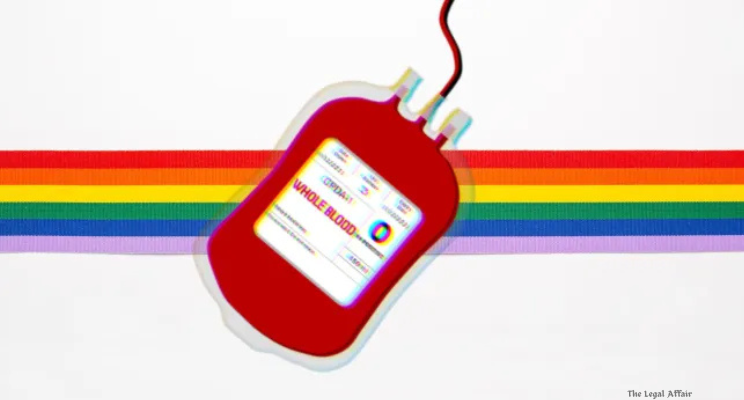
In the case titled THANGJAM SANTA SINGH @ SANTA KHURAI Versus UNION OF INDIA AND ORS., W.P.(C) No. 275/2021 along with connected petitions by Sharif D Rangnekar and Harish Iyer, the Supreme Court of India is presently hearing a set of constitutional challenges to the existing guidelines under the “Guidelines on Blood Donor Selection and Blood Donor Referral, 2017” issued by the National Blood Transfusion Council (NBTC) and National AIDS Control Organization (NACO), which prohibit transgender persons, men who have sex with men (MSM), and female sex workers from donating blood. The petitioners, including prominent LGBTQ+ activists and professionals like Sharif D Rangnekar (author and former journalist), Thangjam Santa Singh (activist), and Harish Iyer (activist), have contended that such a blanket exclusion violates their fundamental rights under Articles 14, 15 and 21 of the Constitution, encompassing the right to equality, dignity and life. During the most recent hearing, a bench of Justices Surya Kant and N Kotiswar Singh expressed grave concern over the discriminatory nature of the guidelines and the implicit stigma they carry against an already marginalized community. Justice Singh pointedly questioned whether branding all transgender persons or MSMs as high-risk individuals was justifiable without medical evidence directly linking their gender identity or orientation to higher risk activities. He noted that many cisgender heterosexual persons also engage in high-risk sexual behavior, and it would be medically unsound and constitutionally impermissible to base prohibitions solely on identity-based presumptions.
Arguments:
On behalf of the Union of India, Additional Solicitor General Aishwarya Bhati submitted that the 2017 guidelines were framed by the NBTC, a body composed of medical and scientific experts, and were based on the prevailing scientific consensus that these particular population groups have statistically higher risks for HIV, Hepatitis B and C infections. She emphasized that the exclusion is not based on stigma but rather on a preventive public health strategy to ensure the safety of the blood supply, particularly for recipients whose health may be compromised. The affidavit filed by the Centre in the Thangjam Santa Singh matter reiterates this rationale, stressing that public health measures are better left to executive discretion and scientific bodies rather than courts, and that any potential relaxation of the rules must still retain robust screening safeguards to prevent transmission of blood-borne infections.
However, the petitioners strongly opposed this line of reasoning, arguing that statistical risk does not justify blanket bans on entire communities, especially when individual-level screening mechanisms have improved dramatically over the last three decades. They pointed out that technological advancements now permit effective screening of donated blood for HIV, Hepatitis B, Hepatitis C and other diseases, thereby removing the need for identity-based exclusions. Petitioners highlighted that countries such as the United States, the United Kingdom, and Canada have revised their policies to allow gay and bisexual men to donate blood after a deferral period or upon individual risk assessment. The petition filed by Sharif D Rangnekar also seeks structural reforms, such as introducing a more behavior-based risk assessment model, launching public awareness campaigns on safe blood donation, and revising the curriculum of medical education to include sensitization regarding LGBTQ+ blood donors. They maintain that the existing guidelines are relics of the 1980s AIDS panic, not grounded in contemporary science, and only perpetuate social stigma and exclusion against LGBTQ+ individuals and sex workers.
Judgement:
Justice Surya Kant, while hearing the matter, stressed the importance of expert consultation, suggesting that the Union government seek medical and epidemiological guidance to find a way forward that upholds public health while eradicating discrimination. He emphasized the dual goal of ensuring safety in blood transfusion and protecting the dignity of minority communities, stating, “You please have a talk with them so that as a community, they are not stigmatized. At the same time, all medical precautions can remain in force.” Justice Singh echoed this sentiment, remarking that blanket assumptions about risk behavior among transgender persons or gay men were inherently flawed and led to the creation of segregated groups that suffer heightened stigma and prejudice. The bench appeared to be signaling a middle path where the Court is not inclined to make scientific decisions but wants to ensure that such decisions are made on a sound evidentiary basis and in a constitutionally compliant manner.
Though the case is still under consideration and no final judgment has been delivered, the observations made during the hearings reflect the Court’s progressive stance on equality and non-discrimination. The bench’s concern centers around the disproportionate impact of the guidelines on already vulnerable populations and their constitutional invalidity in the absence of clear, individualized, and behavior-specific medical reasoning. The Court seems inclined to direct the Union government to consult with experts in epidemiology, virology, public health, and human rights to arrive at a revised framework that preserves the integrity of the blood transfusion process without perpetuating structural biases. The hearing marks an important moment in India’s evolving LGBTQ+ rights jurisprudence, building on precedents like Navtej Singh Johar v. Union of India and NALSA v. Union of India, which recognized the rights to sexual autonomy and gender identity, respectively. It brings into sharp focus the tension between public health objectives and individual liberties, particularly where scientific reasoning is used—or misused—to justify sweeping exclusions that can reinforce social marginalization.
The petitioners have proposed alternatives like behavior-based screening, deferral periods post high-risk exposure, and improved communication about risky behaviors instead of identity-based exclusions. These models are gaining traction globally and would enable India to align with best international practices. Furthermore, they argue that a revised approach would increase the donor pool, which is especially crucial in times of national shortages. The medical community too, they claim, should move away from archaic perceptions and adopt frameworks that are both evidence-based and inclusive. The next phase in the case will likely involve submissions from expert bodies and further review of international practices, along with the possibility of judicial directions to amend the NBTC guidelines to eliminate arbitrary exclusion while maintaining blood safety. The case presents a unique opportunity for the Court to reiterate that constitutional values must underpin public health policy, and that equality cannot be sacrificed at the altar of administrative convenience or generalized medical assumptions.