


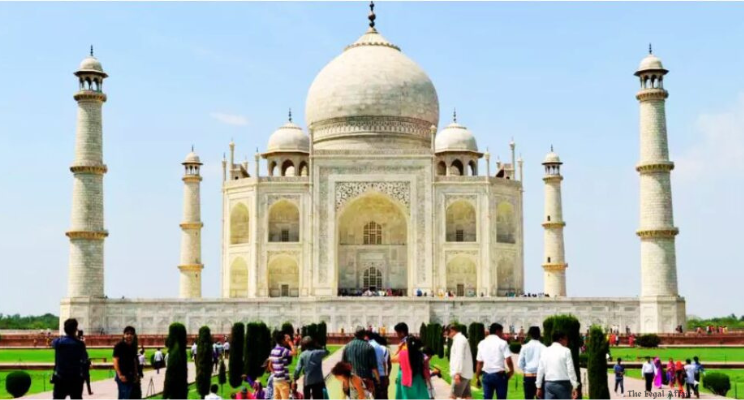
Introduction:
In the landmark case of MC Mehta v. Union of India & Ors., the Supreme Court has reaffirmed its commitment to environmental conservation by reiterating its 2015 directive that mandates prior approval from the Court for any tree felling activities within a five-kilometre radius of the Taj Mahal. This decision underscores the Court’s dedication to preserving the ecological sanctity of the Taj Trapezium Zone (TTZ), a 10,400 square kilometre area encompassing parts of Uttar Pradesh and Rajasthan, established to protect the iconic monument from environmental degradation.
Arguments of Both Sides:
The petitioner, environmentalist MC Mehta, emphasised the necessity of stringent measures to prevent ecological harm to the Taj Mahal, citing the adverse effects of deforestation and pollution on the monument’s integrity. The petitioner argued that unauthorized tree felling within the TTZ could exacerbate environmental deterioration, thereby threatening the structural stability and aesthetic value of the Taj Mahal.
On the other hand, a trust advocating for Agra’s development sought relaxation of the requirement for prior permission to cut trees on private and non-forest lands, proposing a registration system for trees and individuals engaged in felling activities. The trust contended that such relaxation would facilitate agro-farming and related growth, contributing to the region’s economic development.
Judgement:
However, the Supreme Court, comprising Justices Abhay S. Oka and Ujjal Bhuyan, dismissed the trust’s application, stating that granting a blanket exemption for tree felling under the guise of agro-farming would undermine the Court’s longstanding efforts to protect the TTZ. The Court emphasised that any such relaxation would provide a license for indiscriminate tree felling, adversely affecting the environment in the TTZ area.
The Court clarified that its 2015 directive remains in force, requiring all requests for tree felling within a five-kilometre radius of the Taj Mahal to be placed before the Supreme Court, irrespective of the number of trees involved. These applications will be referred to the Central Empowered Committee (CEC) for recommendations before the Court decides on granting permission.
For areas within the TTZ but beyond the five-kilometre distance from the Taj Mahal, the Court stated that tree felling can occur only with prior permission from the Divisional Forest Officer (DFO) or the CEC, under the Uttar Pradesh Tree Preservation Act. The Act mandates compensatory plantation of two trees for every tree felled, unless specifically exempted, and prescribes penalties for unauthorised tree felling or breach of permission conditions.
The Court also carved out a narrow exception, allowing immediate tree felling without prior compliance only in situations of grave urgency, where delay in action may lead to loss of human life. In such cases, due diligence must be exercised, and the urgency must be substantiated.
Furthermore, the Court directed the CEC to submit a report on whether additional restrictions are necessary to protect other UNESCO World Heritage Sites in Agra, such as the Agra Fort and Fatehpur Sikri, thereby extending its environmental oversight beyond the immediate vicinity of the Taj Mahal.