


Introduction:
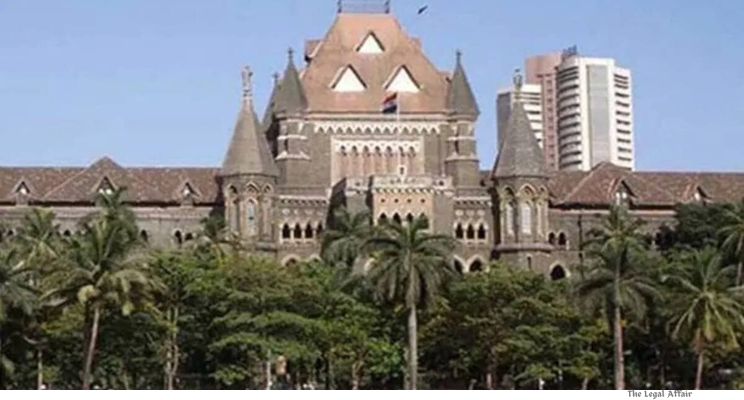
In the case of UTO Nederland B.V. & Another vs. Tilaknagar Industries Ltd., the Bombay High Court was called upon to resolve a critical legal conflict concerning the nature and implications of temporary injunctions passed during civil proceedings. The case arose out of a suit for infringement of copyright and passing-off filed by the appellants, accompanied by a plea for ad-interim injunction. When the trial court denied the request for temporary relief, the appellants took the matter to the High Court on appeal. What ensued was a crucial judicial determination by a full bench, comprising Chief Justice Alok Aradhe, Justice M. S. Karnik, and Justice Shyam C. Chandak, which examined conflicting decisions of earlier Division Benches in Colgate Palmolive Company & Anr vs. Anchor Health And Beauty Care Pvt. Ltd (2005), Parksons Cartamundi Pvt. Ltd. vs. Suresh Kumar Jasraj Burad (2012), and Goldmines Telefilms Pvt. Ltd. vs. Reliance Big Entertainment Pvt. Ltd. & Ors (2014). This decision was pivotal in clarifying the legal framework guiding temporary injunctions and the appellate court’s jurisdiction over such matters.
Arguments of Both Sides:
The appellants argued that the scope of appellate review in cases of rejected injunctions should not be confined to determining whether the order is perverse or flawed on the face of the record. They contended that the appellate court ought to assess the entire case, including facts and application of legal principles, thus enabling a more expansive and substantive review. The respondents, however, emphasised that the trial court exercises judicial discretion when adjudicating injunction applications, and such discretion cannot be lightly disturbed unless proven arbitrary, perverse, or capricious.
Judgement:
The full bench analysed the foundational elements necessary for granting a temporary injunction: the existence of a prima facie case, the balance of convenience favouring the applicant, and the likelihood of irreparable injury. The judges clarified that ‘prima facie case’ simply means that a genuine and substantial legal issue has been raised, warranting further scrutiny. They further stressed that interim relief is not an entitlement but a discretionary measure exercised on well-established principles. In harmonising the conflicting precedents, the Court endorsed the ratio in Colgate Palmolive as laying down the correct law. It held that just because a trial court denies a temporary injunction for lack of a prima facie case does not convert the order into a prima facie adjudication on merits. Rather, such orders remain discretionary, based on judicial evaluation of preliminary factors without any definitive findings on the subject matter. The full bench also referred to the Supreme Court’s ruling in Ramakant Ambalal Choksi vs. Harish Ambalal Choksi & Ors, which stipulated that appellate courts should not supplant their discretion unless the lower court’s order is flawed. Upholding these principles, the Bombay High Court decisively ruled that temporary injunctions are discretionary orders, and appellate intervention is limited to cases where the discretion was exercised arbitrarily or perversely, thus conclusively resolving the jurisprudential inconsistency.