


Introduction:
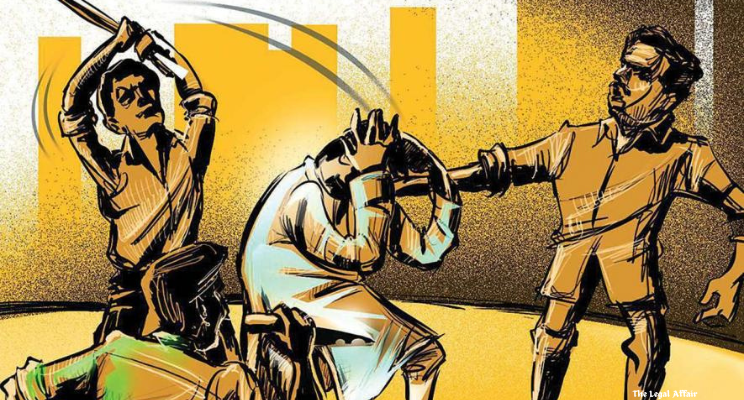
The Supreme Court of India, in the case of ANTI CORRUPTION COUNCIL OF INDIA TRUST v. MINISTRY OF HOME AFFAIRS AND ORS., W.P.(Crl.) No. 191/2019, addressed a Public Interest Litigation (PIL) concerning non-compliance with the guidelines laid down in the landmark 2018 Tehseen Poonawalla judgment. The PIL, filed by the Anti-Corruption Council of India Trust, raised concerns over the rising incidents of mob lynching and the alleged failure of Union and State governments to effectively implement the Supreme Court’s directives to curb such violence. A bench comprising Justices Surya Kant and N Kotiswar Singh took note of Solicitor General Tushar Mehta’s submission that the newly enacted Bharatiya Nyaya Sanhita (BNS), replacing the Indian Penal Code (IPC), specifically criminalizes mob lynching, thereby potentially addressing the concerns raised in the petition. Acknowledging this development, the Court directed the Centre to file a short status report detailing the implementation of the new provisions.
Arguments of the Petitioner:
The petitioners, represented by the Anti-Corruption Council of India Trust, contended that despite the explicit directions issued by the Supreme Court in the 2018 Tehseen Poonawalla judgment, incidents of mob lynching had continued unabated, demonstrating a lack of enforcement by the authorities. They emphasized that the Court’s guidelines mandated stringent preventive, remedial, and punitive measures, including the appointment of nodal officers in each district, fast-track trials, compensation for victims, and disciplinary action against officials failing in their duty. The petitioners further argued that mob violence had seen an alarming increase, particularly instances involving cow vigilantism, and that the absence of a specialized anti-lynching law had emboldened perpetrators. Citing the failure of several states to file affidavits regarding compliance with the Tehseen Poonawalla guidelines, they urged the Court to intervene and ensure strict adherence to its directives.
Arguments of the Respondents:
The Union government, represented by Solicitor General Tushar Mehta, countered the petitioners’ claims by stating that the recently enacted Bharatiya Nyaya Sanhita (BNS) comprehensively addresses mob lynching as a distinct criminal offense. He asserted that with the inclusion of mob lynching under the new legal framework, the concerns raised by the petitioners may have been rendered redundant. Furthermore, the Solicitor General pointed out that continuous monitoring of compliance with judicial directives across all states and union territories was impractical for the Supreme Court. The government also argued that adequate mechanisms were already in place for tackling mob violence, and the states had been directed to ensure strict implementation of legal provisions.
Court’s Judgment:
The Supreme Court, while acknowledging the arguments presented by both sides, noted that the pleadings in the case were incomplete due to the failure of some states to file their affidavits. However, considering the enactment of BNS, the Court sought a short status report from the Centre on the effectiveness of the new legal provision in curbing mob lynching. The bench refrained from passing immediate directions but emphasized that compliance with the Tehseen Poonawalla guidelines remained mandatory for all authorities. The Court also referred to its recent decision in February, where it had disposed of a similar PIL filed by the National Federation of Indian Women, reiterating that the directions issued in Tehseen Poonawalla were binding on all states and union territories. It underscored the impracticality of monitoring every state’s compliance while sitting in Delhi but maintained that enforcement of anti-lynching measures must be ensured at the administrative level. The Court directed the Centre to submit its status report, shedding light on how the new legislation aligns with the directives set forth in the 2018 judgment.