


Introduction:
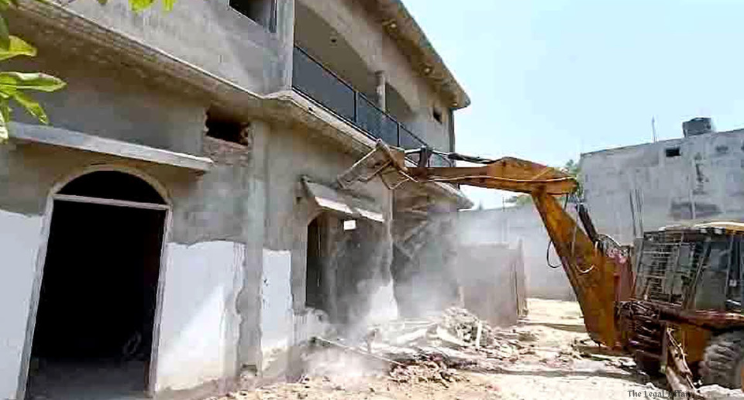
In a significant ruling, the Supreme Court of India, in Zulfiquar Haider & Anr. v. State of Uttar Pradesh & Ors. (Petition for Special Leave to Appeal (C) No. 6466/2021), directed the Prayagraj Development Authority to pay Rs. 10 lakh each as compensation to six individuals whose homes were unlawfully demolished. A bench comprising Justices Abhay S. Oka and Ujjal Bhuyan held that the demolitions were not only illegal but also inhumane, violating the fundamental right to shelter under Article 21 of the Indian Constitution. The Court took strong exception to the manner in which notices were served and the procedural lapses that deprived the appellants of their right to a fair hearing. The petitioners claimed that their properties had been wrongly linked to gangster-politician Atiq Ahmed, who was killed in 2023, and that the state had acted in retaliation rather than in compliance with the law. The state, however, contended that the structures were unauthorized and the appellants had no legal right to continue occupying them. The Allahabad High Court had earlier dismissed their plea, siding with the state’s argument that their lease had expired and their freehold applications had been rejected. However, the Supreme Court took a contrary view, holding that due process was flagrantly violated.
Arguments of Both Sides:
The petitioners argued that the Prayagraj Development Authority had illegally demolished their homes without following the mandatory procedure prescribed under Section 27 of the U.P. Urban Planning and Development Act, 1973. The show-cause notice issued on December 18, 2020, was affixed on the same day with a remark that two attempts had been made to serve it in person. However, the demolition order was passed on January 8, 2021, and was also merely affixed rather than being served through registered post. The first communication via registered post was sent only on March 1, 2021, and received on March 6, 2021, while the demolition was carried out the very next day, effectively depriving the petitioners of their right to appeal under Section 27(2) of the Act. The petitioners also claimed that their properties were wrongly associated with Atiq Ahmed and that the state had acted with bias and ulterior motives. On the other hand, the Attorney General for India, R. Venkataramani, appearing for the state, contended that the demolitions were lawful since the appellants were occupying unauthorized structures. He asserted that they had overstayed their leases, which had expired as early as 1996, and their freehold applications had been rejected in 2015 and 2019. Furthermore, he argued that the petitioners had alternative accommodations and thus, compensation was unwarranted. However, the Supreme Court did not find these arguments persuasive and emphasized the fundamental right to shelter.
Court’s Judgment:
The Supreme Court held that the demolition was illegal and in violation of Article 21 of the Constitution, which guarantees the right to life and shelter. The Court condemned the practice of affixing notices instead of serving them in person or by registered post, stating that such methods were inadequate and unfair. The bench referred to In Re Directions In The Matter Of Demolition Of Structures (2024), which laid down clear guidelines for serving notices before demolition. It also interpreted Section 43 of the UP Planning Act, which mandates genuine efforts to serve notices in person before resorting to affixture. The Court found that the authorities had failed to make repeated attempts to serve notices in person and had instead resorted to affixation as a shortcut. Justice Oka observed that compensation was the only way to hold the authorities accountable, stating, “We will record this whole thing as illegal. And fix compensation of Rs. 10 lakh in each case. That is the only way to do this, so that this authority will always remember to follow due process.” The Court also clarified that its ruling did not determine the appellants’ title over the land and granted them the liberty to pursue legal proceedings to establish their ownership. Additionally, the Court directed the Prayagraj Development Authority to strictly adhere to the guidelines established in In Re Directions In The Matter Of Demolition Of Structures for future demolitions. The Court had earlier considered allowing the appellants to rebuild their homes if they agreed to demolish them at their own cost should their appeals fail. However, the petitioners informed the Court that they lacked the financial resources for reconstruction and instead sought compensation. Rejecting the state’s contention that alternative accommodations justified the demolitions, the Court ruled in favor of the appellants, reinforcing the principle that adherence to due process is paramount in any eviction or demolition process.