


Introduction:
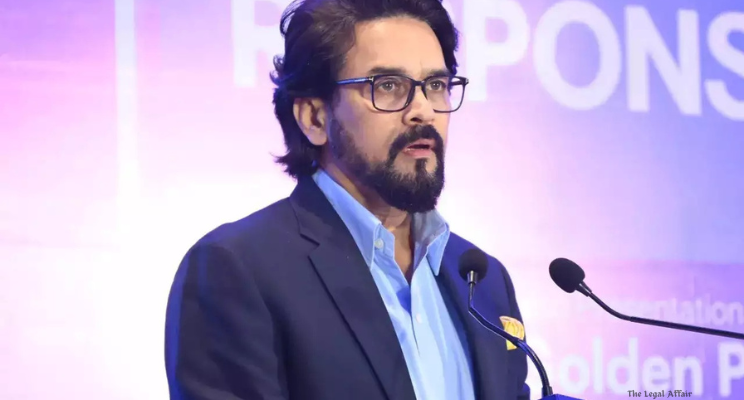
In a significant legal development, the Himachal Pradesh High Court has intervened to reinstate Anurag Singh Thakur’s eligibility to participate in the upcoming elections of the Boxing Federation of India (BFI). This intervention came after Thakur, a former Sports Minister and five-time Member of Parliament from Hamirpur, was disqualified from the BFI’s Electoral College. The court’s decision mandates the BFI to extend the nomination deadline, allowing Thakur to file his nomination and partake fully in the electoral process.
Background:
On March 7, 2025, the BFI, under the leadership of its president Ajay Singh, issued a directive stating that only elected members of affiliated state units could represent their respective states in the federation’s elections. This directive led to the exclusion of several prominent figures, including Anurag Thakur, from the Electoral College. The BFI’s decision was based on the assertion that Thakur was not an elected member of the Himachal Pradesh Boxing Association (HPBA), thereby rendering his nomination invalid.
Petitioners’ Arguments:
Challenging the BFI’s decision, the HPBA, represented by Senior Advocate Abhinav Mukerji and his legal team, filed a petition in the Himachal Pradesh High Court. The petitioners contended that:
- Ultra Vires Action: The March 7 directive by Ajay Singh was beyond his authority and violated the BFI’s Memorandum of Association and the National Sports Development Code of India, 2011. They argued that the directive imposed arbitrary conditions not stipulated in the official rules or regulations of the BFI.
- Nomination Rights: According to the BFI’s Articles of Association, each state association is entitled to nominate two representatives to the Electoral College. There is no stipulation that these representatives must be elected members of the state association. The petitioners emphasized that this long-standing practice had been unilaterally altered without proper authority.
- Timing of the Directive: The directive was issued after the term of the current office bearers had expired on February 2, 2025. Therefore, any decisions made post this date, including the March 7 directive, lacked legal standing.
Respondent’s Arguments:
On behalf of Ajay Singh and the BFI, the counsel argued:
- Eligibility Criteria: The directive aimed to ensure that only bona fide and duly elected members of state associations could participate in the BFI elections. This measure was purportedly in line with promoting transparency and adherence to democratic principles within the federation.
- Authority of the President: As the incumbent president, Ajay Singh possessed the authority to issue directives concerning the electoral process, especially to uphold the integrity and legitimacy of the elections.
- Non-Impleadment of Returning Officer: The respondents highlighted that the petitioners had not included the Returning Officer, who had approved the Electoral College list, as a party in the petition. They argued that any challenge to the electoral process should involve all relevant parties to ensure a comprehensive adjudication.
Court’s Analysis:
After meticulously examining the submissions and relevant documents, the High Court observed:
- Absence of Restrictive Provisions: The BFI’s Rules and Regulations do not stipulate that only elected members of state associations can be nominated to the Electoral College. The court found no clause imposing such a restriction, rendering the March 7 directive inconsistent with the federation’s governing documents.
- Lack of Authority: The court concurred with the petitioners that the directive was issued without proper authority, especially considering that the term of the office bearers had expired before its issuance. This timing undermined the legitimacy of the directive.
- Balance of Convenience: The court determined that the balance of convenience favoured the petitioners. Denying interim relief would cause irreparable harm to Thakur and the HPBA, potentially disenfranchising them from the electoral process without just cause.
Judgment:
In light of these findings, the Himachal Pradesh High Court issued the following orders:
- Stay on the March 7 Directive: The court stayed the operation of the March 7 notice issued by Ajay Singh, deeming it beyond his authority and inconsistent with the BFI’s governing documents.
- Validation of Thakur’s Nomination: The court directed the BFI to recognize Anurag Thakur’s nomination as valid and include him in the Electoral College representing the HPBA.
- Extension of Nomination Deadline: To facilitate Thakur’s participation, the BFI was instructed to extend the last date for submission of nominations. This extension ensures that Thakur can file his nomination and fully engage in the upcoming Annual General Meeting and election process.
Conclusion:
The Himachal Pradesh High Court’s decision underscores the judiciary’s role in upholding organizational governance and ensuring adherence to established rules and regulations. By reinstating Anurag Thakur’s eligibility, the court has reinforced the principles of fairness and due process within sports administration. This ruling not only impacts the immediate parties involved but also sets a precedent for other sports federations to follow transparent and lawful procedures in their electoral processes.